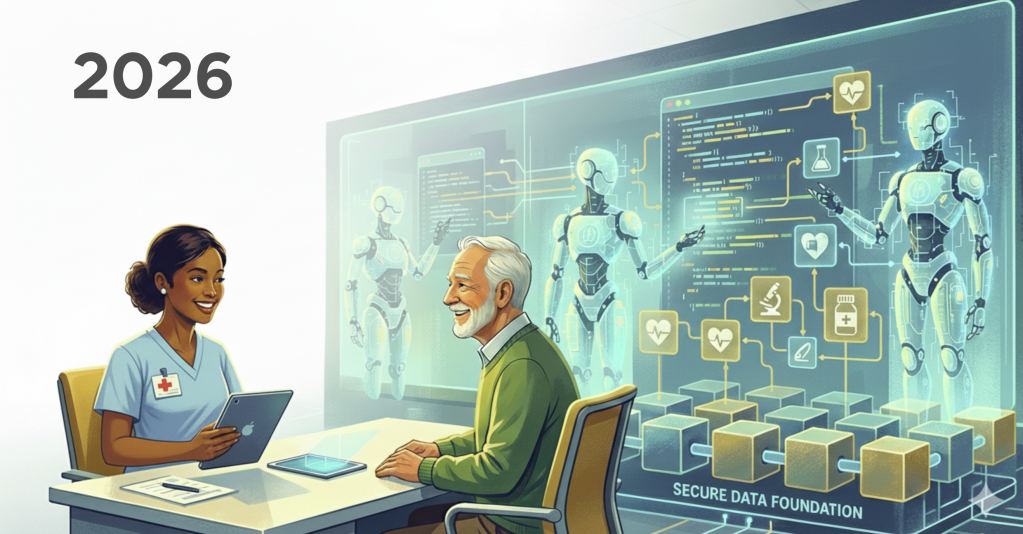
As of 2026, Conifer Health Solutions is expanding its technology-enabled revenue-cycle strategy around the AI platform announced with Google Cloud in November 2025. The original collaboration calls for a next-generation AI platform built on Google Cloud and integrated into Conifer’s proprietary workflows.
Importantly, Conifer’s public 2026 materials do not announce a separate, completely new “Conifer + Google Cloud AI” launch. The 2026 story is better understood as the continued development and operationalization of the 2025 collaboration, alongside Conifer’s broader intelligent-automation platform and new healthcare partnerships.
1. What the Conifer–Google Cloud AI strategy does
Conifer’s objective is to embed AI and intelligent automation throughout revenue cycle management (RCM) rather than use AI as a standalone chatbot or isolated application.
Example
- Patient access
- Insurance and eligibility
- Revenue integrity
- Accounts receivable (A/R) management
- Automated workflow support
- Analytics and operational decision-making
Conifer says its teams had already been developing and deploying custom AI solutions across key points of the RCM value chain before announcing the broader platform.
2. Why AI automation matters for healthcare RCM
Healthcare revenue-cycle operations contain enormous amounts of administrative information.
A typical process can involve:
Patient → registration → insurance verification → authorization → documentation → coding → claim → payment → A/R → collections
Problems at any stage can create:
- claim delays
- denials
- additional administrative work
- delayed reimbursement
- higher cost to collect
- patient billing frustrations
AI automation can potentially identify issues earlier, prioritize work and automate repetitive activities.
Conifer’s current RCM strategy specifically emphasizes automated workflows, intelligent process automation, analytics and resolution through its Conifer Core technology platform.
3. Patient access automation

The front end of the revenue cycle is particularly important because mistakes made before treatment can create downstream financial problems.
Conifer’s patient-access services cover activities from appointment scheduling and pre-registration through patient financial counseling. The company says these services use technology, analytics and automation to streamline the patient experience while supporting reimbursement.
AI can support this model by helping organizations:
- organize patient information
- identify missing information
- automate repetitive administrative workflows
- support eligibility processes
- prioritize cases requiring staff intervention
- improve financial communication
The goal is not simply automation for its own sake it is to make the revenue cycle more efficient while maintaining the patient experience.
4. Insurance and eligibility
AI enabled systems can potentially help analyze large volumes of insurance information and identify cases that need attention. This can help reduce manual work and allow staff to focus on exceptions instead of processing every case in the same way. Conifer’s broader patient-access offering already includes eligibility and enrollment, financial assistance and counseling. One published case study reports a $22 million increase in annual cash collections over a five-year period for a health system engagement. That result is a Conifer case-study outcome not a claim that the $22 million was produced specifically by Google Cloud AI.
5. Revenue integrity
Revenue integrity connects clinical information with accurate reimbursement. The objective is to ensure that healthcare organizations appropriately capture revenue based on the services delivered.
Conifer’s current clinical revenue-integrity offering focuses on areas such as:
- admissions
- charge integrity
- billing integrity
- coding quality
- clinical documentation
- physician education
The company describes these services as a way to improve accuracy and reduce revenue leakage.AI can potentially make these processes more proactive by identifying unusual patterns, inconsistencies or potential problems before they become larger revenue-cycle issues.
6. A/R management automation
Accounts receivable is another major focus.
A/R Management solution as using expertise and automation to:
- increase cash flow
- decrease denials
- reduce cycle time
- recover uncollected revenue
- lower cost-to-collect
AI can add another layer by helping prioritize accounts, identify patterns and direct employees toward cases where intervention is most valuable.
The basic model
Traditional process:
A/R inventory → Manual review → Staff prioritization → Follow-up
AI-assisted process:
A/R inventory → AI analysis → Risk/priority identification → Automated workflow → Human intervention where needed
This approach can potentially make large-scale RCM operations more efficient.
7. ConiferCore and intelligent automation
A key part of the 2026 picture is ConiferCore, Conifer’s enterprise technology platform.
Conifer describes Conifer Core as integrating with existing systems and providing:
- an integrated view of the patient financial journey
- transparent analytics
- automated workflows and inventory management
- intelligent process automation and resolution
This is important because Conifer’s AI strategy is not limited to one technology product. The broader approach combines technology + analytics + workflow automation + RCM expertise.
8. Google Cloud’s role
Google Cloud provides the cloud and AI technology foundation for the next-generation platform.
- operational efficiency
- employee productivity
- patient experiences
- healthcare data analysis
- AI agents and intelligent workflows
Google Cloud’s 2026 healthcare material identifies a shift toward AI agents for workflows, including systems capable of supporting increasingly complex business processes. That direction is highly relevant to RCM because revenue-cycle work contains many structured, repeatable workflows that can potentially be augmented by AI.
9. The 2026 shift toward agentic AI

One of the biggest differences between the 2025 announcement and the broader 2026 AI environment is the increasing emphasis on agentic AI.
Google Cloud’s 2026 healthcare research highlights five trends:
- Agents for every employee
- Agents for every workflow
- Agents for customers
- Agents for security
- Agents for scale
Conifer, this points toward a future where AI doesn’t merely provide information to RCM employees—it could increasingly help coordinate multi-step workflows under appropriate controls.
For example:
Identify problem → analyze information → determine next workflow → initiate action → monitor outcome → escalate exception
That is a more advanced model than simple rules-based automation.
10. Conifer’s 2026 expansion
Conifer’s March 2026 partnership with Healthcare Systems of America (HSA) provides an important example of how its technology-enabled RCM strategy is being applied. Under the agreement, Conifer is providing comprehensive RCM services powered by Conifer Core. The company says the platform integrates:
- advanced analytics
- intelligent workflow automation
- real-time performance dashboards.
11. EHR-system flexibility
Another important feature is Conifer’s EHR-system-agnostic approach.
- Google Cloud described this as one reason Conifer was an attractive partner for developing a next-generation healthcare AI platform.
- In practical terms, the strategy is designed to work across complex healthcare technology environments rather than assuming that every hospital uses the same system.
- That matters because health systems often have multiple applications, EHRs, payer connections and financial systems.
12. Expected benefits in 2026
The combined strategy can be summarized around five major goals:
Better financial performance
AI can help identify opportunities to improve reimbursement and reduce revenue leakage.
Faster workflows
Automation can reduce repetitive manual processing.
Fewer avoidable problems
Earlier identification of eligibility, documentation, coding or billing issues can potentially prevent downstream problems.
More productive employees
Employees can spend less time on routine work and more time handling complex exceptions.
Better patient experience
A more efficient financial journey can reduce administrative friction for patients.
Conifer’s public announcement specifically identifies improved financial performance, stronger cash collections and an elevated patient experience as major objectives.
13. Important caution about 2026 results
It is important to distinguish announced capabilities from measured AI outcomes.
Conifer has published strong results for some broader RCM engagements
For Example, its website cites a Dartmouth Health result involving A/R days falling from 60 to 47 days and cash collections exceeding the goal.
However, that should not automatically be interpreted as a Google Cloud AI result.
As of the current public information, Conifer has not published a comprehensive 2026 breakdown showing exactly how many percentage points of improvement in A/R, denials or collections were caused specifically by the Google Cloud AI platform.
14. Challenges and risks
AI-driven RCM also requires safeguards.
Data security
Revenue-cycle systems handle sensitive healthcare and financial information.
Accuracy
Incorrect AI interpretation can create billing, reimbursement or patient-service problems.
Human oversight

Complex financial and healthcare cases may require trained professionals.
Integration
Hospitals use complicated combinations of EHR, payer, billing and financial systems.
Governance
AI decisions need monitoring, validation and appropriate controls.
Final takeaway
Conifer Health Solutions’ 2026 AI strategy is essentially the next phase of its Google Cloud collaboration announced in 2025. The focus is on embedding AI and intelligent automation into the complete revenue cycle—from patient access and eligibility to revenue integrity and A/R management. The broader 2026 direction is moving from basic automation toward AI-powered workflows and agentic systems. Conifer Core provides the operational technology layer, while Google Cloud supplies advanced cloud and AI capabilities.