Programming languages are the foundation of modern technology. They allow humans to communicate with computers and provide instructions to perform specific tasks. From developing websites and mobile applications to creating artificial intelligence (AI), video games, software, and business systems, programming languages play an essential role in the digital world.
A programming language is a formal language consisting of instructions, rules, and syntax that developers use to write computer programs. These instructions tell computers what to do, how to process information, and how to produce the desired results.
In 2026, programming languages are more important than ever because businesses increasingly depend on software development, automation, cloud computing, cybersecurity, and artificial intelligence.
Whether you are a beginner, student, professional developer, or business owner, understanding programming languages can help you explore new career opportunities and build innovative digital solutions.
What Are Programming Languages?
Programming languages are tools used to create instructions that computers can understand and execute. Developers write code using specific keywords, symbols, functions, and logical structures.
Every programming language has its own syntax, features, advantages, and applications. Some languages are designed for website development, while others are commonly used for artificial intelligence, data science, mobile applications, and operating systems.
Examples of popular programming languages include:
- Python
- JavaScript
- Java
- C++
- C#
- PHP
- Swift
- Kotlin
- Go
- Rust
- TypeScript
How Do Programming Languages Work?
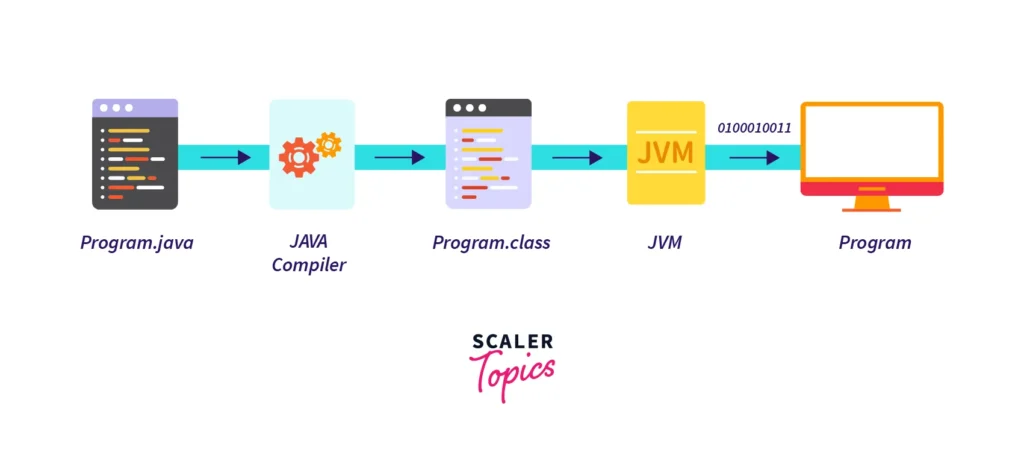
Programming languages work by allowing developers to write instructions that are translated into a format a computer can execute.
The process generally involves the following steps:
- Writing Code: Developers write instructions using a programming language.
- Compilation or Interpretation: A compiler or interpreter translates or executes the instructions.
- Execution: The computer performs the requested operations.
- Testing: Developers check the program for errors and unexpected behavior.
- Debugging: Errors are identified and corrected to improve performance.
Some programming languages use compilers, while others rely on interpreters or virtual machines.
Types of Programming Languages
Programming languages can be divided into several categories based on how they work and what they are used for.
1. High-Level Programming Languages
High-level programming languages are designed to be easy for humans to read, write, and understand. They use English-like words and simplified instructions, making programming more accessible.
Examples:
- Python
- Java
- JavaScript
- PHP
- Ruby
Common uses:
- Website development
- Artificial intelligence
- Software applications
- Data analysis
- Business automation
2. Low-Level Programming Languages
Low-level programming languages communicate more directly with computer hardware. They provide developers with greater control over memory and system resources.
Main types:
- Machine language
- Assembly language
Common uses:
- Operating systems
- Hardware programming
- Embedded systems
- Device drivers
- Performance-critical applications
3. Object-Oriented Programming Languages
Object-oriented programming (OOP) organizes code around objects and classes. This approach helps developers create reusable, organized, and maintainable software.
Examples:
- Java
- C++
- Python
- C#
- Ruby
Main features:
- Encapsulation
- Inheritance
- Polymorphism
- Abstraction
4. Functional Programming Languages
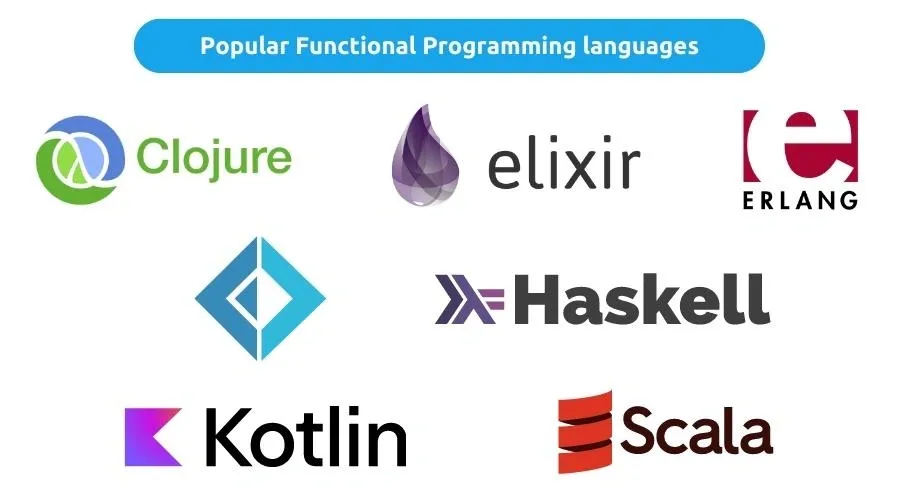
Functional programming focuses on functions, expressions, and predictable results. It helps developers create reliable applications and manage complex operations.
Examples:
- Haskell
- Scala
- Elixir
- Clojure
- F#
Common uses:
- Data processing
- Financial applications
- Distributed systems
- Concurrent programming
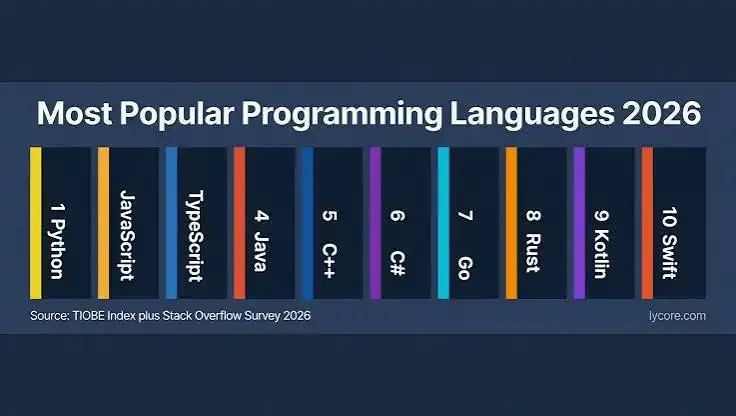
10 Most Popular Programming Languages in 2026
The following programming languages are widely used across different areas of software development.
1. Python
Python is one of the most popular programming languages because of its simple syntax, flexibility, and extensive libraries. It is especially useful for beginners and experienced developers.
Main applications:
- Artificial intelligence
- Machine learning
- Data science
- Web development
- Automation
2. JavaScript
JavaScript is an essential language for interactive websites and modern web applications. It allows developers to create dynamic features that improve user experiences.
Main applications:
- Front-end development
- Back-end development
- Web applications
- Interactive websites
- Browser-based games
3. Java
Java is a general-purpose programming language known for its portability, security features, and reliability.
Main applications:
- Enterprise software
- Android development
- Banking systems
- Cloud applications
- Large-scale business platforms
4. C++
C++ is a powerful programming language that provides developers with significant control over system resources and performance.
Main applications:
- Game development
- Operating systems
- High-performance software
- Robotics
- Embedded systems
5. C#
It is commonly used to create Windows applications, enterprise software, and video games.
Main applications:
- Desktop applications
- Game development with Unity
- Web development
- Enterprise software
- Cloud services
6. PHP
PHP is a server-side programming language widely used for website development and content management systems.
Main applications:
- Website development
- WordPress development
- E-commerce platforms
- Web applications
- Server-side programming
7. Swift
Swift is Apple’s programming language for developing applications across its platforms.
Main applications:
- iPhone applications
- iPad applications
- macOS software
- Apple Watch applications
- Apple TV applications
8. Kotlin
Kotlin is a modern programming language commonly used for Android development. It offers concise syntax and works with Java technologies.
Main applications:
- Android applications
- Mobile software
- Backend development
- Cross-platform development
9. Go (Golang)
Go is a programming language developed by Google. It is known for its simplicity, efficient performance, and support for concurrent programming.
Main applications:
- Cloud computing
- Server development
- Networking systems
- Microservices
- Distributed applications
10. Rust
Rust is a systems programming language designed to provide performance and memory safety. It is increasingly relevant for applications where reliability and security are important.
Main applications:
- Systems programming
- Cybersecurity tools
- Embedded systems
- Blockchain infrastructure
- High-performance applications
Best Programming Languages for Artificial Intelligence
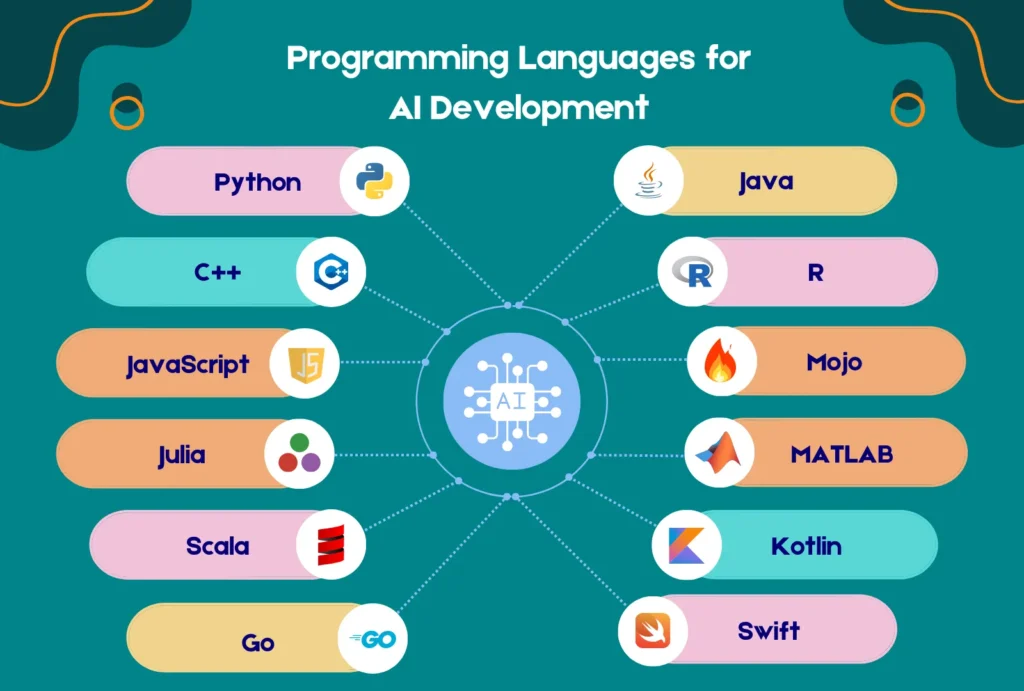
Artificial intelligence has become one of the most important areas of technology. Programming languages help developers create intelligent systems that can analyze information, recognize patterns, automate tasks, and generate content.
Some popular choices include:
| Programming language | AI application |
| Python | Machine learning and deep learning |
| R | Statistical computing and data analysis |
| Java | Enterprise AI applications |
| C++ | High-performance AI systems |
| JavaScript | Browser-based AI applications |
| Julia | Scientific computing and numerical AI |
Python is particularly popular in AI development because of libraries and frameworks such as TensorFlow, PyTorch, Scikit-learn, and Keras.
How to Learn Programming Languages Step by Step
Learning programming requires patience, regular practice, and a structured approach.
- Understand the Basics: Learn variables, data types, operators, conditions, and loops.
- Choose One Language: Start with Python, JavaScript, or another language that matches your goals.
- Practice Coding: Write small programs regularly to strengthen your understanding.
- Learn Data Structures: Understand arrays, lists, dictionaries, stacks, and other structures.
- Explore Frameworks: Learn tools that help you build practical applications.
- Build Real Projects: Create websites, calculators, applications, or automation tools.
- Understand Debugging: Learn how to identify errors and improve your code.
- Create a Portfolio: Showcase your projects to demonstrate your programming skills.
Conclusion
Programming languages are essential tools that power modern technology and digital innovation. They help developers create websites, mobile applications, artificial intelligence systems, business software, and advanced computer solutions.
From Python and JavaScript to Java, C++, Kotlin, and Rust, every programming language offers different features and benefits. Choosing the right language depends on your development goals, experience, and project requirements.
In 2026, learning programming languages can provide valuable technical skills and open opportunities in the growing technology industry. Starting with basic concepts, practicing regularly, and building real-world projects are effective ways to become a confident programmer.
Frequently Asked Questions (FAQs)
1. What is a programming language?
A programming language is a formal language used to write instructions that computers can execute to perform specific tasks.
2. Which programming language is best for beginners?
Python is a popular choice for beginners because it has relatively simple syntax and a large learning community.
3. What are the five most popular programming languages?
Python, JavaScript, Java, C++, and C# are widely used programming languages across different industries.
4. Which programming language is best for AI development?
Python is one of the most popular choices for AI and machine learning because it provides extensive libraries and development frameworks.
5. Is JavaScript used for website development?
Yes. JavaScript is widely used to create interactive websites and modern web applications.
6. Which programming language is best for Android development?
Kotlin is a leading choice for native Android application development, while Java is also widely used.
7. How long does it take to learn programming?
Basic programming concepts may take a few weeks or months to understand. Becoming proficient generally requires consistent practice and real-world project experience.