AI Mobile Technology combines artificial intelligence, machine learning, cloud computing, and mobile software to improve smartphone performance and user experiences.
Today, AI-powered smartphones can recognize images, understand voice commands, summarize information, improve photographs, and help users complete everyday tasks more efficiently. As mobile technology continues to evolve, AI is becoming an important part of smartphone innovation, mobile applications, digital communication, and personal productivity.
1. What Is AI Mobile Technology?
AI Mobile Technology refers to the integration of artificial intelligence into smartphones, mobile applications, operating systems, and connected devices. It allows mobile devices to analyze information, recognize patterns, understand user commands, and perform intelligent tasks. Traditional smartphones mainly depend on predefined instructions and applications. However, AI-powered smartphones can offer more adaptive and personalized experiences.
For example,
- Recognize faces and objects in photographs.
- Translate conversations into different languages.
2. How Does AI Mobile Technology Work?
AI mobile technology works through a combination of smartphone hardware, software, machine learning models, and data processing systems.
The process generally involves five important steps:
- Data Collection: Smartphones collect information through cameras, microphones, sensors, and user interactions.
- Data Processing: AI systems analyze collected information using mobile processors or cloud-based computing.
- Pattern Recognition: Machine learning models identify objects, speech, text, and user behavior.
- Decision-Making: AI algorithms determine the most appropriate response or action.
- Smart Results: The smartphone provides recommendations, translations, image improvements, or automated assistance.
3. Seven Powerful AI Mobile Technology Innovations in 2026
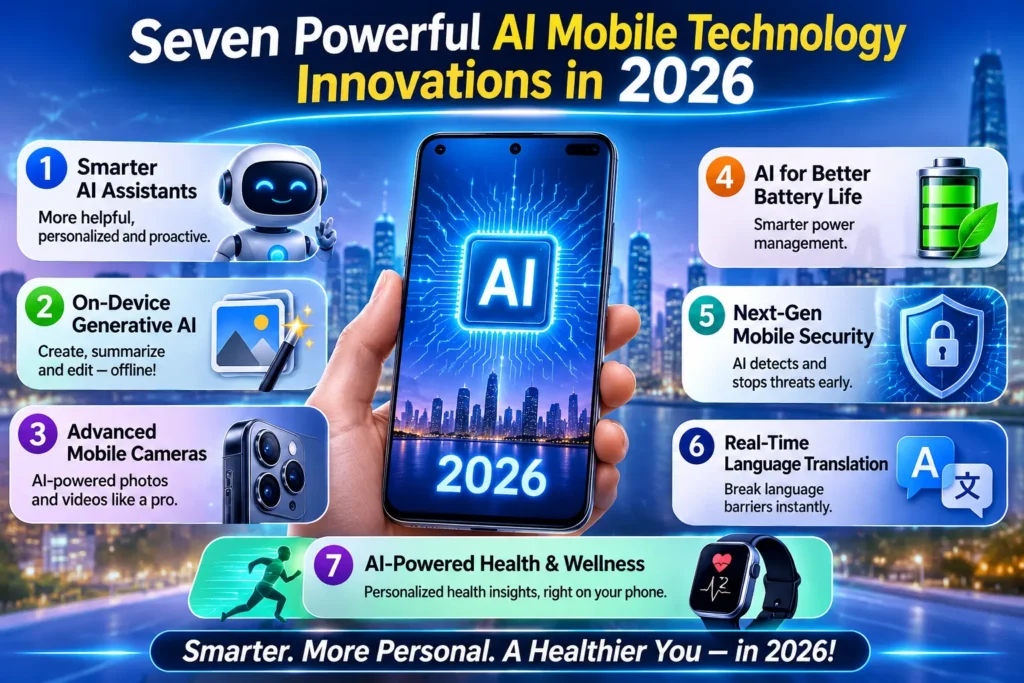
AI is introducing new capabilities that make smartphones more intelligent and useful. Here are seven important innovations transforming mobile technology.
1. AI-Powered Smartphone Assistants
AI-powered smartphone assistants help users complete everyday activities through voice commands and intelligent interactions. These assistants can understand natural language, answer questions, provide recommendations, and support daily tasks.
Key features:
- Voice-controlled smartphone operations.
- Intelligent reminders and scheduling.
- Personalized recommendations.
2. AI Mobile Security and Privacy
Mobile security is another important area where artificial intelligence is making a difference. AI-powered security systems can analyze unusual activity, identify suspicious patterns, and help protect sensitive information.
Important security features:
- Facial recognition.
- Intelligent fraud detection.
- Suspicious application monitoring.
3. On-Device AI and Edge Computing
On-device AI allows smartphones to perform certain intelligent tasks directly on the device instead of depending entirely on cloud servers. Modern mobile processors increasingly include specialized hardware designed to accelerate AI operations.
Key advantages:
- Faster responses for supported tasks.
- More efficient AI processing.
- Better support for offline features.
4. Major Applications of AI Mobile Technology
AI mobile technology is being used across different industries and everyday activities.
| Industry | AI mobile applications |
| Healthcare | Health monitoring and wellness assistance |
| Education | Personalized learning and AI tutors |
| Business | Productivity and workflow automation |
| Banking | Fraud detection and transaction monitoring |
AI in Mobile Healthcare
AI-powered mobile applications can help users track wellness information, organize health records, and understand general health information. Some applications can also analyze supported health measurements.
AI in Mobile Banking
Financial institutions can use AI systems to identify suspicious transactions, detect unusual account activity, and support customer services.
5. Benefits of AI Mobile Technology
AI mobile technology provides several advantages for smartphone users and businesses.
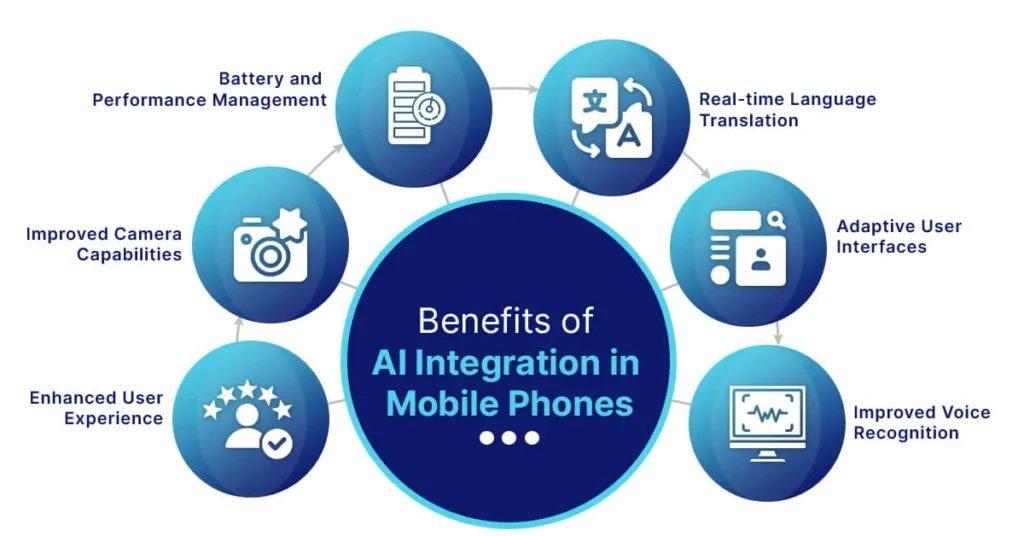
1. Improved Productivity
AI assistants can help users organize schedules, summarize information, and complete everyday activities more efficiently.
2. Better User Experience
Intelligent recommendations and personalized features make smartphones easier to operate.
3. Enhanced Photography
AI-powered cameras can automatically improve lighting, colors, focus, and image quality.
4. Stronger Security Assistance
AI can identify unusual patterns and help detect potential security threats.
5. Smarter Applications
AI applications provide advanced features for writing, learning, designing, and business management.
6. Greater Accessibility
Voice recognition, speech-to-text, and language assistance can help people interact with mobile devices in different ways.
6. Challenges and Disadvantages of AI Mobile Technology
Although AI offers many benefits, it also creates challenges that smartphone users and technology companies should consider.
- Privacy Concerns: AI applications may process sensitive personal information.
- Data Security: Poorly protected systems can expose user information.
- Battery Consumption: Some intensive AI operations can consume additional power.
- Internet Dependency: Cloud-based AI features may require a reliable internet connection.
- High Device Costs: Advanced AI hardware can increase smartphone prices.
- Incorrect Results: AI-generated information may sometimes be inaccurate.
- Digital Dependence: Excessive reliance on AI tools can reduce independent problem-solving.
7. Best AI Mobile Technology Features to Look For
When choosing an AI-powered smartphone, consider these important features:
| Feature | Why it matters |
| AI processor or NPU | Accelerates supported AI tasks |
| Smart camera | Improves photography and editing |
| Voice assistant | Supports hands-free interactions |
| AI translation | Helps with multilingual communication |
| Biometric security | Provides convenient authentication |
8. Popular Companies Driving AI Mobile Innovation
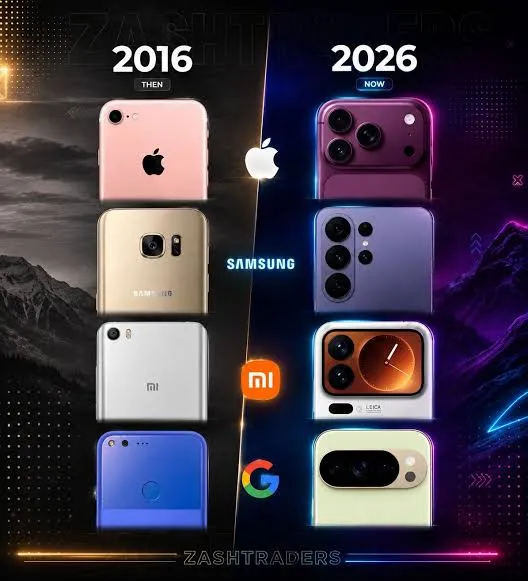
| AppleDevelops Apple Intelligence features for supported iPhones, including writing assistance, image features, and intelligent interactions. | SamsungDevelops Galaxy AI features for supported Galaxy smartphones, including translation, photo editing, and productivity tools. |
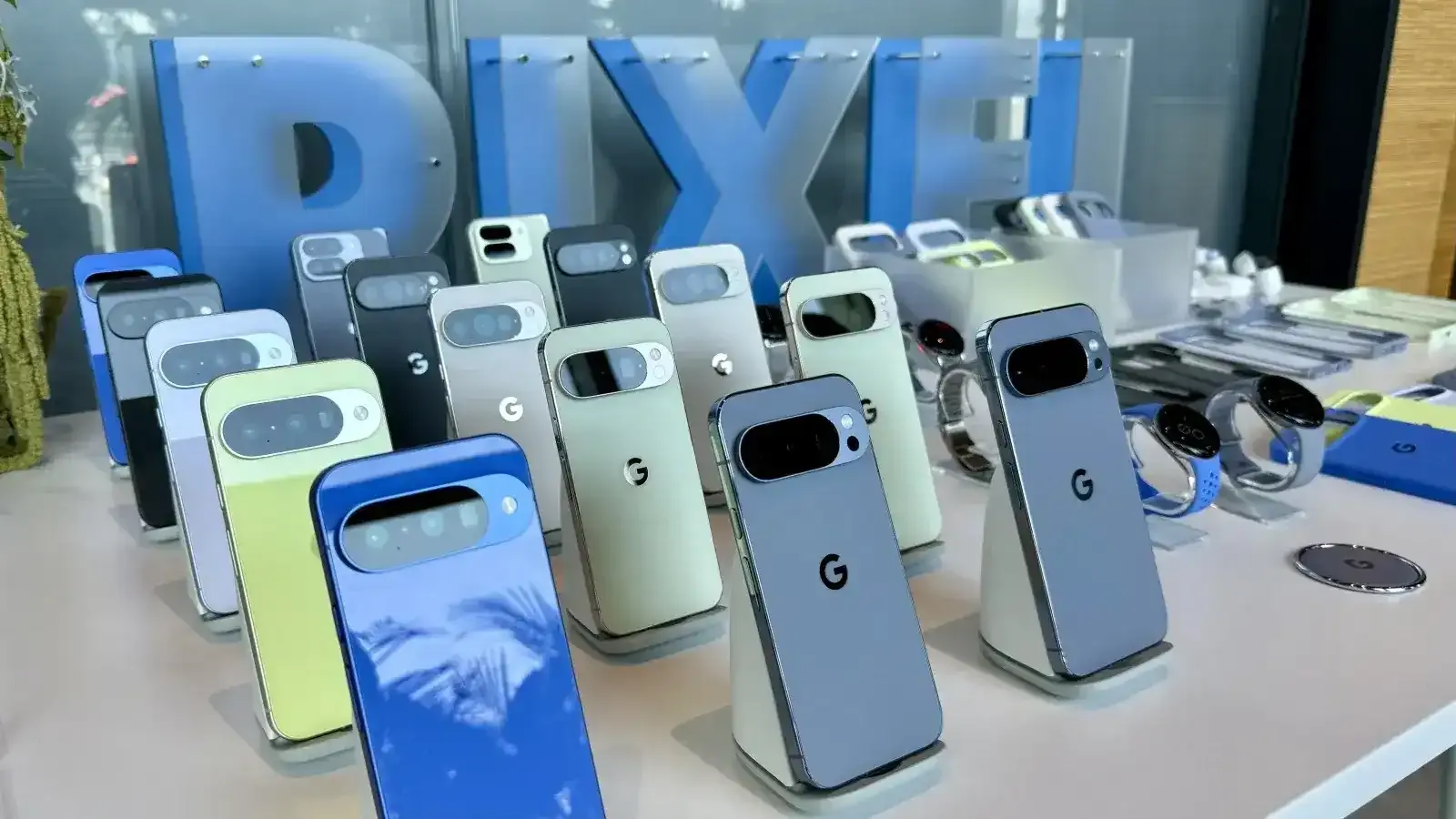
| GoogleDevelops Gemini and AI-powered capabilities across supported Pixel devices and Android services. | QualcommDevelops Snapdragon mobile platforms and processors with AI acceleration capabilities. |
9. Future of AI Mobile Technology in 2026 and Beyond
The future of AI mobile technology is expected to bring more intelligent, personalized, and connected smartphone experiences.
Some important future developments include:
- Advanced AI Assistants: Smartphones may become better at understanding complex requests and completing multiple tasks.
- Smarter Mobile Cameras: AI will continue improving photography, video editing, and image recognition.
- Personal AI Agents: AI agents may help users organize work, manage applications, and complete everyday activities.
- Improved Mobile Healthcare: AI applications may provide more advanced health tracking and wellness support.
- AI-Powered Augmented Reality: Smartphones may offer more intelligent interactive experiences.
- Better Mobile Security: AI-supported systems may improve fraud detection and digital protection.
- Personalized Mobile Experiences: Smartphones may adapt more effectively to individual preferences and needs.
Conclusion
AI Mobile Technology is transforming the smartphone industry in 2026 by introducing intelligent features that improve communication, productivity, photography, security, and personalization. The seven powerful innovations discussed in this guide demonstrate how artificial intelligence is changing the way people interact with mobile devices. From AI-powered assistants and smart cameras to real-time translation and on-device processing, these technologies are creating new opportunities for individuals and businesses. As AI continues to develop, smartphones will become increasingly capable of understanding user needs and supporting everyday tasks. Responsible development, data privacy, and reliable performance will remain essential to the future of mobile technology.
Frequently Asked Questions (FAQs)
Q1. What is AI Mobile Technology?
AI Mobile Technology refers to the integration of artificial intelligence into smartphones and mobile applications to improve automation, personalization, security, and performance.
Q2. How does AI improve smartphones?
AI improves smartphones through intelligent assistants, advanced photography, voice recognition, real-time translation, personalized recommendations, and security features.
Q3. What are the seven powerful innovations in AI mobile technology?
The seven major innovations include AI smartphone assistants, AI cameras, AI applications, mobile security, real-time translation, personalization, and on-device AI.
Q4. Which smartphones use AI technology?
Supported smartphones from Apple, Samsung, Google, and other manufacturers offer different AI-powered features.
Q5. Is AI mobile technology useful for students?
Yes. Students can use AI mobile applications for research assistance, language learning, writing support, educational explanations, and productivity.
Q6. Does AI mobile technology require the internet?
Not always. Some AI features work directly on smartphones, while other features require internet connectivity and cloud-based processing.