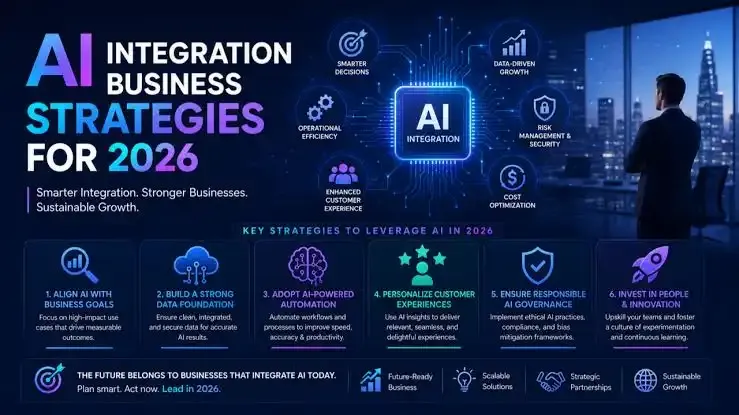
AI integration services are transforming the way businesses operate in 2026.As companies adopt digital technologies, integrating AI into existing software, websites, customer relationship management (CRM) systems, and business workflows has become an important part of digital transformation. Whether a business is a small startup or a large enterprise, AI integration services can help connect different tools, reduce manual work, and support long-term growth.
How Do AI Integration Services Work?
1. Business needs assessment
Identify repetitive tasks, customer service challenges, data problems, and opportunities where AI could create measurable value.
2. Data and system preparation
Review existing software, APIs, databases, data quality, access permissions, and compatibility requirements.
3. Deployment and continuous improvement
Launch the solution, train employees, monitor outcomes, and improve the system as business requirements evolve.
Advantages and Disadvantages of AI Integration Services
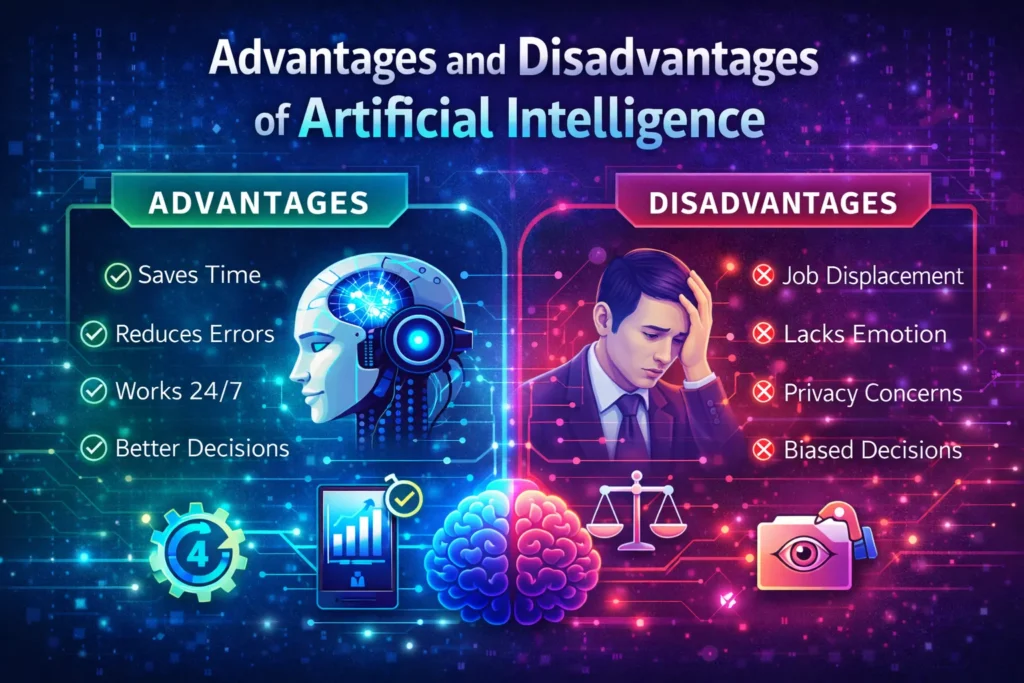
AI integration services offer significant opportunities, but businesses should understand the limitations before investing.
| Advantages | Disadvantages |
| Automates repetitive tasks | Initial implementation can be expensive |
| Improves access to business insights | Poor-quality data can produce unreliable results |
| Supports faster customer responses | AI can generate incorrect information |
| Connects existing business applications | Legacy systems may be difficult to integrate |
| Supports business growth | Usage and maintenance costs can increase |
| Improves workflow consistency | Security and privacy risks require attention |
| Enables new digital services | Employees may need training and process changes |
How Much Do AI Integration Services Cost in 2026?
The cost of AI integration services depends on the complexity of the project, the number of applications involved, the amount of customization, and the AI technology selected.
Typical cost components include:
- Consultation and planning Requirements analysis, workflow mapping, and technical assessment.
- Software and AI usage Model subscriptions, API consumption, and platform licensing.
- Security and testing Access controls, privacy reviews, reliability testing, and monitoring.
- Maintenance and support Updates, troubleshooting, performance evaluation, and ongoing optimization.
- Employee training Helping teams use and supervise the integrated systems effectively.
AI Integration Best Practices for 2026

Define measurable goals: Decide whether the project should reduce processing time, improve customer satisfaction, or increase workflow accuracy.
Prepare high-quality data: Check data accuracy, relevance, consistency, and access permissions.
Use secure APIs: Authenticate connections, apply appropriate permissions, and monitor API activity..
Protect sensitive information: Apply suitable data-retention, privacy, and confidentiality controls.
Keep human oversight: Require review or approval when errors could cause significant financial, legal, operational, or personal harm.
Monitor performance: Track accuracy, response time, usage, failures, and business outcomes.
Plan for failures: Create fallback procedures for unavailable models, incorrect outputs, and interrupted integrations.
Train employees: Explain how to use the system, recognize limitations, and escalate problems.
Future Trends in AI Integration Services
1. AI Agents and Automated Workflows
AI agents can perform multi-step tasks using approved tools, business data, and predefined permissions. Companies will need stronger monitoring and controls as these systems become more capable.
2. Unified Business Data
Organizations are increasingly connecting information from different applications to provide AI systems with relevant, authorized context. Better data integration can support more useful answers and decisions.
3. Natural-Language Interfaces
Employees may increasingly interact with business systems using everyday language rather than navigating complicated menus or writing queries manually.
Final though
Successful implementation requires more than choosing an AI tool. Businesses need clear objectives, suitable integration technology, reliable data, security controls, employee training, and continuous performance monitoring.
Frequently Asked Questions (FAQs)
1. Why are AI integration services important in 2026?
They help businesses incorporate AI into their existing operations, improve productivity, support customer service, and develop more efficient digital workflows.
2. Are AI integration services suitable for small businesses?
Yes. Small businesses can start with focused applications such as website chatbots, lead management, email classification, or document processing without rebuilding their entire technology infrastructure.
4. How long does AI integration take?
The timeline depends on the project. A straightforward integration may take days or weeks, while a complex enterprise deployment can take months.