Overview
The U.S. food recall business reported 1,590 product recalls in fiscal year 2025, highlighting the continuous difficulties in ensuring food safety in a convoluted and international supply chain. These recalls have a variety of causes, representing the various dangers that businesses encounter during the production, processing, and distribution of food.
Products that tested positive for dangerous infections like Listeria monocytogenes or Salmonella prompted some recalls, while others implicated possible contamination with Staphylococcus aureus, norovirus, or even chemical risks like Cesium-137 (Cs-137).
Physical pollutants, mildew, yeast, spoiling, and inadequate pasteurization and sanitation records were the causes of several recalls. Recalls resulted from even seemingly insignificant problems, such as removing soy from a label or misidentifying fish species, underscoring the crucial attention to detail needed in food safety operations.
These instances highlight the enormity and complexity of today’s food safety issues. Businesses must react swiftly to possible threats as ingredients and final goods travel across numerous locations and supply chains.
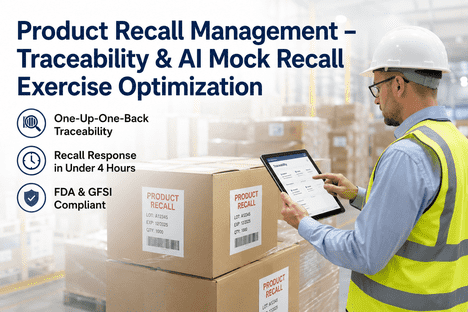
Companies can track impacted items, collaborate with authorities, centralize information, and effectively handle food recalls with the help of food recall management software. Such software helps lower consumer risks and safeguard brand integrity by automating crucial procedures and upholding regulatory compliance.
1. What is food recall management?
The systematic procedure used to take dangerous food items off the market at any point in the food chain, even those that customers already own, is known as food recall management. Designed to reduce health risks and preserve consumer protection when contamination, mislabeling, or other safety issues are found, it is a fundamental component of food safety governance.
Food recall management is fundamentally based on a structured framework that outlines roles, protocols, and routes of communication between the food business and regulatory bodies.
2. National Systems Examples
The Food and Drug Administration (FDA) and the U.S. Department of Agriculture (USDA) are principally responsible for coordinating food recalls in the United States. The USDA is in charge of handling recalls pertaining to meat, poultry, and some egg products, while the FDA is in charge of most food product recalls. To promote transparency, both organizations regularly update their public recall databases.
Together with Health Canada and the Public Health Agency of Canada, the Canadian Food Inspection Agency (CFIA) oversees food recall protocols in Canada. Preventive control planning, traceability, and public notice are key components of the CFIA’s recall system. According to Canadian legislation, food enterprises must maintain thorough product traceability records that are easily accessible in the event of an incident and have recall processes in place.
3. How Food Recalls Are Tracked and Categorized
Finding the recall’s classification and distribution pattern is one of the initial tasks. The scope, urgency, and degree of necessary public communication are determined by these two elements.
1. Classify Recalls (by Risk Level)
Class I: A scenario in which there is a plausible chance that exposure to the product may result in fatalities or major health effects (e.g., Listeria or E. coli infection).
Class II: A product that may have transient or medically reversible health effects or where there is little chance of major repercussions (such as unreported allergies).
Class III: A product that violates manufacturing or labeling requirements but is unlikely to have negative health impacts (e.g., mislabeling or minor packaging problems).
2. Distribution Trends (Recall Scope)
Where the recalled product was sold or shipped—from one area to several nations—is described by the distribution pattern.
The impacted areas are frequently listed in detail in FDA recall data, including:
Only a few states (such as CT, NJ, and VA) are subject to regional recalls.
nationwide recalls in more than 20 states (such as AK, CA, TX, NY, WA, and WY).
Recalls in the United States, Canada, Australia, and Europe
These trends demonstrate how far products can travel before a problem is identified. The recall becomes more complicated the wider the distribution, necessitating cooperation between supply chain partners, retailers, and authorities.
4. How Do I Pick Software for Food Recall Management?
The next stage for any food business operator or regulatory body is to choose the appropriate tools to efficiently manage food recalls after having a clear understanding of what food recall management comprises and how recalls are categorized and monitored.
The foundation of an efficient, transparent, and compliant recall system is modern food recall management software. Selecting the best course of action
might mean the difference between a prompt, controlled recall and a delayed, error-prone reaction that jeopardizes public safety and brand reputation.
A successful recall depends on seven essential components, according to the FAO/WHO Guide for Developing and Improving National Food Recall Systems: a strong legal framework, well-defined roles and responsibilities, efficient communication, strong traceability, trustworthy documentation, training, and frequent system reviews.
Faster, more transparent, and fully compliant recall management is made possible by the best software solutions, which are built to support and reinforce each of these areas.
5. Important Things to Take Into Account When Choosing Food Recall Management Software
1. Assure Complete Traceability Throughout the Food Chain
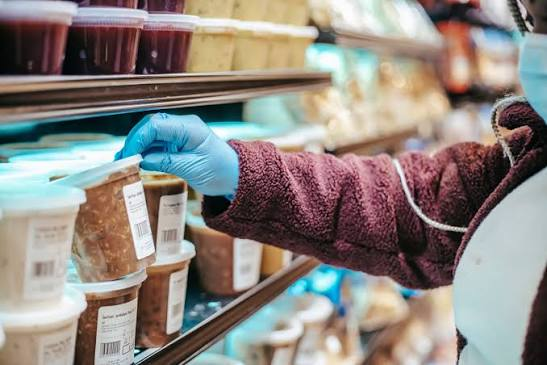
The cornerstone of any successful recall is traceability. The FAO/WHO one-step-forward, one-step-back guideline should be supported by the software, enabling teams to quickly identify impacted batches, track distribution across several sites, and trace ingredients back to their source. Throughout the whole food chain, visibility and control are improved by integration with supply chain or ERP systems.
2. Seek Out Robust Notification and Communication Tools
It’s critical to communicate well. Select software that automatically notifies distributors, customers, regulatory bodies, and internal teams. During a recall event, features like dashboards, email or SMS alerts, and pre-made communication templates guarantee that information is disseminated promptly and precisely.
3. Give documentation and audit readiness first priority.
For post-recall analysis and regulatory compliance, thorough records are essential. Every stage of a recall, from initiation to verification and disposal, should be automatically logged by the ideal system to allow audits and lessons-learned evaluations without requiring extra manual labor.
4. Assess Decision-Support and Risk Assessment Capabilities
The extent of distribution and the seriousness of the risk determine recall decisions. Seek out software that offers capabilities for prioritization, decision trees, and risk classification.
5. Look for Features of International Collaboration and Multiagency
Several authorities are frequently involved in recalls, and networks like INFOSAN are frequently used for cross-border cooperation. To expedite the global response to threats to food safety, the software should facilitate safe collaboration and data sharing with external parties.
6. Evaluate Training Options and Usability
Without appropriate adoption, even the most sophisticated platform will fail. Quality assurance teams and compliance managers can use the system with confidence thanks to user-friendly dashboards, multilingual interfaces, and integrated training courses or simulations.
7. Examine Support, Integration, and Compliance
Make sure the program complies with international food safety regulations, including ISO 22000, HACCP, and Codex Alimentarius. It should allow upgrades in reaction to changing rules, offer round-the-clock support, and connect smoothly with current systems.
6. AI in the Management of Food Recalls
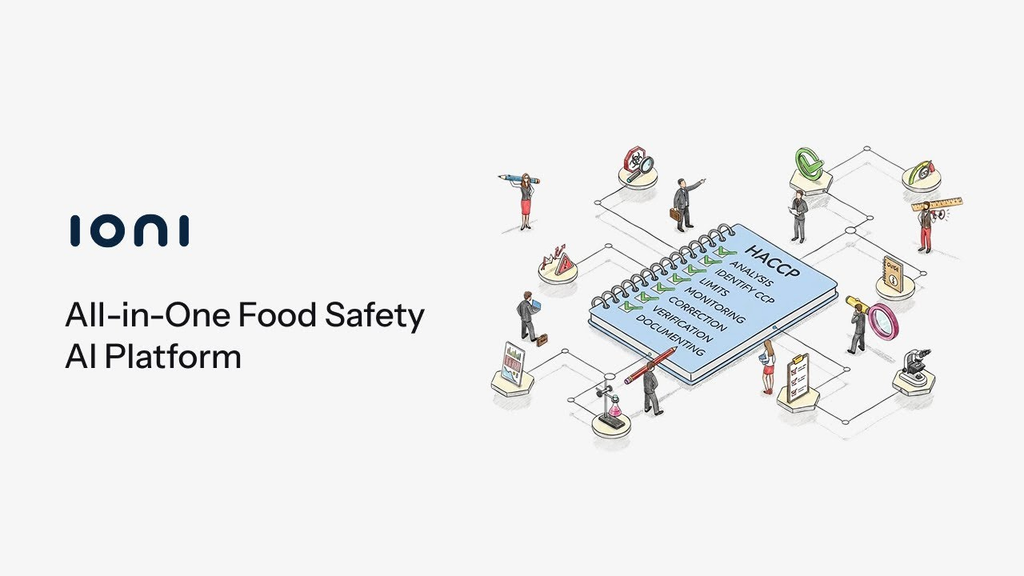
In contemporary food recall management software, artificial intelligence is becoming a crucial distinction. Distribution, traceability, and past recall data can all be analyzed by AI to spot possible threats before they become more serious. It provides support for:
Prioritizing recalls according to possible severity and distribution impact is known as predictive risk assessment.
Automated data analysis: Finding abnormalities, gaps, or discrepancies in documentation.
Intelligent alerts and notifications: Emphasizing the most important tasks for groups and interested parties.
Training and simulation: Conducting realistic recall scenarios to ensure staff readiness.
Regulatory monitoring: recommending process modifications in response to changes in regulations or standards.
Businesses can obtain quicker, more accurate insights by incorporating AI as a specialized component, which enhances recall effectiveness and consumer protection.
Conclusion
Effective food recall management is now essential to maintaining regulatory compliance, safeguarding consumer safety, and preserving brand reputation. By combining real-time monitoring, AI-driven insights, CAPA management, and compliance tracking into a single platform, modern food recall management software like IONI enables businesses to handle food recalls proactively.
Businesses can see every step of the recall process by centralizing procedures, automating notifications, and offering predictive risk assessments. Selecting the appropriate software changes the way recalls are carried out, speeding up reaction times and guaranteeing that corrective and preventive measures are carried out effectively.
Purchasing powerful digital technologies enables food companies to precisely handle product recalls, protect consumers, and improve overall food safety systems.