
A rising number of people think that by implementing a patient-centered care model, healthcare organizations may enhance both the quality of care they offer and the health outcomes of their patients. A NEJM Catalyst study found that patient-centered care has been associated with a number of advantages, such as improved patient-provider interactions, increased trust between patients and clinicians, and improved health outcomes.
Professionals in administration and healthcare who possess the necessary training, education, and expertise can assist in making healthcare facilities more patient-centered. Here is a detailed examination of this care approach, including an explanation of patient-centered care, its advantages, and real-world instances.
1. Patient-Centered Care: What Is It?
In addition to the patient’s symptoms and medical history, patient-centered treatment takes into account the patient’s values and the emotional, social, and financial aspects of their life. It is frequently viewed as a collaboration between a patient and a healthcare professional, where the patient’s viewpoint is just as significant as the physician’s or nurse’s.
Decisions regarding the patient’s care and treatment are heavily influenced by the patient and their family in patient-centered care. The conventional top-down doctor-patient model, in which the healthcare provider makes all of the decisions on behalf of the patient, differs greatly from this method.
2. Patient-Centered Care Fundamentals
In order to address and satisfy patients’ needs, the Picker Institute, a British healthcare research institute, formulated eight fundamental principles of patient-centered care. These guidelines are as follows:
Quick access to medical guidance
Treatment by experts the patient can trust
Continuity of care and smooth transitions
Support and involvement from family and caregivers
Open communication and a focus on self-care
Participation in decision-making and respect for patient choices
Compassion and emotional assistance
Taking into account physical and environmental requirements
Patient-centered care emphasizes caring for the patient at every stage of their diagnosis and treatment, as opposed to concentrating solely on health outcomes as determined by medical specialists. Thus, the registrars.
3. Patient-Centered Care Examples
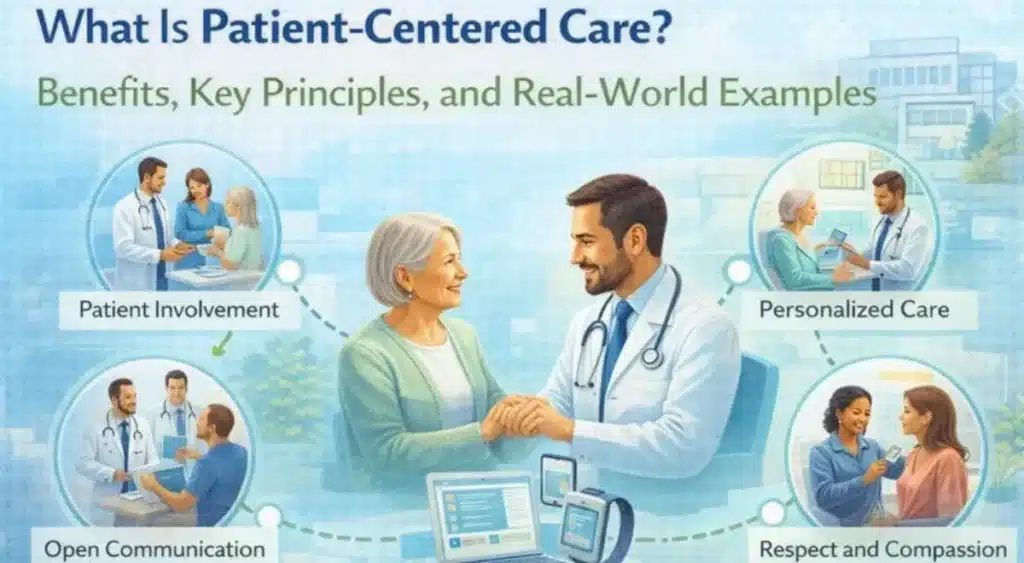
A patient-centered care approach requires cooperation between different kinds of practitioners and can be used in a wide range of healthcare settings. Here are a few instances of patient-centered treatment.
Allowing a patient to decide when to have visitors at the hospital following a procedure is one way to provide patient-centered care. The available visiting hours have historically been set by hospitals. A patient-centered approach, on the other hand, allows the patient to decide who can see them and when. To support the family’s well-being and bonding with the infant, a maternity ward, for instance, might be set up to let family members spend time with a mother and child at any time of day.
4. What Are the Advantages for Patients and Practitioners of a Patient-Centered Care Model?
Adopting a patient-centered care strategy has many advantages. It can significantly enhance the lives and health of patients, healthcare professionals, and even the healthcare system as a whole.
Advantages for Patients
Instead of automatically referring patients for additional testing or treatment, a patient-centered strategy, as its definition suggests, helps patients feel heard and cared for. The concept focuses on patients’ overall assessment of the care they received rather than measurements that simply gauge the effectiveness of a particular treatment. This implies that the patient’s overall experience with the healthcare system is more important than the results of a specific course of treatment.
Additionally, patient-centered care assists patients and their families in managing any psychological challenges—such as doubt or fear—that may arise from their diagnosis or course of treatment.
Advantages for Professionals
Healthcare professionals benefit from the patient-centered care model because it enables them to spend more time with patients and ultimately do their jobs more effectively. Certain healthcare models compensate practitioners based on how many patients they visit rather than the quality of care they deliver. Practitioners may experience increased stress and workloads as a result, which limits their ability to provide all of their patients with the best care possible. Patient-centered care can enable more customized therapy, which is advantageous for professionals as
5. Advantages for Medical Systems
The patient-centered approach lowers costs and increases efficiency, which benefits the entire healthcare system. It can lessen the need for pointless testing and hospital referrals by concentrating on easier fixes first. This is meant to lessen the prevalent practice of overtesting and overreferring patients who could receive better care from their primary care physician, not to refuse additional diagnostics or treatments to those who require them.
6. Promoting a Model of Patient-Centered Care
Adopting a patient-centered approach to current healthcare procedures is a complicated process that calls for collaboration from people at many different levels of a healthcare organization. By striking a balance between patient-centered care and other goals and making sure that any system-level changes boost productivity and enhance care outcomes, healthcare administrators may contribute to this shift.
The online Master of Health Administration (MHA) program at Tulane University is a good option for anyone wishing to help healthcare companies succeed. The curriculum at Tulane can provide you with the knowledge and abilities necessary to make data-driven decisions that can significantly affect the performance of a healthcare organization.