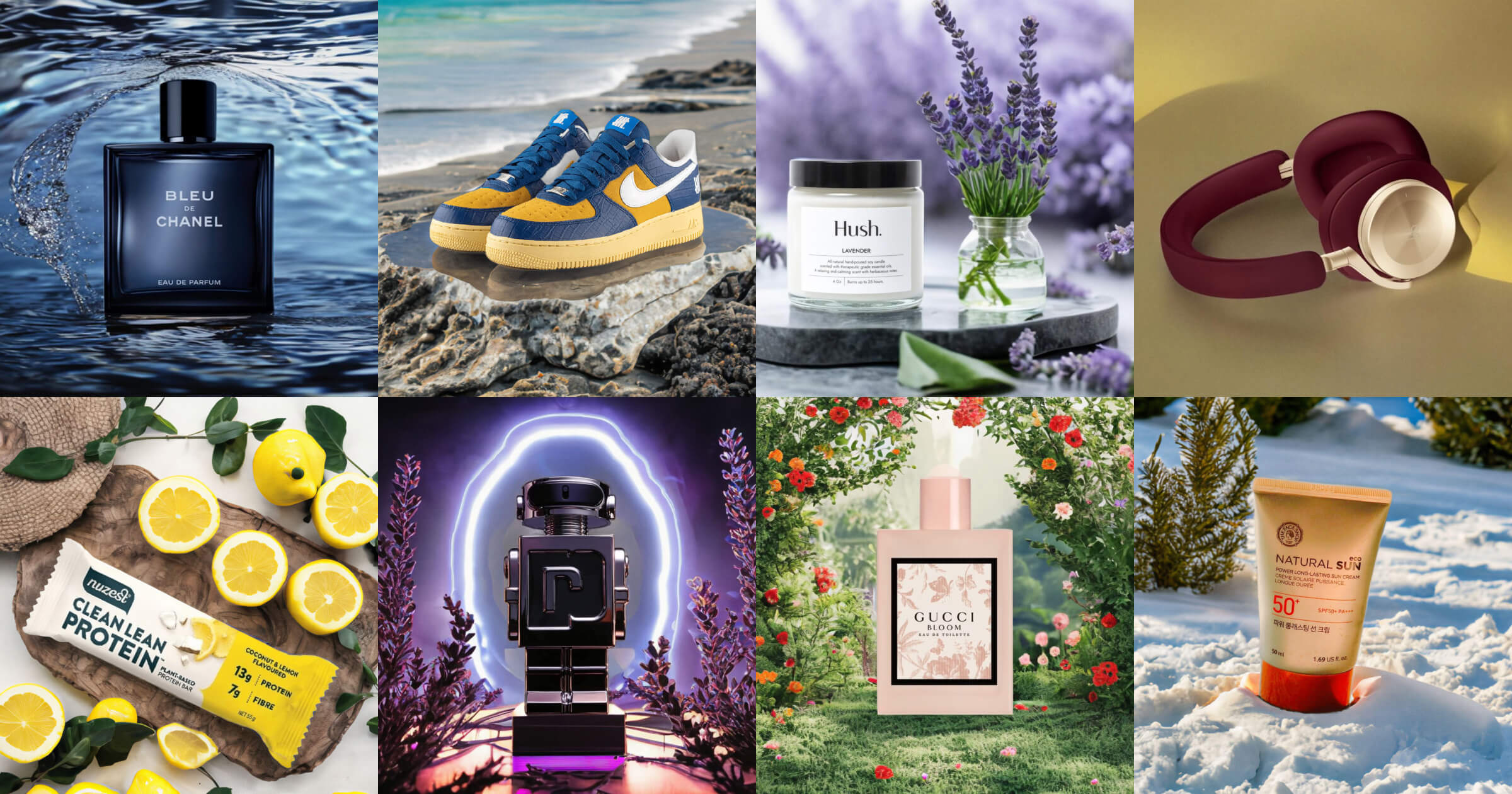
AI product photography is the use of artificial intelligence to create, edit, enhance, and adapt commercial product images. Instead of relying entirely on a physical studio, photographer, props, lighting, and manual retouching, businesses can start with a real product photo and use AI to generate backgrounds, lifestyle scenes, lighting variations, product compositions, and marketplace-ready images.
1. How AI Product Photography Works
The most reliable workflows begin with a clear photograph of the actual product. This helps preserve the product’s shape, color, packaging, labels, and other important characteristics.
Step-by-step process
- Take a source photo
- Use a smartphone or camera.
- Keep the product sharply focused.
- Use good, even lighting.
- Photograph the entire product.
- Improve the product image
AI can help with:- Lighting
- Exposure
- Sharpness
- Color balance
- Noise reduction
- Resolution
- Minor imperfections
- Generate a new background
For example:
- White studio
- Luxury marble
- Kitchen counter
- Office desk
- Outdoor environment
- Bedroom
- Beach
- Seasonal setting
2. What AI Product Photography Can Create
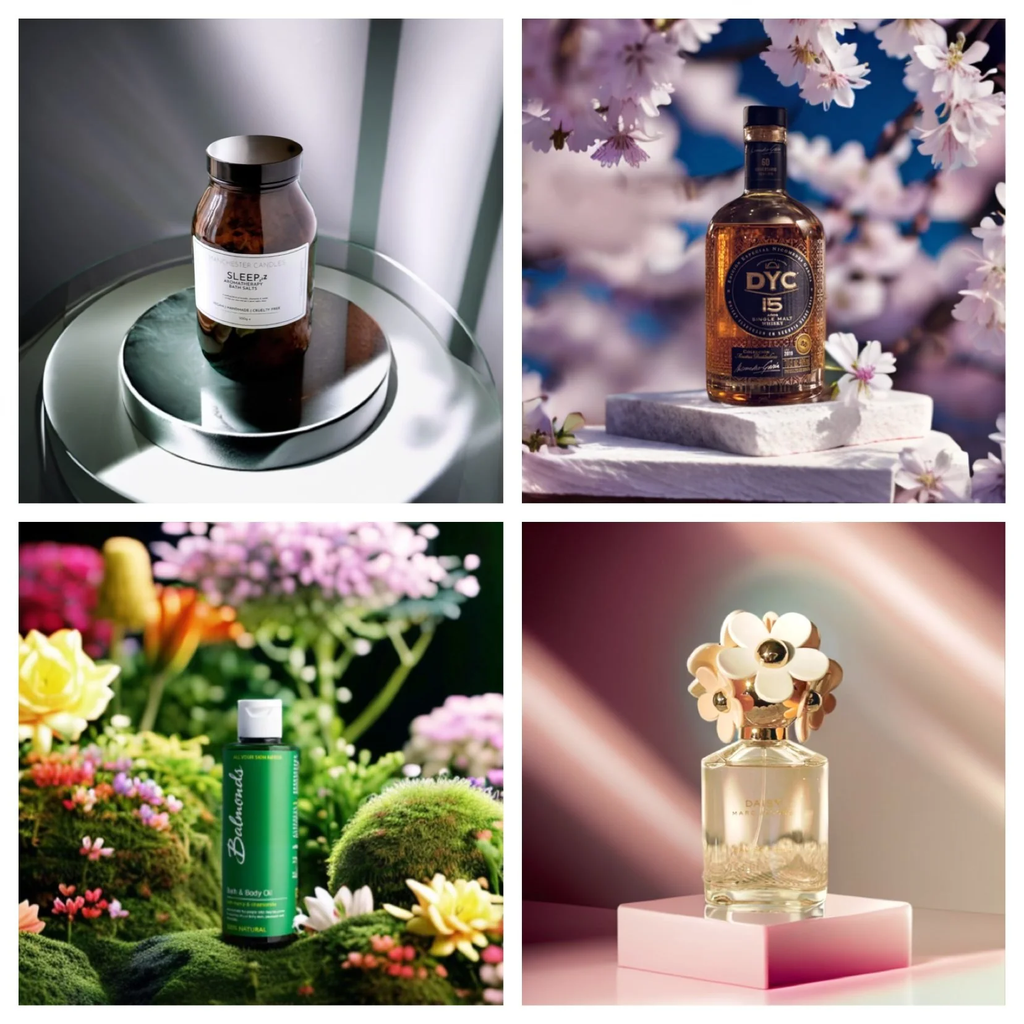
AI can produce many different types of commercial imagery.
| Image Type | Main Purpose |
| White-background product photo | Amazon/ecommerce listings |
| Studio product shot | Professional catalog |
| Lifestyle photo | Show product in real-world use |
| Hero image | Website/product-page headline |
| Social media image | Instagram, Facebook, TikTok |
| Seasonal image | Christmas, summer, Valentine’s Day, etc. |
| On-model image | Fashion and accessories |
| Flat lay | Beauty, food, fashion, accessories |
| Close-up/macro | Show product details |
| Promotional creative | Ads and campaigns |
| Product comparison | Feature-focused marketing |
| UGC-style image | Social advertising |
| Product video | TikTok, Reels, ads |
3. Major Benefits
Lower production costs
Traditional product photography can involve photographers, studios, equipment, models, props, travel, and editing. AI can reduce much of this production overhead. Current industry comparisons report traditional photography costs ranging from tens to hundreds of dollars per image depending on the production, while AI workflows can substantially reduce the marginal cost.
Faster production
Instead of waiting days or weeks for a traditional shoot and post-production, AI workflows can produce initial variations within minutes or even seconds, depending on the tool and workflow.
Easy background changes
You can keep the same product while changing the environment:
4. Best Products for AI Photography
AI product photography works particularly well for:
- Cosmetics
- Skincare
- Clothing
- Shoes
- Jewelry
- Home décor
- Kitchen products
- Consumer electronics
- Accessories
- Bags
- Furniture
- Food packaging
- Small household products
- Beauty products
Fashion is particularly suitable for AI because clothing can be placed onto virtual models, although fit, fabric behavior, logos, and exact garment details still require careful review
5. Products That Need Extra Care
AI should be used more cautiously for products where exact visual accuracy is critical.
Examples include:
- Pharmaceuticals
- Medical devices
- Products with legal labels
- Jewelry with precise hallmarks
- Products containing serial numbers
- Highly technical equipment
- Luxury products
- Products with intricate textures
- Packaging with lots of small text
AI can introduce subtle inaccuracies into labels, typography, dimensions, textures, or other details. Human quality control is therefore important for commercial imagery.
6. Popular AI Product Photography Tools in 2026

The market includes dedicated e-commerce tools as well as general-purpose AI image generators.
Photoroom
- Background removal
- Product cleanup
- Ecommerce images
- Background generation
- Quick catalog work
It is frequently recommended as a dedicated e-commerce product-photography solution.
Adobe Firefly
- Generative editing
- Background replacement
- Creative workflows
- Teams already using Adobe Creative Cloud
Pebblely
- Simple product images
- Lifestyle backgrounds
- Small e-commerce businesses
Flair AI
- Creative product compositions
- Art direction
- Advertising visuals
Claid AI
- Automated product-image processing
- Ecommerce workflows
- API-based image production
Midjourney
Good for:
- Creative concepts
- Premium campaign ideas
- Artistic environments
7. AI Product Photography vs Traditional Photography
| Feature | AI Photography | Traditional Photography |
| Studio required | Usually not. | Yes |
| Photographer required | Usually not. | Usually yes |
| Physical props | Optional | Often required |
| Speed | Very fast | Slower |
| Background changes | Easy | Requires another setup/edit |
| Scaling | Excellent | More difficult |
| Creative variations | Very high | Limited by production budget |
| Product accuracy | Requires checking | Usually very high |
| Physical texture accuracy | Can vary | Excellent |
| Luxury campaigns | Sometimes unsuitable | Often preferred |
| Catalog production | Excellent | Expensive at scale |
| Human review | Recommended | Recommended |
8. Best AI Product Photography Workflow
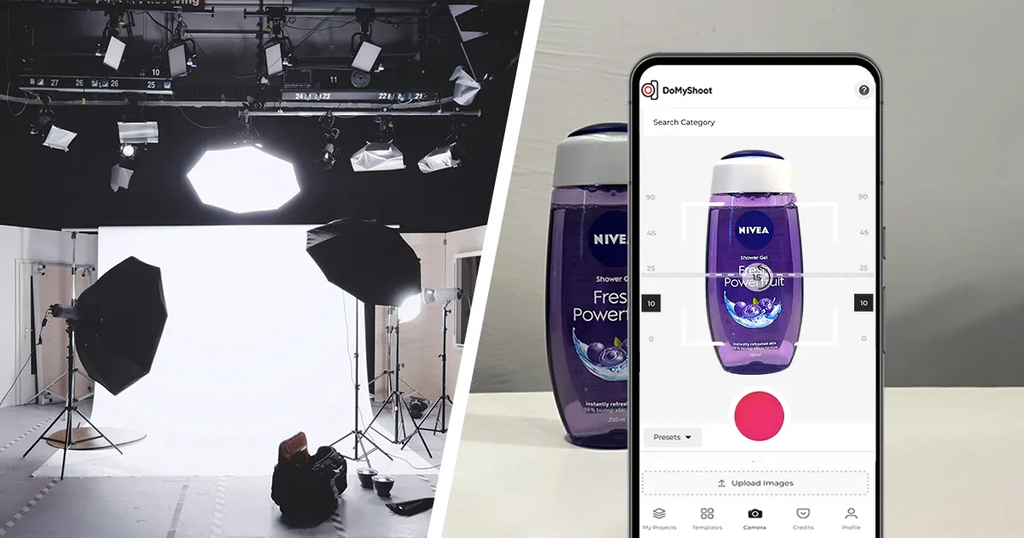
A professional workflow can be structured like this:
1. Photograph the real product
↓
2. Clean and enhance the source image
↓
3. Remove background
↓
4. Generate white-background version
↓
5. Generate lifestyle environments
↓
6. Generate different compositions
↓
7. Create advertising/social versions
↓
8. Check product accuracy
↓
9. Retouch manually where necessary
↓
10. Export marketplace-specific images
9. Cost Considerations
AI product photography can significantly reduce production costs, but the actual price depends on the following:
- AI platform
- Number of generations
- Resolution
- API usage
- Number of SKUs
- Human retouching
- Commercial licensing
- Team size
- Automation requirements
Some current tools target solo sellers with relatively inexpensive subscriptions, while enterprise workflows can cost considerably more because of APIs, batch processing, collaboration and higher usage
Final Takeaway
AI product photography is best understood as a production tool, not simply an image generator. It can dramatically speed up e-commerce photography, reduce production costs, create lifestyle scenes, generate advertising variations, and scale visual content across large product catalogs.
The strongest approach in 2026 is generally real product reference + AI generation/editing + human quality control. AI is excellent at changing the environment and creating variations, but businesses should still verify packaging, labels, dimensions, colors, materials, and other product-critical details before publishing.