The Zanus AI system is an artificial intelligence platform designed to help businesses automate operations, manage company information, support customers, and perform everyday tasks. Its products include private AI servers, business AI software, and an AI-powered front-office service.
1. What Is the Zanus AI System?
Zanus AI focuses on making AI available for business operations while giving organizations greater control over their data and workflows.
Unlike a general-purpose chatbot, a business AI system can connect AI capabilities with company documents, customer information, internal procedures, and automated tasks.
According to the company’s product information, Zanus offers two main approaches:
- Private AI infrastructure: Hardware and software that businesses can operate on their own premises.
- Zanus Front Office: A subscription-based service that handles customer-facing activities such as answering questions, qualifying leads, preparing quotes, and booking appointments.
2. Main Features of Zanus AI

Private AI Server
Runs AI software on dedicated business hardware. This can help organizations retain greater control over their information and reduce dependence on external AI services.
Zanus AI Operating System
Brings together AI assistants, document management, customer records, scheduling, and workflow automation in a unified business environment.
AI Front Office
Supports customer conversations through channels such as website chat, phone, voice, and email, with features for lead follow-up, product demonstrations, quotations, and appointment scheduling.
Business Knowledge Management
Helps teams organize and search internal information, including documents and company procedures, so employees can find relevant answers more efficiently.
3. How Does Zanus AI Work?
Step 1: Connect business information.
The system can ingest supported company documents and other authorized data sources to build a searchable knowledge base.
Step 2: Process information with AI
AI models use the available information to answer questions, summarize documents, and assist with business decisions.
Step 3: Automate workflows
Depending on configuration, the system can support tasks such as managing customer inquiries, scheduling work, drafting documents, and triggering automations.
Step 4: Monitor results
Staff can review outputs, track work, and supervise actions according to the organization’s access controls and approval procedures.
4. Benefits of the Zanus AI System
Improved productivity: Helps reduce repetitive administrative work.
Data control: Private deployment can give organizations greater control over sensitive information.
Business automation: Supports repeatable workflows across teams.
Faster information retrieval: Makes internal documents and procedures easier to search.
Customer support: AI-powered front-office tools can respond to inquiries outside normal business hours.
Centralized operations: Combines several business functions within a connected software environment.
Potential cost savings: Automation may reduce manual effort, although actual
5. Industries That Can Use Zanus AI
Business and professional services
Automate document preparation, customer management, internal knowledge searches, and routine office workflows.
Recruitment and staffing
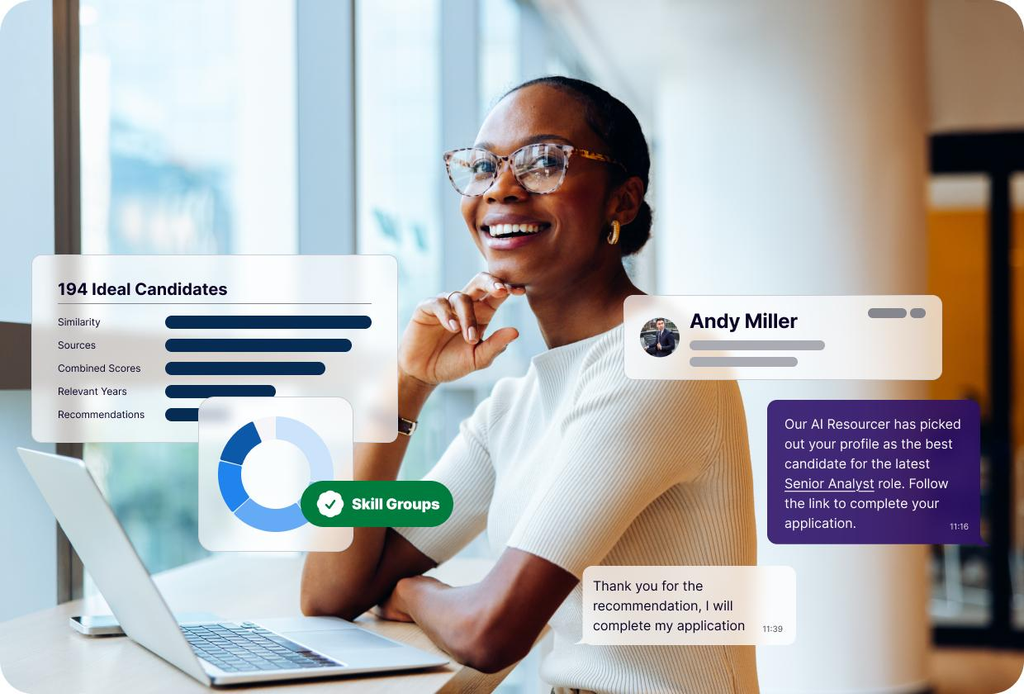
Assist with résumé parsing, candidate records, job orders, interview scheduling, and recruitment workflows.
Healthcare administration
Potentially assist with administrative documents and internal knowledge retrieval. Healthcare organizations must independently verify applicable privacy, security, and regulatory requirements.
Sales and customer service
Support lead qualification, customer questions, quotations, follow-ups, and appointment booking.
IT and enterprise operations
Support internal documentation, technical knowledge management, and controlled automation for business teams.
6. Zanus AI vs. Traditional Cloud AI

| Feature | Zanus Private AI | Traditional cloud AI |
| Deployment | On-premises option | Hosted by a provider |
| Data control | Greater direct control with suitable configuration | Depends on provider and contract |
| Internet dependence | Can support local operation | Usually requires internet access |
| Initial investment | May require dedicated hardware | Often lower upfront cost |
| Ongoing costs | Hardware, maintenance, and operating costs | Subscription or usage-based fees |
| Customization | Can be configured around internal data and workflows | Depends on the platform |
| Maintenance | Businesses may manage local infrastructure. | The provider manages much of the infrastructure. |
Neither approach is automatically better for every business. Private AI can suit organizations with strict data-control requirements, while cloud AI may be easier to deploy and scale for smaller teams.
7. How Much Does Zanus AI Cost?
Zanus AI offers different products and configurations, so there is no single price for the entire system.
- Private AI servers: Hardware and software costs depend on the selected configuration.
- Business AI software: Pricing may vary by industry edition and software package.
- Zanus Front Office: Offered as a subscription service.
- Implementation and support: Costs and requirements should be confirmed with the company.
8. Limitations and Things to Check
Before purchasing, businesses should evaluate:
- Hardware requirements: Ensure the selected server can handle the required AI workloads.
- Data security: Confirm access controls, encryption, backups, and data retention policies.
- AI accuracy: Test responses using real company documents and business scenarios.
- Integration compatibility: Check support for existing CRM, databases, email, and business applications.
- Total ownership cost: Include maintenance, upgrades, energy use, support, and future expansion.
- Vendor claims: Independently verify performance, compliance, certifications, and claimed savings.
- Human oversight: Require approval for consequential actions such as financial transactions or sensitive customer decisions.
Conclusion
The Zanus AI system represents a business-focused approach to artificial intelligence, combining private AI servers, AI operating software, and customer-facing automation. It can help organizations explore more efficient ways to manage information, support customers, and automate repetitive tasks. Before adopting it, businesses should compare its costs, security arrangements, integrations, and real-world performance with alternative AI platforms.