1. AI Make-or-Buy Decision: Build or Buy an AI Solution?
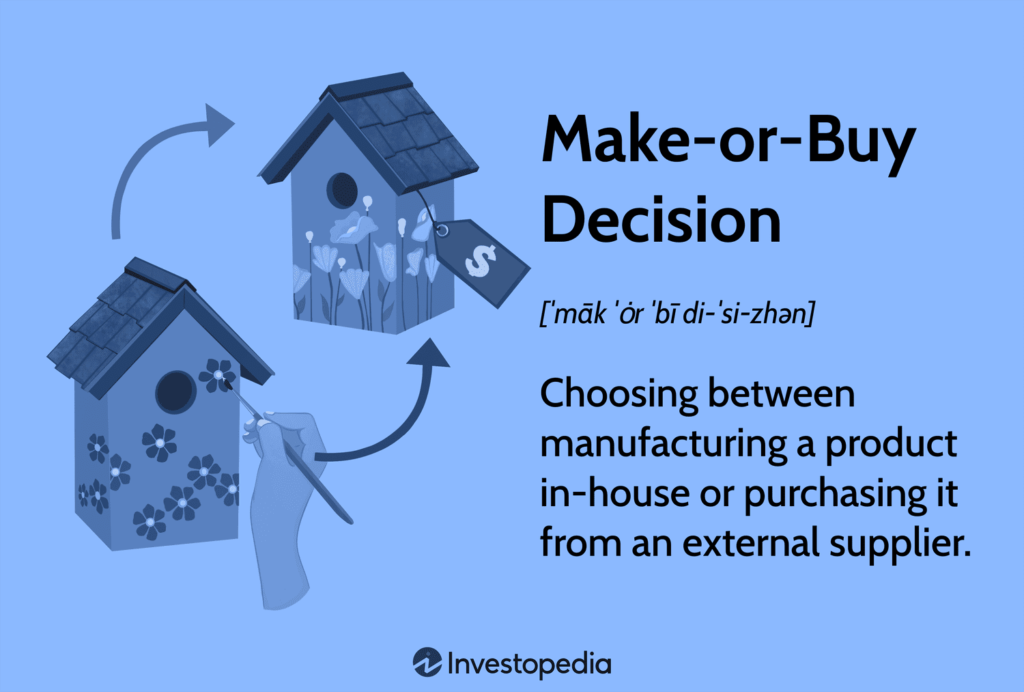
AI Make-or-Buy: Digital transformation powered by AI is no longer optional for companies that want to remain competitive. However, choosing to adopt artificial intelligence is only the first step. One of the most important strategic questions businesses—from SMEs to large enterprises across the DACH region—must answer is whether to develop an AI solution internally (make) or purchase a ready-made AI solution (buy).
The make-or-buy decision is far more than a technical choice. It is a critical part of an organization’s AI strategy, with significant implications for costs, resources, scalability, security, and long-term competitiveness. The wrong decision can result in wasted investment, delayed implementation, and missed opportunities. The right approach, however, can help organizations improve efficiency, accelerate innovation, and create a sustainable competitive advantage.
This article explores the key factors businesses should consider when deciding whether to make or buy AI solutions. It provides a practical framework for evaluating costs, technical capabilities, customization requirements, data considerations, implementation time, and long-term business value—helping organizations choose the approach that best supports their AI strategy and future growth.
2. The Strategic Dilemma: Why the AI Make-or-Buy Decision Matters
Introducing AI solutions for businesses is a major strategic investment, comparable to expanding production capacity or entering a new market. Developing a customized AI solution can be attractive because it offers greater control, flexibility, and the opportunity to create a solution tailored to specific business requirements.
At the same time, the market offers a growing range of powerful, ready-to-use AI platforms and applications. These solutions can help companies deploy AI faster, reduce development costs, and gain access to advanced technologies without building an in-house team of AI specialists.
There is no universal answer to the AI make-or-buy decision. The right choice depends on an organization’s objectives, resources, technical requirements, budget, and, most importantly, its AI maturity.
A company that is just beginning to use ChatGPT in the workplace will have very different needs from an industrial organization that has already implemented AI-powered predictive maintenance across its production operations. Understanding these differences is essential for choosing whether to build an AI solution internally, purchase an existing solution, or combine both approaches.
3. The Make Approach: When In-House AI Development Becomes a Strategic Advantage

Developing an AI solution internally is ambitious and resource-intensive, but in certain situations it can become a major strategic advantage. For companies whose AI capabilities are closely connected to their products, processes, or competitive position, building in-house may provide greater value than relying on an off-the-shelf solution.
Main Reasons for In-House AI Development (“Make”)
- Unique competitive advantage: If an AI application is central to your business model and delivers a distinctive customer benefit that competitors cannot easily replicate, developing it internally can create a strong competitive advantage. For example, a financial services company could develop a proprietary risk assessment model using decades of specialized internal data.
- Highly specific requirements and data: Standard AI solutions may not adequately support highly specialized processes or unique data structures. When proprietary data is a critical business asset, maintaining greater control over how that data is processed and used can be essential.
- Maximum control and flexibility: In-house development provides greater control over the AI architecture, model development, security, data management, integrations, and future enhancements. Organizations can adapt the system as business requirements change without depending entirely on a third-party provider.
- Building internal AI expertise: Developing AI internally can help organizations establish long-term expertise in data science, machine learning, and AI engineering. This can turn AI from a purchased technology into a strategic organizational capability.
4. The Challenges of the Make Approach
The advantages of building AI internally come with significant costs and responsibilities. Companies need substantial upfront investment, specialized professionals such as data scientists and ML engineers, reliable data infrastructure, and ongoing resources for maintenance and improvement.
Development can also take considerably longer than deploying an existing solution, while technical complexity and changing AI technologies can increase project risk. For this reason, organizations should carefully evaluate whether the expected strategic value of an in-house AI solution justifies the required investment, time, and expertise.
5. The Buy Approach: Why Ready-Made AI Solutions Are Often the Smarter Choice
For many companies, particularly SMEs, purchasing an established AI solution can be a more practical and cost-effective alternative to developing one internally. The market now offers a wide range of ready-made AI platforms and applications, covering use cases from AI process optimization and customer service automation to AI-powered knowledge management and predictive maintenance.
6. Main Reasons to Choose a Ready-Made AI Solution (“Buy”)
- Fast implementation and time-to-market: Instead of spending months or years developing an AI system, companies can often deploy a proven solution within weeks or months. Faster implementation allows organizations to start generating value sooner and respond more quickly to changing market demands.
- Proven solutions for common business challenges: Many organizations face similar operational problems. Established AI solutions are already available for use cases such as customer service automation, logistics optimization, document processing, forecasting, and predictive maintenance. Using a proven product can reduce the need to reinvent the technology internally.
- Lower costs and reduced risks: Purchasing an existing solution typically requires less upfront investment than building an AI system from scratch. Subscription or licensing models can also make costs easier to forecast. Because the technology has already been developed and tested, companies may also reduce some of the technical and implementation risks associated with internal development.
- Greater focus on the core business: Building and maintaining an AI platform requires specialized talent and ongoing technical resources. By purchasing a ready-made solution, companies can allow internal teams to focus on their core competencies while relying on an experienced technology provider for much of the AI infrastructure and development.
- Access to advanced technology: AI providers continuously invest in research, development, infrastructure, and product improvements. Buying an established solution can give businesses access to advanced capabilities without requiring them to fund and maintain an equivalent in-house research and development operation.
7. The Limitations of the Buy Approach
The buy approach is not automatically the best choice. Ready-made solutions may offer limited customization, integration challenges, vendor dependence, or concerns about data security and compliance. Companies may also have less control over product roadmaps, pricing changes, and future features.
Therefore, before selecting a solution, organizations should evaluate not only the purchase price but also integration requirements, data protection, scalability, customization options, vendor reliability, and the total cost of ownership (TCO).
Conclusion
important strategic consideration for companies across the DACH region. There is no universal approach. The right choice depends on an organization’s goals, data, resources, AI maturity, and long-term competitive strategy. Make: Best suited to organizations with unique data, highly specialized processes, and AI capabilities that represent a core competitive advantage. It requires significant investment, technical expertise, and a long-term commitment to development and maintenance. Buy: Often the most practical option for companies seeking proven solutions to common business challenges. Ready-made AI tools can accelerate implementation, reduce development costs, and allow businesses to focus on their core operations. Hybrid: A combination of both approaches can provide a flexible middle ground. Companies can use established AI platforms for standard capabilities while developing proprietary solutions for areas where differentiation and specialized expertise matter most. Ultimately, successful AI adoption begins with honest self-assessment and a clear, data-driven strategy. By evaluating business objectives, technical requirements, costs, risks, and internal capabilities, organizations can determine which approach delivers the greatest long-term value. This strategic foundation can help companies move beyond experimentation and build AI capabilities that support sustainable efficiency, innovation, and competitive advantage.