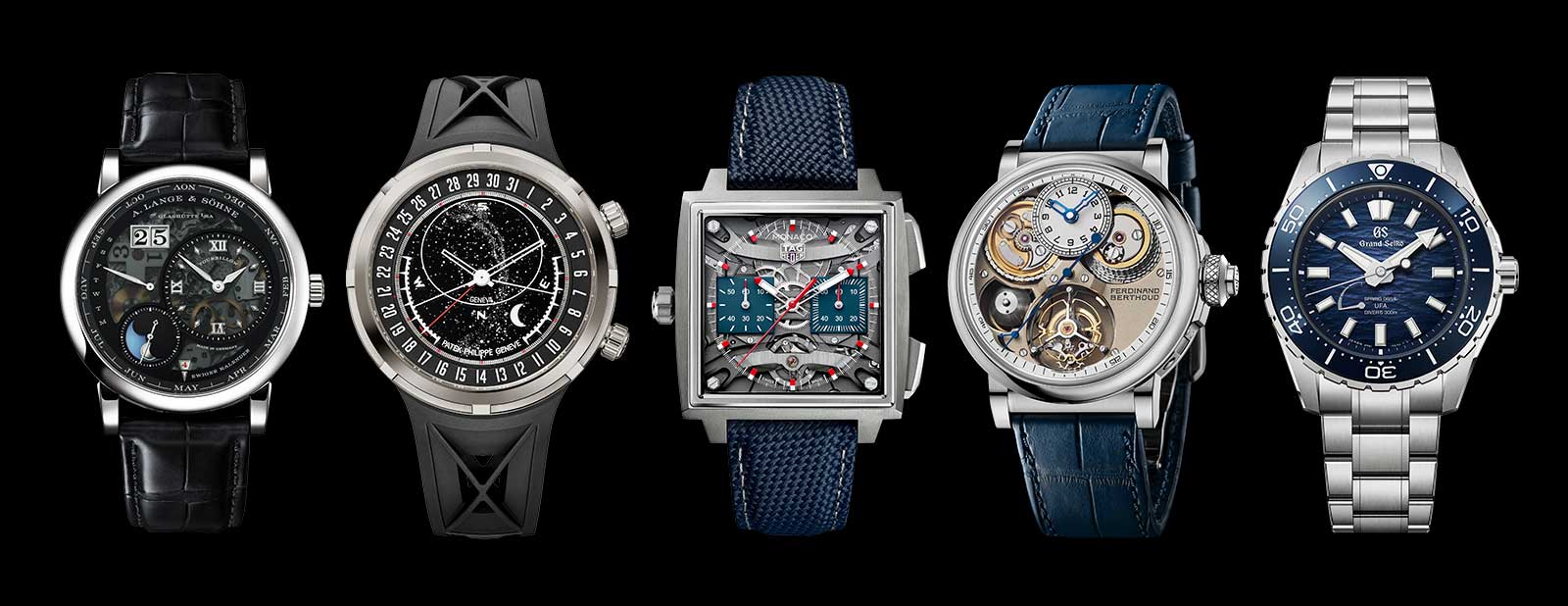
AI watches are evolving from simple notification devices into intelligent, personalized wearable assistants. In 2026, the biggest shift is the move toward on-device AI, personalized health insights, AI fitness coaching, voice assistants, and real-time contextual support.
1. On-Device AI Becomes a Major Trend
One of the most important developments is Edge AI—processing AI tasks directly on the smartwatch rather than relying entirely on cloud servers. Counterpoint reported that Edge AI-capable smartwatch shipments grew 70% year over year in Q1 2026, reaching 25% of the smartwatch market. The company expects penetration to exceed 32% during 2026.
This can provide:
- Faster AI responses
- Better privacy
- Reduced dependence on a smartphone
- Real-time health and safety analysis
- More efficient battery usage
2. AI-Powered Health Monitoring
Health monitoring is becoming more intelligent. Instead of simply collecting heart rate, sleep, activity, and other measurements, AI can analyze patterns and turn them into personalized insights. Modern wearable AI is increasingly focused on interpreting continuous sensor data rather than simply displaying numbers. Research published in 2026 is also exploring conversational systems that combine wearable sensor information with AI-generated wellbeing guidance.
Potential applications include:
- Heart-rate pattern analysis
- Sleep insights
- Stress monitoring
- Activity recommendations
- Recovery analysis
- Personalized wellness suggestions
- Early-warning health signals
Important: consumer AI watches should not automatically be treated as medical diagnostic devices. Some emerging measurements, such as smartwatch-based blood-pressure estimation, still require broader validation before they can be considered clinically reliable.
3. AI Fitness Coaching
Another major trend is the transition from fitness tracking to AI fitness coaching. Rather than saying how many steps or calories a user has completed, an AI watch can potentially interpret activity patterns and provide customized recommendations.
Examples include:
- Personalized running plans
- Workout recommendations
- Recovery suggestions
- Training-load analysis
- Goal tracking
- Real-time coaching
Current 2026 smartwatches are already incorporating AI-assisted running and wellness features.
4. AI Voice Assistants on Your Wrist
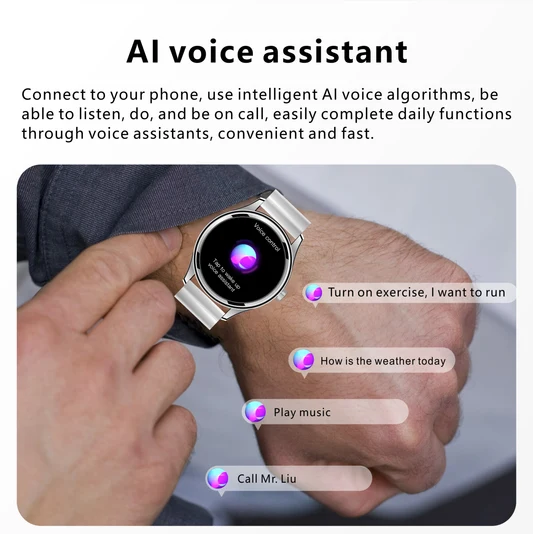
Voice interaction is becoming increasingly important. AI watches can connect users with assistants capable of answering questions, managing tasks, interpreting information, and controlling compatible devices.
The trend is moving beyond basic voice commands toward context-aware wearable assistants that understand what the user is doing and provide more relevant responses.
For example, an AI watch could potentially help with:
- Reminders
- Messages
- Navigation
- Translations
- Weather information
- Calendar tasks
- Fitness questions
The 2026 Moto Watch Ultra, for example, combines Wear OS with Gemini and Motorola’s Qira assistant.
5. Personalized AI Experiences
Personalization is becoming a defining feature of wearable AI. Instead of providing identical recommendations to everyone, AI can analyze an individual’s historical patterns and preferences.
For example:
Traditional smartwatch:
“You slept 6 hours.”
AI-powered smartwatch:
“Your sleep was shorter than your recent average. Consider reducing intense activity today.”
The goal is to turn raw wearable data into actionable personal insights.
6. Privacy and Local Processing
As watches collect increasingly sensitive health and behavioral information, privacy is becoming more important. On-device AI can reduce the need to send every piece of sensor information to cloud servers. This makes local processing attractive for applications involving health, safety, and personal data. Counterpoint describes Edge AI wearables as a shift toward systems that can sense, interpret, and act locally in real time while improving privacy and power efficiency.
7. Smarter Safety Features
AI is also strengthening smartwatch safety capabilities.
Potential and existing applications include:
- Fall detection
- Abnormal heart-rate alerts
- Emergency notifications
- Location sharing
- Activity anomaly detection
- Personalized safety alerts
Local AI processing can be particularly valuable when an immediate response is required.
8. AI + Wearable Ecosystems
AI watches are increasingly becoming part of larger technology ecosystems.
A smartwatch can connect with:
- Smartphones
- Wireless earbuds
- Smart rings
- Smart glasses
- Fitness platforms
- Smart-home devices
- Health applications
This creates a broader AI wearable ecosystem, where information from multiple devices can contribute to a more complete picture of the user’s activities and wellbeing.
9. Battery Life Remains a Challenge
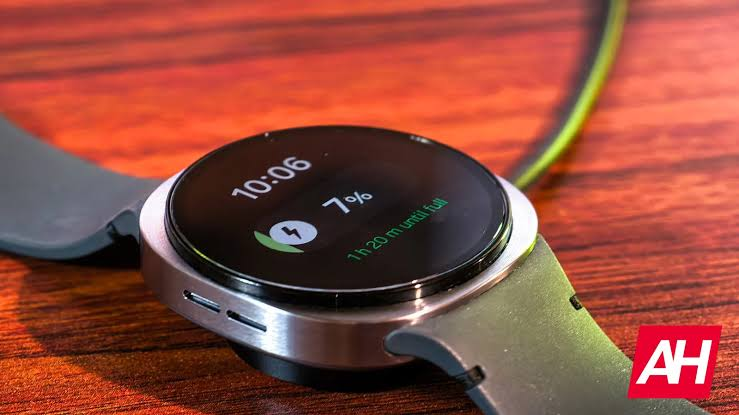
AI requires computing power, and computing power can consume battery energy. This creates an important 2026 challenge: manufacturers need to deliver sophisticated AI features without forcing users to charge their watches constantly. Some newer devices demonstrate the trade-off. Motorola’s Moto Watch Ultra, for example, offers AI and Wear OS capabilities but has a substantially shorter claimed battery life than the company’s previous custom-OS model.
Future improvements will likely depend on:
- More efficient AI models
- Dedicated neural processors
- Low-power sensors
- Better chips
- More efficient software
10. The Future of AI Watches
The long-term direction is clear: AI watches are becoming less like miniature smartphones and more like personal wearable computers.
The next generation could increasingly combine:
Sensors + Edge AI + Voice + Health Data + Personalization + Context Awareness
This could allow watches to understand patterns rather than simply record them.
Benefits of AI Watches
- More personalized experiences
- Faster responses
- Better fitness guidance
- Intelligent health insights
- Improved safety features
- Reduced dependence on smartphones
- Greater automation
- More contextual recommendations
Challenges
However, several issues remain:
- Battery limitations
- Privacy concerns
- Data security
- AI accuracy
- Medical reliability
- Subscription costs
- Device compatibility
- User trust
Conclusion
AI Watch Trends Shaping 2026 points toward a new generation of wearable technology where artificial intelligence works continuously in the background. The biggest developments are Edge AI, personalized health insights, AI fitness coaching, voice assistants, privacy-focused processing, and connected wearable ecosystems. The most important change is that smartwatches are moving from “showing data” to “understanding data.” As AI chips become more efficient and wearable sensors become more sophisticated, the watch on your wrist could increasingly function as a personalized AI companion rather than simply a timekeeper.