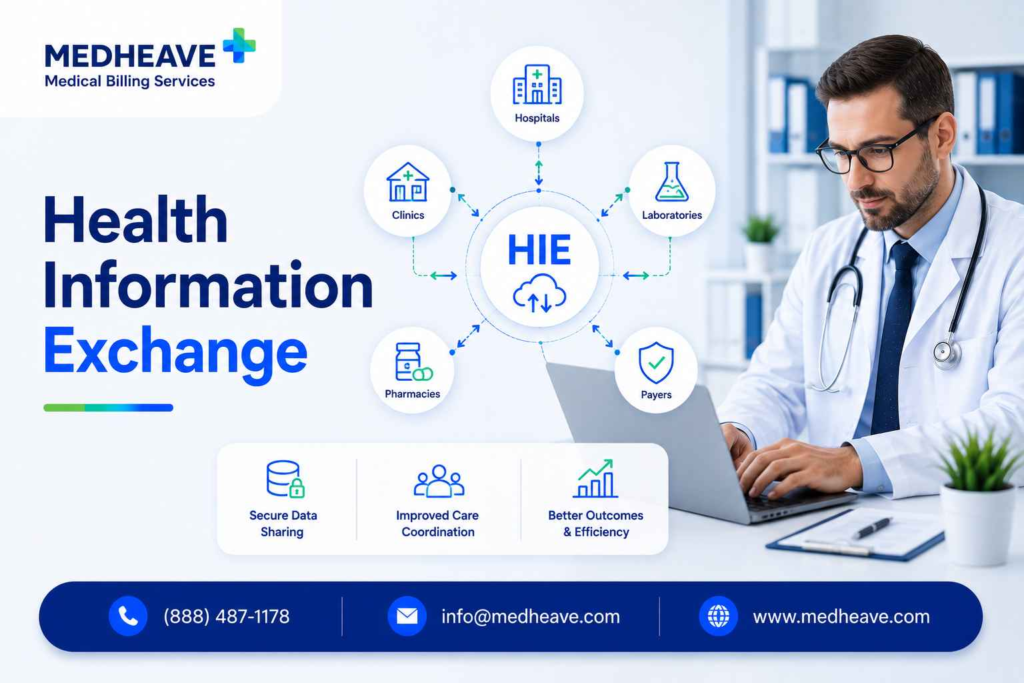
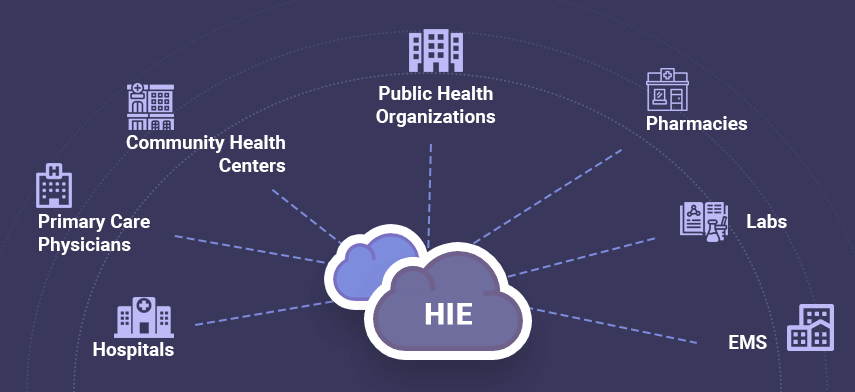
Health Information Exchange (HIE) is the electronic sharing of healthcare information among organizations within a region, community, or hospital information system (HIS). Its primary purpose is to enable the secure exchange of a patient’s essential medical information among doctors, nurses, pharmacists, other healthcare providers, and patients. By facilitating timely access to accurate health records, HIE improves the speed, quality, safety, and cost-effectiveness of patient care.
1. Purpose of Health Information Exchange (HIE)
Health Information Exchange (HIE) is designed to facilitate the secure electronic sharing of patient health information among healthcare organizations and providers. Its key purposes include:
- Improve the quality of patient care by providing healthcare professionals with accurate, complete, and up-to-date patient information.
- Enhance patient safety by reducing medication errors, avoiding adverse drug interactions, and ensuring access to allergy and medical history records.
- Support coordinated care by enabling seamless communication among physicians, nurses, pharmacists, specialists, and other healthcare providers.
- Increase efficiency by providing faster access to patient information and reducing delays associated with paper-based records.
- Lower healthcare costs by minimizing unnecessary tests, reducing administrative work, and improving resource utilization.
- Improve clinical decision-making by giving healthcare providers timely access to comprehensive patient data.
- Empower patients by allowing them to access and share their health information, promoting greater involvement in their own care.
- Ensure secure information exchange by protecting patient confidentiality through authorized access and secure electronic communication.
2. Health Information Exchange (HIE) Models
1. Centralized Model
In the centralized model, patient health information from multiple healthcare organizations is stored in a single central database. A
Advantages:
- Easy and fast access to patient records.
- Simplifies data management.
- Improves data availability.
Disadvantages:
- Higher risk if the central database is compromised.
- Requires significant investment in security and maintenance.
2. Federated (Decentralized) Model
In the federated model, patient records remain stored in the individual healthcare organizations where they were created.
Advantages:
- Healthcare organizations maintain control of their own data.
- Better privacy and security.
- No need for a central data repository.
Disadvantages:
- Data retrieval may be slower.
- Requires strong interoperability between different systems.
3. Hybrid Model
The hybrid model combines features of both centralized and federated models. Frequently used or essential patient information is stored in a central repository, while detailed medical records remain at the original healthcare organizations.
Advantages:
- Balances accessibility with data ownership.
- Faster access to important patient information.
- Improved flexibility and scalability.
Disadvantages:
- More complex to implement and manage.
- Requires coordination between centralized and decentralized systems.
3. Challenges of Health Information Exchange (HIE)
These challenges include:
1. Interoperability Challenges
Different healthcare organizations use various electronic health record (EHR) systems, which may not communicate effectively with each other. Lack of compatibility can prevent smooth exchange and understanding of health information.
2. Privacy and Security Concerns
Patient health information is highly sensitive and must be protected from unauthorized access, cyberattacks, and data breaches. Maintaining confidentiality while allowing appropriate access is a major challenge.
3. Data Quality Issues
Incomplete, inaccurate, or outdated patient information can affect the reliability of exchanged data and may lead to incorrect clinical decisions.
4. Lack of Common Standards
Differences in data formats, medical terminologies, and communication standards make it difficult for healthcare systems to exchange information consistently.
5. Cost of Implementation and Maintenance
Developing an HIE system requires substantial investment in technology, infrastructure, software, training, and ongoing maintenance.
6. Patient Consent Management
Obtaining and managing patient permission for sharing health information while respecting privacy requirements can be complex.
7. Resistance to Adoption
Healthcare professionals and organizations may be reluctant to adopt HIE due to workflow changes, lack of training, or concerns about data ownership.
8. Legal and Regulatory Barriers
Healthcare organizations must comply with laws and regulations governing patient privacy, data sharing, and information security, which can vary between regions.
9. Technical and Infrastructure Limitations
Limited internet access, outdated healthcare systems, and insufficient technical support can restrict effective HIE implementation.
10. Governance and Trust Issues
Successful HIE requires cooperation, clear policies, and trust among healthcare organizations. Lack of proper governance can reduce participation and effectiveness.