








Have you ever come across the name GDTJ45 Builder Software and wondered what it actually is? You’re not alone. Many people search for terms like “software GDTJ45 Builder does not work. GDTJ45 Builder software problems” or “how to edit code in GDTJ45 Builder Software” after encountering references online. Others simply want to know whether GDTJ45 Builder is real or fake.
The challenge is that there is no verifiable evidence that GDTJ45 Builder is an official commercial or open-source software product. As a result, many users are left confused by conflicting information and unsupported technical claims.
In this article, we’ll examine what GDTJ45 Builder Software is claimed to be, why so many people report installation and software issues, and whether those claims are supported by reliable evidence. We’ll also discuss why the term has generated so much online confusion and introduce trusted builder software alternatives that are widely used by developers and organizations. By the end of this guide, you’ll have a clearer understanding of the topic and be better equipped to choose proven tools instead of relying on unverified software claims.
GDTJ45 Builder Software Explained: Features, Problems, Alternatives & 2026
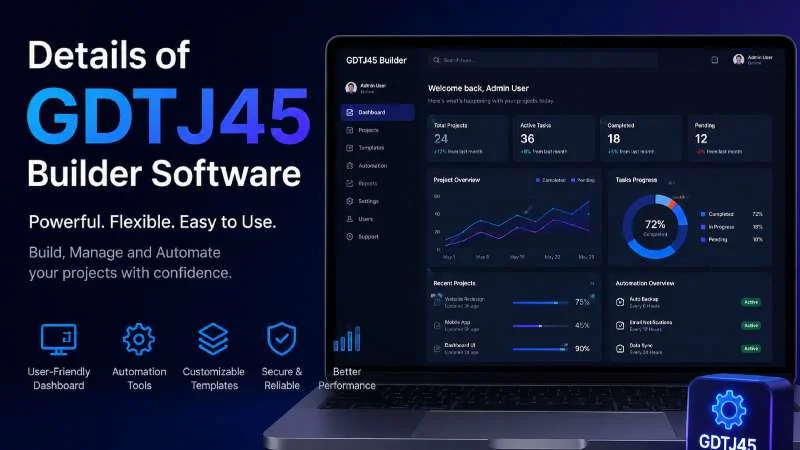
GDTJ45 Builder Software is often described online as a modern application development tool that simplifies software creation and workflow management. Various articles claim that it combines visual development features with traditional coding capabilities, allowing developers to build, test, and manage software projects from a single platform.
According to these descriptions, the software is intended to streamline development by reducing manual configuration, supporting collaborative workflows, and improving project management. However, these claims are not supported by an official vendor, product website, or publicly available technical documentation.
As a result, there is no reliable evidence confirming that GDTJ45 Builder Software is a legitimate commercial or open-source product. The information available online is inconsistent and frequently repeated across multiple websites without verifiable sources. Because of this uncertainty, many users search for additional information before deciding whether the software is genuine or attempting to troubleshoot reported issues.
What GDTJ45 Builder Software Is Used For

GDTJ45 Builder Software is often described online as a development tool intended for creating internal applications, dashboards, and workflow-based systems. Some sources claim that it follows a low-code or modular development approach, allowing users to assemble reusable components and reduce the amount of manual programming required.
Based on these descriptions, the tool is said to support activities such as rapid prototyping, workflow automation, application configuration, and system integration. These capabilities are commonly associated with modern low-code and no-code platforms, which help organizations develop business applications more quickly.
However, there is currently no verified official documentation or recognized product source confirming that GDTJ45 Builder Software provides these features. The available information appears inconsistent, so users should verify the authenticity and origin of any software claiming to be GDTJ45 Builder before installing it or using it for development projects.
For teams seeking similar functionality, established low-code and application development platforms with official documentation and active support communities are generally a safer choice.
Key Features of GDTJ45 Builder Software
GDTJ45 Builder Software is frequently described online as a development platform with features commonly found in modern application-building tools. These descriptions often associate the platform with modular architecture, allowing developers to reuse components across different projects and reduce repetitive development work.
Some sources also claim that it supports real-time collaboration, enabling multiple team members to contribute to the same project environment simultaneously. Other commonly mentioned capabilities include API integration, automated development checks, workflow management, and performance monitoring features designed to improve productivity and shorten development cycles.
These capabilities reflect the feature sets typically offered by established low-code, no-code, and application development platforms. However, there is currently no verified official documentation or vendor information confirming that GDTJ45 Builder Software provides these features. Users should validate the source, authenticity, and technical details of any software distributed under this name before relying on it for professional development work.
For organizations evaluating similar functionality, established development platforms with documented features, security reviews, and active support communities provide a more reliable foundation.
Interface Design and Workflow Management
GDTJ45 Builder Software is often described as having a visual workspace that allows users to arrange, configure, and manage application components through a simplified interface. This type of design is commonly associated with low-code and no-code development platforms, where visual tools help users understand application structure without requiring extensive programming knowledge.
Workflow management is another capability frequently mentioned in descriptions of the platform. In theory, workflow features help teams organize development tasks, monitor changes, manage project progress, and maintain consistent processes throughout the software life cycle. Version control practices and structured workflows can reduce confusion when multiple contributors are working on complex projects.
However, there is currently no verified official documentation confirming the exact interface design or workflow capabilities of GDTJ45 Builder Software. The features described above represent common functionality found in modern development platforms rather than confirmed specifications of a verified GDTJ45 product.
Learning Curve and Development Speed
The learning curve for platforms like GDTJ45 Builder Software is generally described as moderate, particularly for users who already have experience with software development concepts and visual development environments. New users may require additional time to understand concepts such as modular design, component configuration, project structure, and system setup.
One of the commonly associated advantages of builder-style development tools is improved development speed. By using reusable components, templates, automated workflows, and visual configuration options, these platforms can help teams reduce repetitive tasks and accelerate application creation.
However, the exact learning curve and productivity benefits of GDTJ45 Builder Software cannot be independently verified because there is no confirmed official documentation or recognized product source. The benefits described are typical of established low-code and application development platforms rather than confirmed features of a verified GDTJ45 product.
Core Features of GDTJ45 Builder Software
GDTJ45 Builder Software is often described online as a unified development environment that brings multiple software-building capabilities together within a single workspace. According to various online descriptions, its purpose is to simplify development activities, improve workflow organization, and support faster application creation.
The features commonly associated with this type of platform are typically designed to help developers manage projects more efficiently, reduce repetitive tasks, and improve collaboration between technical and non-technical users.
However, there is currently no verified official documentation, vendor information, or publicly confirmed product specification for GDTJ45 Builder Software. The components discussed below represent features commonly found in modern development platforms and are based on general descriptions rather than confirmed capabilities of a verified GDTJ45 product.
The following sections explore the key components often associated with builder-style development tools.
Modular Development Architecture
Modular development architecture is a software design approach that divides applications into smaller, independent components or modules. Each module can be developed, tested, maintained, and updated separately, allowing teams to manage complex systems more efficiently.
In builder-style development environments, modular architecture can help reduce project complexity by encouraging reusable components and clear separation between different application functions. This makes it easier for development teams to scale applications, introduce new features, and modify existing functionality without requiring major changes to the entire system.
While modular architecture is a common feature of modern software development platforms, there is currently no verified technical documentation confirming the exact implementation of this capability in GDTJ45 Builder Software. The concept described reflects standard practices used across established development frameworks and application-building tools.
Who Benefits from GDTJ45 Builder Software

GDTJ45 Builder Software is often described online as a general-purpose development tool intended to support different types of users involved in software projects. Descriptions of similar builder platforms typically focus on helping both technical developers and semi-technical teams create, manage, and organize applications more efficiently.
Tools in this category are commonly used in environments where rapid development, collaboration, reusable components, and structured workflows are important. They may be valuable for teams looking to reduce repetitive development tasks and improve coordination throughout the software life cycle.
However, there is currently no verified official documentation or confirmed product information establishing the actual user base or capabilities of GDTJ45 Builder Software. The user groups discussed below reflect the types of teams that typically benefit from established low-code and application development platforms rather than confirmed users of a verified GDTJ45 product.
Enterprise Internal Tool Development
Large organizations frequently require internal applications such as dashboards, reporting systems, approval workflows, and operational automation tools to support business processes. Builder-style development platforms are often considered useful for creating these solutions because they can provide reusable components, visual configuration options, and structured development workflows.
By using this type of platform, enterprises may be able to standardize application development practices, improve collaboration between departments, and reduce the need to build every internal solution entirely from custom code. This can help teams maintain consistency, simplify maintenance, and deliver business applications more efficiently.
However, there is no verified documentation confirming that GDTJ45 Builder Software is used by enterprises or provides these specific capabilities. These benefits are generally associated with established low-code and internal application development platforms.
Startup MVP Creation
Startups often prioritize speed and flexibility when developing their first products. Builder-style development platforms are commonly associated with rapid minimum viable product (MVP) creation because they allow teams to prototype ideas, test concepts, and refine features without investing heavily in lengthy development cycles.
By using reusable components, visual development tools, and automated workflows, startups can potentially shorten the time required to validate product ideas and bring early versions of applications to market. This approach helps founders gather user feedback sooner and make informed decisions before committing significant engineering resources.
However, there is no verified evidence confirming that GDTJ45 Builder Software specifically supports startup MVP development. These advantages are generally linked to established low-code and rapid application development platforms.
Digital Agency Workflows
Digital agencies often manage multiple client projects simultaneously, requiring efficient processes for development, collaboration, and delivery. Platforms designed for application building are commonly used by agencies to organize workflows, reuse components, and reduce repetitive development tasks across projects.
A structured builder environment can help agencies improve consistency, accelerate project delivery, and simplify collaboration between designers, developers, and clients. Reusable templates and standardized workflows may also help reduce turnaround times while maintaining quality across different client engagements.
Developers and Product Teams Use Cases
For developers, builder-style development platforms are often used to simplify complex workflows, manage integrations, and organize backend systems through more structured development processes. By providing reusable components, templates, and automated setup options, these tools can help reduce repetitive tasks and allow developers to focus on core application functionality.
Product teams can also benefit from improved collaboration between designers, developers, project managers, and business stakeholders. A shared development environment can make it easier for teams to align on requirements, review progress, and coordinate changes throughout the product life cycle.
While these advantages are commonly associated with modern application development platforms, there is currently no verified documentation confirming that GDTJ45 Builder Software specifically provides these capabilities. The use cases described reflect general benefits of established low-code and collaborative development tools.
As with other claimed capabilities of GDTJ45 Builder Software, these benefits reflect common characteristics of modern development platforms rather than confirmed features of a verified GDTJ45 product.
Common Software GDTJ45 Builder Problems

Users searching for GDTJ45 Builder problems often report confusion, setup difficulties, and uncertainty about the software’s actual functionality. However, because there is no verified official documentation, vendor support channel, or confirmed product source for GDTJ45 Builder Software, many reported issues cannot be directly attributed to a validated software platform.
The problems commonly mentioned in online discussions are similar to challenges found in many development tools and builder environments. These may include installation failures, configuration errors, compatibility issues, unexpected crashes, performance slowdowns, and difficulties integrating external services.
Is GDTJ45 Builder Software Real or AI-Generated Spam?
The question of whether GDTJ45 Builder Software is a real development tool or simply an online-generated topic has become increasingly common. Based on currently available information, there is no verified evidence of an official software product, recognized company, developer organization, public documentation, or legitimate source code repository associated with the name GDTJ45 Builder Software.
Many online articles describe it as a modern development platform with features such as visual building, workflow automation, modular architecture, and collaboration tools. However, these descriptions often lack references to an official product page, technical documentation, release history, or confirmed user community. Similar wording across multiple websites may indicate that some content was generated or reproduced without independent verification.
This does not conclusively prove that the name is intentionally spam or that no private/internal tool with a similar name exists. It is possible that the term comes from an internal project, a misidentified product, a placeholder name, or inaccurate online content.
Conclusion
While searches for software GDTJ45 Builder problems may lead to many discussions about setup issues, crashes, and development challenges, there is currently no verified evidence confirming GDTJ45 Builder Software as an official, documented development platform.
The types of problems commonly associated with this name—such as configuration errors, compatibility issues, execution failures, and workflow challenges—are similar to those found in many software development projects. environments. These issues are typically managed through proper system configuration, reliable development practices, version management, testing procedures, and clear documentation.
For teams evaluating application-building solutions, choosing a verified platform with official support, security information, active updates, and a trusted user community is essential. Established development tools can provide the benefits often claimed for builder software, including faster prototyping, improved collaboration, reusable components, and more efficient workflows.