Brand Awareness: The foundation of any successful marketing strategy is brand recognition. If a customer doesn’t know who you are, they can’t purchase from you. However, awareness is not a coincidence. It is intentionally constructed through intelligent advertising, and the most crucial choice you will make is which targeting strategy is best for building brand awareness. The answer depends on your audience’s demographics, the market you operate in, and how well your targeting aligns with their real interests and geographic location.
What Is the True Meaning of Brand Awareness?
The degree to which your target market is familiar with your brand name, logo, goods, or services is known as brand awareness. It’s not about clicks or quick purchases. It’s about making your brand stick in people’s minds so they will think of you first when they’re ready to make a purchase. Strong brand awareness maintains your company at the forefront of a competitive market, fosters trust, and lowers the cost of subsequent conversion initiatives.
The Principal Targeting Choices Described
Targeting Affinity Audiences
People are reached by affinity targeting according to their long-term passions, interests, and lifestyle choices. Affinity audiences are groups of people who regularly express interest in a subject, such as technology, fitness, travel, or sustainable living, on websites like Google Display Network and YouTube. These individuals are far more open to your message because they are already interested in topics associated with your business. Affinity targeting is often considered the best place to start when it comes to brand recognition since it strikes a balance between broad reach and significant relevance.
Targeting Custom Affinity Audiences
Marketers have more control with custom affinity audiences. You specify your ideal audience by entering particular URLs, keywords, rival websites, and interest themes rather than selecting a pre-built category. This enables you to create a highly customized audience that reflects your top clients. Because it minimizes wasted impressions and guarantees that your brand message reaches people who actually align with what you provide, custom affinity targeting is especially effective for brand awareness targeting methods.
Targeting Demographics
Your audience is filtered by age, gender, economic bracket, parental status, and educational attainment when you use demographic targeting. Demographic information alone is insufficient to support a brand awareness campaign. Demographics, however, focus your audience and guarantee that your creative connects with the correct people when combined with affinity or interest targeting. To prevent irrelevant impressions, a premium brand that targets affluent professionals in metropolitan India, for instance, will employ affinity signals in addition to demographic filters.
Topic and Contextual Targeting
With contextual targeting, your advertisements appear on websites with content that is pertinent to your brand. Your display advertisements may show up on wellness articles, fitness websites, and nutrition blogs if you own a health supplement company. Because the surrounding content places your viewers in the proper frame of mind before they even see your advertisement, this strategy is effective for increasing brand awareness. A related feature on the Google Display Network is topic targeting, which allows you to select content categories so that your advertisements show up next to widely relevant content.
Similar and Lookalike Audiences
In order to create lookalike audiences, you upload a seed audience—usually your current clients or website visitors—and ask the platform to locate new people that exhibit similar behavior. Because it identifies new individuals who already have traits with those who have expressed interest in your brand, this approach is great for increasing brand awareness. Lookalike audiences are one of the most dependable resources for effectively expanding brand awareness initiatives on Meta.
The Significance of Geo-Targeted Brand Awareness Initiatives
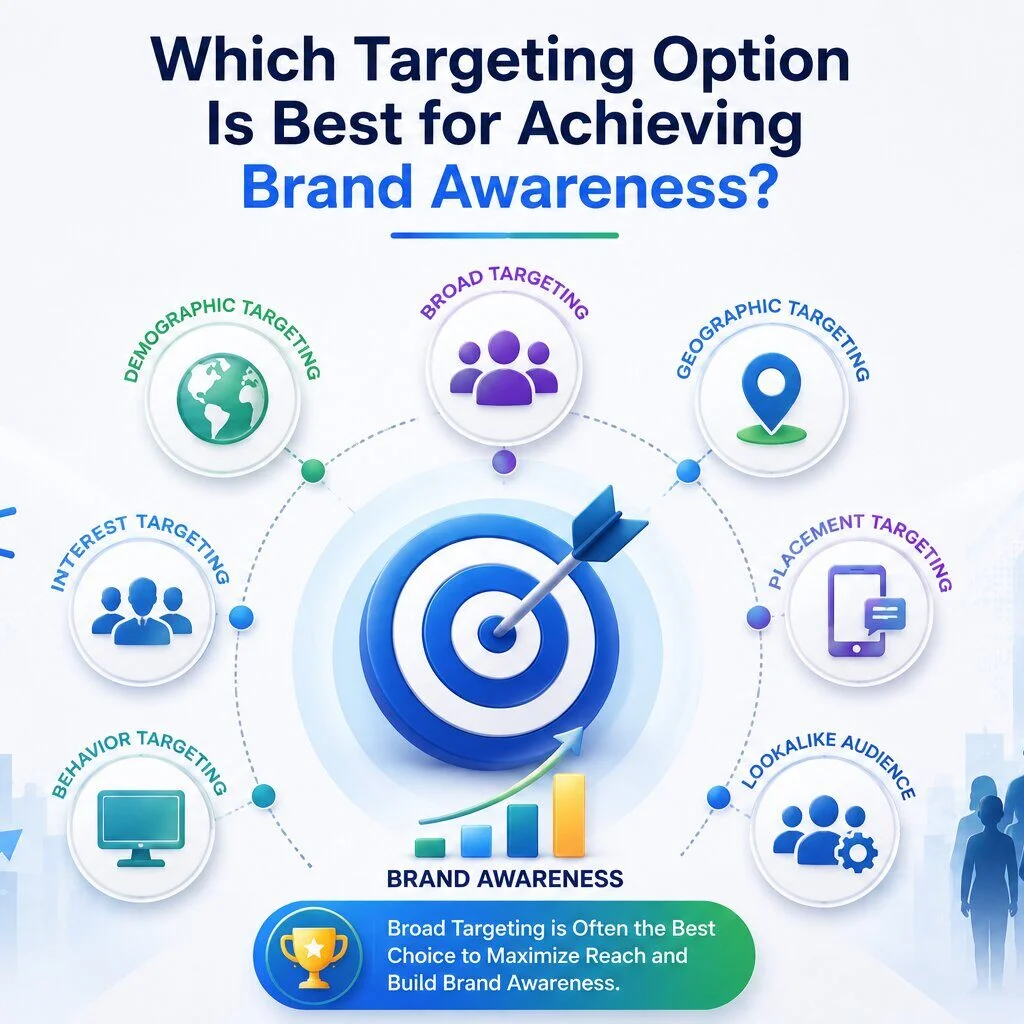
Geo-targeted brand awareness campaigns are crucial for companies operating throughout India or focusing on particular urban markets. You can limit your advertisements to particular states, cities, pin codes, or radius zones surrounding a location by using geo-targeting. Instead of dispersing its awareness expenditure over unrelated regions, a brand debuting in Delhi, Mumbai, Bengaluru, or Pune can focus it on those areas.
Regional personalization is also made possible by geotargeting. An audience in Jaipur might react differently to an advertisement that uses local language cues, culturally appropriate images, and city-specific messaging when it is displayed to viewers in Chennai. The key indicators of awareness success, ad recall and brand identification, are raised by this localization.
What is the best targeting strategy for raising brand awareness, then?
In most cases, the greatest way to increase brand exposure is through affinity audience targeting, particularly personalized affinity audience targeting. It usually results in a lower cost per thousand impressions, provides the widest reach among truly interested users, and permits sufficient flexibility to target several audience segments within a single campaign.
Custom affinity targeting should be the main layer; contextual or subject targeting should be used to support it for placement relevance; demographic filters should be used to refine the appropriate age and income profiles; and geo-targeting should be used to focus spending on priority markets. Increase your reach to similar high-potential users by adding a lookalike audience to your current customer base
Conclusion
The targeting options you select have a direct impact on how effectively your budget increases brand awareness, which is a long-term investment. Reach and relevancy are best balanced with affinity and tailored affinity targeting. These tactics routinely outperform broad broadcast approaches when combined with geo-targeting throughout India’s major markets and backed by powerful creativity. Your brand will be remembered long after the advertisement is shown if you start with the appropriate targeting foundation.