Introduction
A special prosecutor plays an important role in the legal system by investigating and prosecuting specific cases that may require independence, specialized expertise, or additional oversight.
In 2026, the role of a special prosecutor remains an important topic in discussions about justice, transparency, accountability, and the rule of law. By operating under a defined legal mandate, a special prosecutor can help address concerns about conflicts of interest and ensure that allegations receive appropriate legal attention. Understanding how special prosecutors are appointed, what powers they possess, and what limitations they face helps explain how justice systems work to balance authority with accountability.
What Is a Special Prosecutor?
A special prosecutor is a lawyer or prosecuting official appointed or authorized to handle a particular investigation or prosecution outside the ordinary prosecutorial process, often because of a potential conflict of interest, unusual complexity, or a need for independent oversight. The exact title, appointment process, and authority vary by jurisdiction. In some places, similar roles may be called an independent prosecutor, special counsel, or independent counsel. Special prosecutors may investigate allegations involving public officials, government agencies, organized crime, or other matters specified in their appointment. Their authority is limited by applicable law and the scope of their mandate.
Why Is a Special Prosecutor Important in 2026?
Special prosecutors can help maintain public confidence in the justice system, particularly when an investigation involves powerful individuals or institutions.
Key reasons for their importance include:
- Independence: Helping address actual or perceived conflicts of interest.
- Accountability: Investigating allegations involving people in positions of authority.
- Transparency: Supporting public understanding of how significant investigations are handled, subject to legal confidentiality.
- Legal integrity: Ensuring that evidence and applicable laws guide prosecutorial decisions.
- Public trust: Demonstrating that allegations can receive appropriate scrutiny regardless of a person’s position.
An appointment alone does not guarantee independence or a particular outcome. The prosecutor’s authority, safeguards, resources, and adherence to legal procedures all matter.
Key Responsibilities of a Special Prosecutor
1. Investigating Allegations
Depending on the jurisdiction and legal authorization, this work can involve reviewing documents, interviewing witnesses, coordinating with investigators, and assessing relevant records. Investigations must follow applicable legal requirements, including rules governing searches, evidence collection, privacy, and individual rights.
2. Evaluating Evidence
One of the central responsibilities is determining whether the available evidence supports criminal charges under the applicable legal standard. Prosecutors must assess the reliability of witness statements, documentary evidence, digital records, and other relevant information. Allegations alone do not establish guilt.
3. Bringing Criminal Charges
When legally justified, a special prosecutor may bring charges or present evidence through the appropriate court process. In some jurisdictions, additional approvals or procedural requirements apply. The decision to prosecute should be based on evidence and law rather than political pressure, public popularity, or media attention.
4. Presenting Cases in Court
If a case proceeds to trial, the special prosecutor may present evidence, question witnesses, and make legal arguments. The defense has the opportunity to challenge the prosecution’s evidence and arguments. The court determines the outcome according to the applicable law and procedures.
5. Protecting Due Process
A fair investigation must respect the rights of everyone involved. These protections may include the presumption of innocence, access to legal representation, and the right to challenge evidence. A special prosecutor’s responsibility is not simply to secure convictions. It is to pursue justice lawfully and fairly.
What Powers Does a Special Prosecutor Have?
The powers of a special prosecutor depend on the laws of the jurisdiction and the terms of the appointment.
Possible powers include:
- Requesting or obtaining relevant records through lawful procedures.
- Working with investigators and law enforcement agencies.
- Interviewing witnesses and reviewing evidence.
- Seeking subpoenas or court-authorized investigative measures where permitted.
- Filing criminal charges within the authorized scope.
- Presenting evidence and arguments in court.
These powers are not unlimited. A special prosecutor generally cannot disregard constitutional protections, exceed the authority granted by law, or treat an allegation as proof of guilt.
How Is a Special Prosecutor Appointed?
The appointment process differs between countries and legal systems. A typical process may include the following steps:
- Identification of a potential conflict: Authorities determine whether ordinary investigative or prosecutorial arrangements are appropriate.
- Legal authorization: The relevant law or government procedure establishes whether a special appointment is permitted.
- Selection of a qualified prosecutor: An eligible lawyer or official is chosen under the applicable rules.
- Definition of the mandate: The appointment identifies the matter to be investigated and the authority granted.
- Oversight and reporting: Applicable rules determine how the prosecutor is supervised and whether findings or reports must be submitted.
- Conclusion of the assignment: The prosecutor completes the authorized work, subject to relevant reporting, court, and procedural requirements.
The process is not identical everywhere. In some jurisdictions, an existing prosecutorial authority appoints a special counsel; in others, a court or another authorized institution may play a role.
Special Prosecutor vs. Regular Prosecutor
| Feature | Special Prosecutor | Regular Prosecutor |
| Main purpose | Handles a designated matter or investigation | Handles cases within an ordinary prosecutorial office |
| Appointment | Often follows a specific legal authorization | Usually follows standard hiring or appointment procedures |
| Scope | Defined by the appointment and applicable law | Defined by the office’s jurisdiction and responsibilities |
| Independence | May include safeguards for specific conflicts of interest | Depends on institutional rules and applicable safeguards |
| Duration | May end when the assignment is completed | Often continues as part of an ongoing role |
| Case types | May involve unusual, sensitive, or complex matters |
Neither role automatically guarantees a fair or unfair outcome. Both are subject to the laws and ethical standards governing prosecutors.(https://ainewsbreak.co.uk/)
Advantages of a Special Prosecutor
Greater Independence
A special appointment can reduce conflicts of interest when the people or institutions involved have connections to the ordinary investigative process.
Focused Attention
A prosecutor assigned to a specific matter may devote substantial time and resources to understanding complex evidence and legal issues.
Accountability for Powerful Individuals
Special prosecutors can investigate allegations involving public officials or influential organizations when the applicable law authorizes such investigations.
Specialized Expertise
Some investigations require experience in areas such as financial crime, public corruption, cybersecurity, or complex litigation.
Public Confidence
A credible appointment and a fair process can help reassure the public that serious allegations are being evaluated through established legal procedures.
Disadvantages and Challenges
High Costs
Complex investigations may require significant funding, specialized staff, forensic analysis, and extensive legal work.
Lengthy Investigations
Large volumes of evidence, court disputes, and complex legal questions can make investigations time-consuming.
Political Pressure
High-profile investigations may attract criticism from political groups, public officials, or media commentators, potentially affecting public perceptions.
Limited Resources
A special prosecutor may face challenges involving staffing, access to evidence, cooperation between agencies, or the scope of the appointment.
Damage From Unproven Allegations
Public discussion of an investigation can affect reputations before any charges are filed or before a court reaches a conclusion. Confidentiality and careful communication can help reduce unnecessary harm.
Special Prosecutors and Political Independence
The relationship between special prosecutors and politics is often closely scrutinized. When allegations involve government officials or politically influential individuals, the public may question whether investigators can work without improper interference.
However, independence does not mean freedom from all oversight. Legitimate supervision and accountability can coexist with the need for impartial investigations.
How Special Prosecutors Affect Public Trust
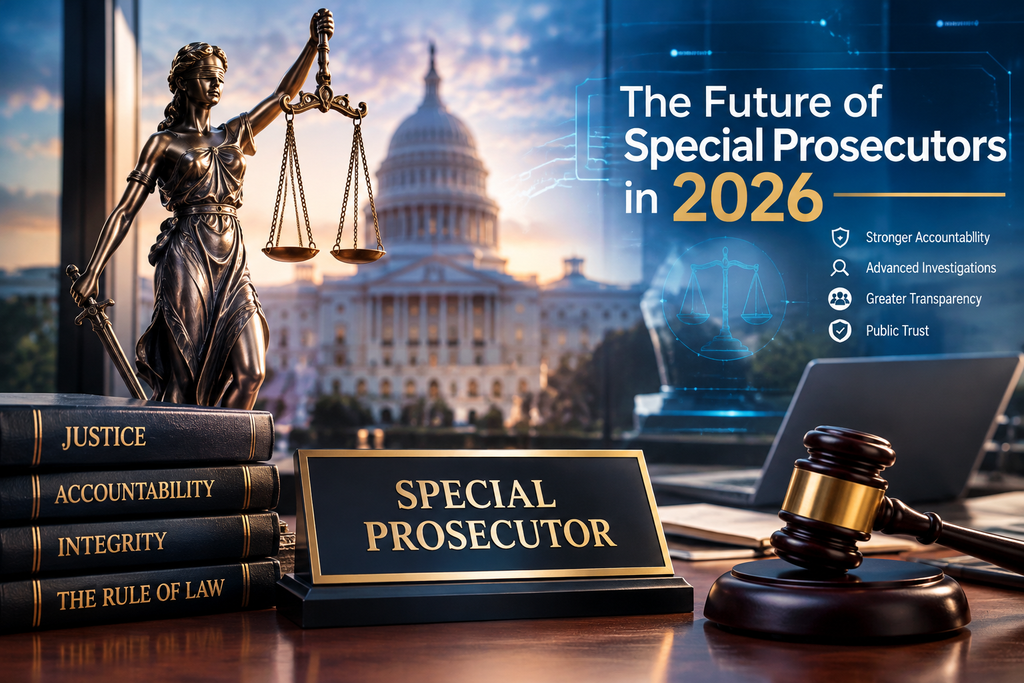
Public confidence depends on more than the announcement of an investigation. People also look at how evidence is handled, whether legal standards are applied consistently, and whether the process respects the rights of everyone involved.
Several practices can support public trust:
- Explain the legal basis and scope of an appointment when disclosure is permitted.
- Avoid public statements that prejudge guilt.
- Protect confidential information and witness safety.
- Follow established evidentiary and procedural rules.
- Provide reports or explanations when legally required and appropriate.
- Apply prosecutorial standards without favoritism.
A fair process may not satisfy every observer, particularly in a politically sensitive case. Nevertheless, consistent procedures and evidence-based decisions are essential to the legitimacy of the justice system.
The Future of Special Prosecutors in 2026
Technology and changing investigative demands continue to create new challenges for prosecutors. Digital communications, artificial intelligence, financial transactions, and large electronic records can make investigations more complex.
Artificial Intelligence and Digital Evidence
AI tools may help legal teams organize documents, identify relevant information, and review large evidence collections. However, automated systems can make mistakes, overlook context, or reproduce biases.
Prosecutors must verify important findings, preserve evidence integrity, and comply with applicable privacy and disclosure requirements.
Cybercrime and Financial Investigations
Specialized investigations may involve digital fraud, ransomware, complex financial transactions, or cross-border evidence. These cases can require cooperation between legal professionals, technical experts, financial investigators, and law enforcement agencies.
Transparency and Accountability
Public expectations for accountability continue to make communication an important consideration. Prosecutors must balance legitimate public interest with confidentiality, fair-trial rights, and the integrity of ongoing investigations.
Frequently Asked Questions (FAQs)
1. What is the main purpose of a special prosecutor?
The main purpose is to handle a designated investigation or prosecution, often when a conflict of interest, unusual complexity, or need for specialized oversight makes a separate appointment appropriate.
2. Who appoints a special prosecutor?
The appointing authority depends on the jurisdiction. It may be a government official, an existing prosecutorial authority, a court, or another body authorized by law.
3. Can a special prosecutor investigate government officials?
Yes, if the relevant law and appointment authorize the investigation. The prosecutor must follow applicable legal procedures and respect individual rights.
4. Does a special prosecutor have unlimited power?
No. The prosecutor’s authority is limited by law, jurisdiction, the scope of the appointment, ethical rules, and applicable judicial oversight.
How Can a Special Prosecutor Help Ensure Justice?
A special prosecutor can contribute to a fair legal process when the appointment is lawful, the investigation is properly resourced, and prosecutorial decisions are based on credible evidence. The process generally involves identifying the relevant legal questions, collecting and evaluating evidence, considering applicable defenses, determining whether charges are justified, and presenting the case through the appropriate legal channels. Justice also requires recognizing limits. A prosecutor cannot guarantee a conviction, replace the role of the court, or disregard the rights of a person under investigation. The objective is to establish facts and apply the law fairly not to secure a predetermined result.
Conclusion
Special Prosecutor Justice, Power & Truth in 2026 highlights the important relationship between independent investigations, legal accountability, and public confidence. Special prosecutors may play a significant role when a matter requires focused attention or when potential conflicts of interest make ordinary arrangements difficult. Their effectiveness depends on lawful authority, professional independence, sufficient resources, responsible oversight, and respect for due process. Although these investigations can be expensive, lengthy, and politically sensitive, a carefully structured process can help ensure that serious allegations receive appropriate legal consideration. There is no standard timeline. The duration depends on the complexity of the case, the volume of evidence, legal challenges, available resources, and the scope of the appointment.