
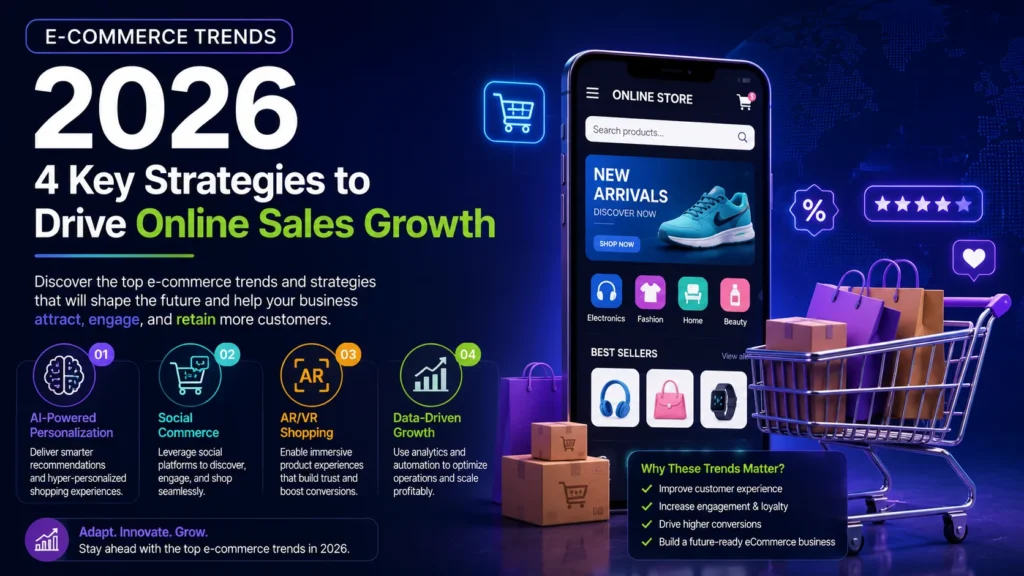
E-commerce in 2026 is being shaped by AI-driven shopping, social commerce, first-party data, and seamless omnichannel experiences. Businesses that combine technology with customer-centric strategies are positioned to grow faster than those relying only on paid advertising.
1. Optimize for AI-Powered Shopping
Consumers are increasingly discovering products through AI assistants and conversational search rather than traditional search engines.
Action Steps:
- Create detailed, structured product descriptions.
- Add comprehensive FAQs and buying guides.
- Use schema markup for products and reviews.
- Build strong brand credibility through authentic reviews and expert content.
2. Hyper-Personalization with AI
Use AI to personalize:
- Product recommendations
- Homepage content
- Email campaigns
- Dynamic pricing
- Search results
Personalized shopping experiences increase customer engagement, average order value (AOV), and repeat purchases.
3. Social Commerce & Live Shopping
Platforms such as TikTok, Instagram, and YouTube continue to shorten the path from discovery to purchase.
Successful brands:
- Partner with creators.
- Host live product demonstrations.
- Encourage user-generated content.
- Enable in-app purchasing where available.
Social commerce continues to expand as consumers become more comfortable purchasing directly within social platforms.
4. Mobile-First Experience
Most online shopping now happens on smartphones.
Optimize:
- Fast page speed
- One-click checkout
- Mobile-friendly navigation
- Digital wallets
- Responsive design
Even small improvements in mobile usability can significantly improve conversion rates.
5. First-Party Data Strategy
With ongoing privacy changes, businesses should rely more on data collected directly from customers.
Examples include:
- Loyalty programs
- Email subscriptions
- SMS marketing
- Purchase history
- Customer preference centers
This helps improve personalization while reducing dependence on third-party tracking.
6. Faster Fulfillment & Flexible Delivery
Customers increasingly expect the following:
- Same-day or next-day delivery (where feasible)
- Free shipping thresholds
- Easy returns
- Multiple delivery options
- Buy Online, Pick Up In Store (BOPIS)
Convenience remains a major driver of conversion and retention.
7. Omnichannel Commerce
Customers expect a consistent experience across:
- Website
- Mobile app
- Physical stores
- Marketplaces
- Social media
Synchronizing inventory, pricing, and customer accounts across channels improves both customer satisfaction and operational efficiency.
8. Video-First Marketing
Short-form videos are becoming one of the highest-performing content formats.
Create:
- Product demos
- Before-and-after videos
- Customer testimonials
- Tutorials
- Behind-the-scenes content
Video helps build trust and often increases purchase confidence.
9. Subscription & Membership Models
Recurring revenue models can improve customer lifetime value through:
- Product subscriptions
- VIP memberships
- Exclusive discounts
- Early access to launches
- Rewards programs
These approaches also strengthen customer loyalty.
10. AI Customer Service
Modern AI assistants can:
- Answer FAQs
- Track orders
- Recommend products
- Handle returns
- Escalate complex issues to human agents
Customers increasingly expect instant support, making AI-assisted service an important efficiency tool.
Top E-commerce Trends in 2026
| Trend | Business Impact |
| AI shopping assistants | Higher conversion through personalized recommendations |
| Agentic commerce | AI increasingly helps users research and buy products, requiring retailers to adapt trust and fraud systems |
| Social commerce | Continued growth in purchases directly on social platforms |
| Zero-click product discovery | Product information must be optimized for AI and conversational search |
| Retail media | New advertising and monetization opportunities for retailers |
| Visual search & AR | Easier product discovery and greater purchase confidence |
| Sustainable commerce | Greater focus on transparency, eco-friendly packaging, and circular commerce |
| Unified commerce | Seamless integration of online and offline experiences |
These trends reflect a broader shift toward AI-assisted discovery, richer shopping experiences, and integrated commerce ecosystems.
Practical Growth Priorities
For most e-commerce businesses, the highest-return initiatives are:
- Invest in AI-powered personalization.
- Build a strong first-party customer database.
- Create short-form video and live shopping content.
- Optimize for AI-driven product discovery.
- Improve mobile speed and checkout.
- Strengthen loyalty and retention programs.
- Expand into social commerce channels.
- Use analytics to continuously test pricing, promotions, and customer journeys.
Rather than chasing every new technology, focus on initiatives that measurably improve customer experience, trust, and conversion. Businesses that combine these fundamentals with AI-enabled capabilities are likely to be better positioned for growth throughout 2026.