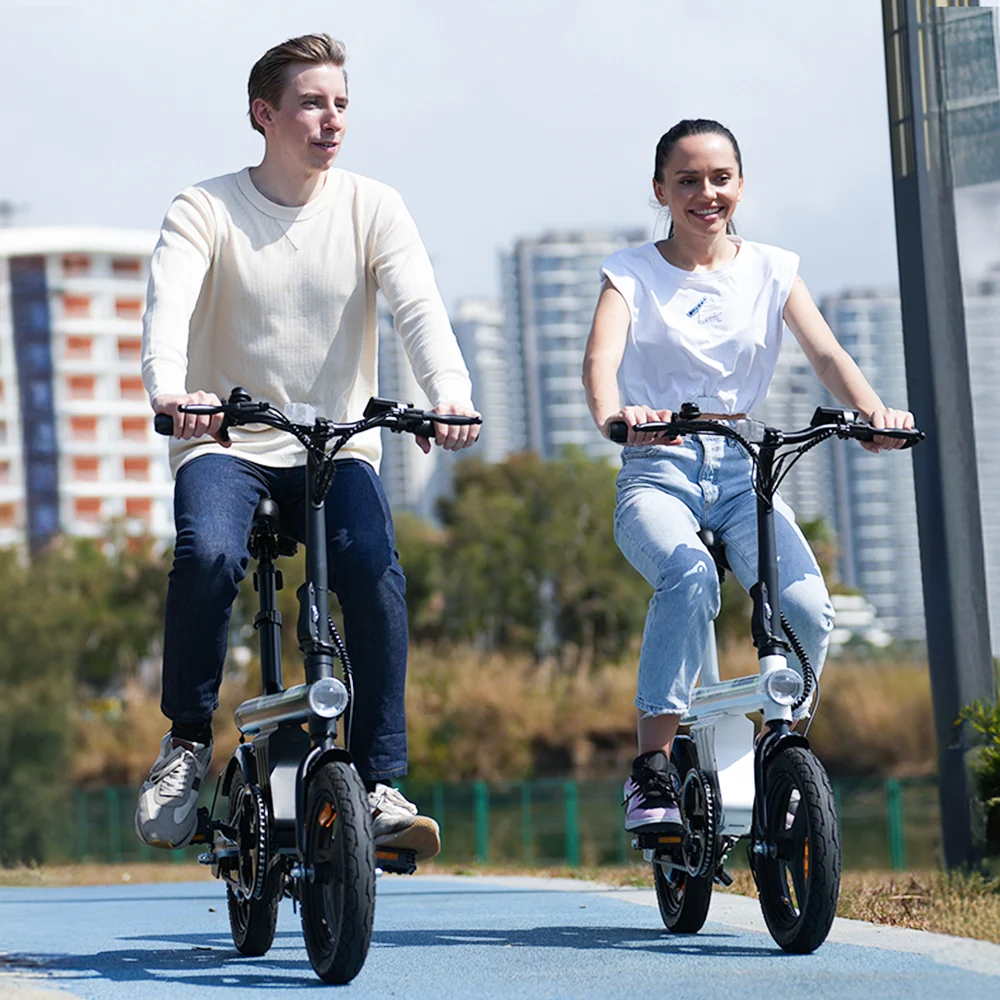
AI folding electric bikes combine electric assistance, compact folding designs, connected technology, and increasingly intelligent software to address one of the biggest challenges of city transportation. moving efficiently when space, parking, and time are limited. In 2026, folding e-bikes are no longer simply lightweight bicycles that happen to fold. Current testing shows a broad range of models designed for daily commuting, public-transit connections, apartments, RV travel, cargo, and longer urban rides.
What Are AI Folding Electric Bikes?
An AI folding electric bike is best understood as a smart connected folding e-bike, rather than an autonomous bicycle.
The physical platform typically combines:
- Folding frame
- Electric motor
- Rechargeable battery
- Pedal assistance
- Compact wheels
- Electronic controls
- Smartphone connectivity
- GPS or navigation capabilities on some models
- Ride-performance data
- Battery-management software
Important distinction: Most consumer folding e-bikes marketed as “smart” in 2026 are not self-driving bicycles. AI is primarily useful for navigation, personalization, diagnostics, battery intelligence, and connected mobility.
Why Folding Electric Bikes Are Important in 2026
Urban transportation increasingly requires flexibility.
A commuter might:
Ride → Fold → Train → Unfold → Ride
This makes a folding e-bike particularly useful for people who cannot store a full-size bicycle at home or work. A September 2026 Cycling Weekly commuter guide specifically notes that folding bikes can enable public-transport integration and solve storage limitations at home or work. Recent 2026 testing also identifies folding e-bikes as useful for city dwellers, multimodal commuters, and people with limited storage space.
How AI Can Improve a Folding Bike
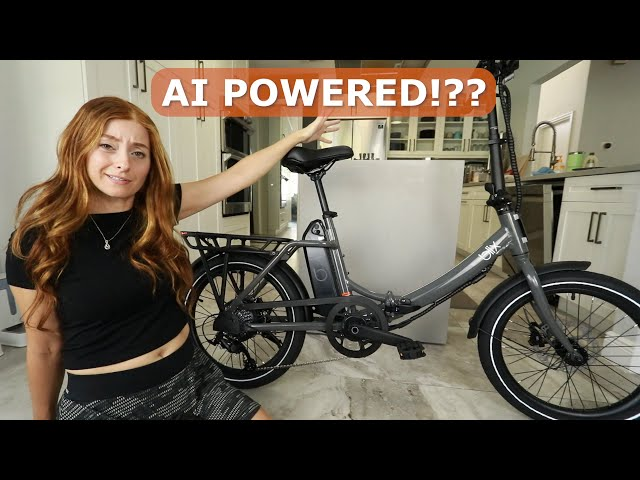
1. Smarter Route Planning
AI-assisted navigation could analyze:
- Traffic
- Bike lanes
- Hills
- Road conditions
- Distance
- Estimated battery consumption
- Rider preferences
Instead of simply selecting the shortest route, an intelligent system could prioritize a route that is safer, flatter, quieter, or more battery-efficient. This direction fits the wider development of AI-powered urban transportation. The 2026 AI City Challenge includes research into transportation safety, traffic-anomaly reasoning, multimodal perception, and traffic forecasting.
2. Intelligent Battery Management
Battery anxiety remains one of the biggest concerns for e-bike riders.
- Battery percentage
- Rider weight
- Terrain
- Speed
- Temperature
- Assist level
- Riding history
- Wind conditions
A future AI system could tell a rider:
“You have enough battery for your destination, but using maximum assist on the final hill may require a recharge.”
That is much more useful than simply displaying a percentage.
3. Personalized Pedal Assistance
Different riders have different preferences.
An intelligent system could learn whether a rider typically prefers:
- Maximum range
- Strong acceleration
- Minimal pedal effort
- Moderate assistance
- Hill-focused assistance
Over time, the e-bike could recommend appropriate assistance levels for different journeys.
4. Predictive Maintenance
Connected sensors can provide information about the bicycle’s operating condition.
Future AI systems could monitor unusual patterns involving:
- Motor behavior
- Battery performance
- Braking
- Tire pressure
- Electrical systems
- Drivetrain components
Instead of waiting for a failure, the system could provide an early maintenance warning.
The Biggest Advantage: Multimodal Mobility

The strongest argument for folding e-bikes isn’t necessarily AI.
It is portable.
A traditional e-bike may be excellent for riding but difficult to carry into an apartment, train, office, or car.
For example:
Home → Folded e-bike → Train → Unfold → Office
This approach can reduce dependence on driving for short urban journeys. The Brompton Electric G Line has specifically been highlighted as a strong option for urban and multimodal commuting, while other 2026-tested models emphasize portability, range, or value.
Key Features to Look For
Folding Mechanism
The quality of the folding mechanism is crucial.
Look for:
- Quick folding
- Secure locking
- Easy unfolding
- Compact folded dimensions
- Minimal loose components
Weight
An electric folding bike can still be very heavy because of its motor, battery, frame, tires, and accessories. Current 2026 comparisons show enormous variation in folded-bike weight and volume. One August 2026 comparison found folding e-bikes ranging from roughly 29 pounds to well over 50 pounds, depending on the model. If you need to carry your bike upstairs or onto public transportation, weight may matter more than motor power.
Battery
Consider both:
Battery capacity and real-world range.
A large battery can provide longer range, but it can also increase weight. The right balance depends on your commute.
Motor
Motor performance becomes especially important when riding:
- Steep hills
- Long distances
- Heavy loads
- Strong headwinds
- Stop-and-go city streets
Tire Size
Smaller wheels can help create a compact folding package, while larger wheels can provide a different balance of ride comfort and stability. Think about your city’s roads before choosing.
Brakes
Urban riders encounter frequent:
- Cars
- Pedestrians
- Intersections
- Wet roads
- Emergency stops
Reliable braking is therefore a major priority.
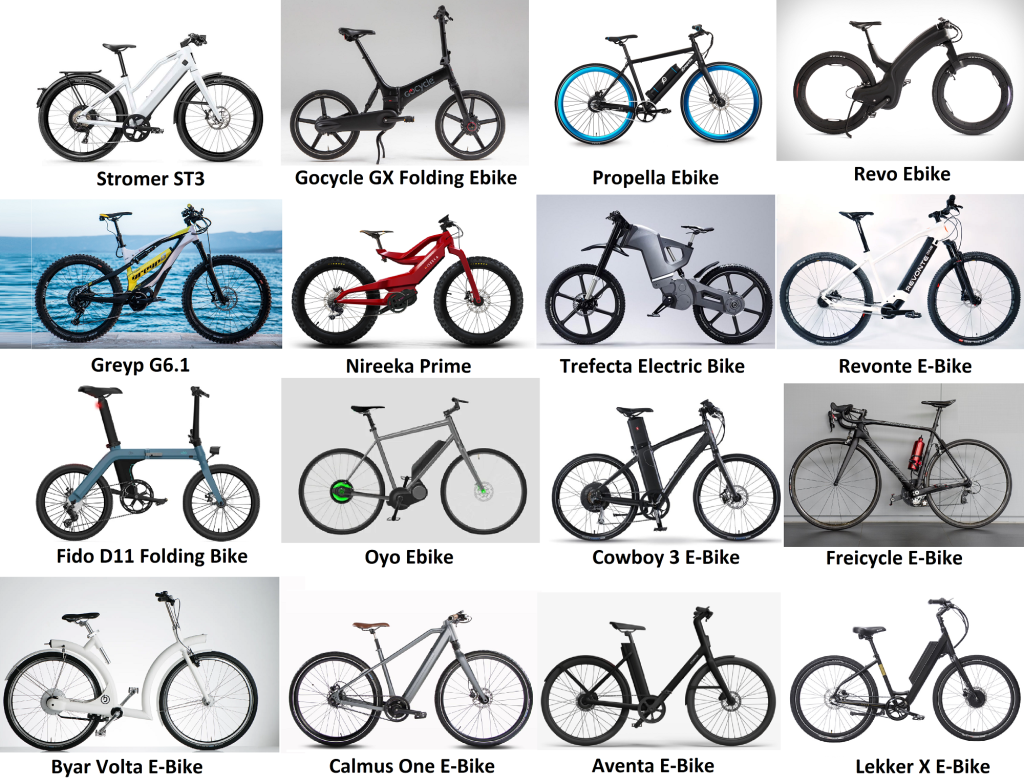
Leading 2026 Folding Bike Categories
Current testing demonstrates that there isn’t one folding e-bike that is best for everyone.
| Category | Example 2026 choice |
| Overall/value | Ride1Up Portola |
| Urban & multimodal | Brampton Electric G Line |
| Long range | Meltric Fold 1 Plus |
| Lightweight | Utopia Carbon Fold 1 |
| Cargo-oriented | Electric XP4 |
| Budget | Go Tax Fold |
These classifications come from different 2026 testing guides and should be treated as use-case recommendations rather than universal rankings.
For example,
Tom’s Guide’s June 2026 testing selected the Urtopia Carbon Fold 2 as its overall folding-bike pick and the Ride1Up Portola as its budget choice, demonstrating how rankings can vary according to testing methodology and priorities.
AI vs. Traditional Folding eBikes
| Feature | Traditional Folding Bike | AI/Smart Folding Bike |
| Electric assistance | ✓ | ✓ |
| Folding frame | ✓ | ✓ |
| Battery monitoring | ✓ | ✓ |
| Smartphone app | Sometimes | Usually |
| GPS/navigation | Sometimes | More likely |
| Ride analytics | Limited | ✓ |
| Personalized recommendations | Limited | Emerging |
The important lesson is that “AI” should not be the only buying criterion.
A poorly designed bicycle with an impressive app is still a poor bicycle.
Benefits of AI Folding Electric Bikes
1.Benefits
Space Efficiency
A folding design can make bicycle ownership practical for people living in small apartments.
Easier Commuting
Motor assistance can make hills and longer journeys less demanding.
Public Transportation Integration
Folding makes it easier to combine cycling with trains and other transportation.
Smart Navigation
Connected systems can help riders plan more efficient journeys.
Personalized Riding
Ride data can potentially help optimize assistance and battery use.
Potentially Fewer Car Trips
For suitable urban journeys, an e-bike can provide an alternative to driving.
2.Disadvantages
Weight
The biggest disadvantage is often the weight of the electric components.
Price
Smart technology, quality batteries, motors, and folding mechanisms can increase the purchase price.
Battery Dependence
A depleted battery turns the bike into a considerably heavier conventional bicycle.
Theft
An expensive connected e-bike needs strong security.
Maintenance
You have both bicycle components and electrical components to maintain.
AI Limitations
AI features can be helpful, but they are not necessarily essential. Navigation, battery estimation, and ride statistics can often be handled without advanced AI.
Safety and Responsible AI
As bicycles become more connected, safety becomes increasingly important.
An intelligent mobility system should assist the rider rather than encourage unsafe behavior.
AI should not encourage riders to:
- Ignore traffic signals
- Exceed local speed limits
- Follow dangerous routes
- Distract themselves with a phone
- Depend blindly on automated recommendations
Research into physical AI and urban mobility increasingly emphasizes hazard-aware systems and safety constraints because intelligent transportation systems operate around pedestrians, cyclists, vehicles, and other unpredictable road users.
Environmental Impact
Folding e-bikes can potentially contribute to lower-emission urban transportation when they replace some car journeys.
However, “electric” does not automatically mean zero environmental impact.
Manufacturing involves:
- Batteries
- Metals
- Electronics
- Motors
- Transportation
- Replacement components
Battery longevity, repairability, responsible charging, and product lifespan therefore matter. The greatest environmental benefit comes when an e-bike becomes a durable transportation tool that replaces repeated car trips, rather than another rarely used gadget.
Who Should Buy One?
An AI folding e-bike is particularly attractive for:
Apartment residents
Limited storage makes compact folding valuable.
Train commuters
The ability to combine cycling and transit is a major advantage.
Office commuters
A compact bike may be easier to store indoors.
RV travelers
A folding e-bike can provide local transportation without moving the main vehicle.
Urban errand riders
Electric assistance makes short trips practical without driving.
Technology enthusiasts
Connected features can provide navigation and ride analytics.
Who Should Avoid One?
A folding e-bike may not be ideal if you:
- Need to carry the bike up several flights of stairs every day
- Regularly ride very long distances
- Primarily ride aggressive off-road terrain
- Need a very lightweight bicycle
- Have no convenient way to charge the battery
- Don’t need the folding function
In those situations, a conventional e-bike or lightweight bicycle may make more sense.
The Future of AI Folding Bikes
The next generation could move beyond simple smartphone connectivity.
Potential developments include:
AI Range Prediction
More accurate predictions based on terrain, weather, rider behavior, and traffic.
Safer Route Intelligence
Routes optimized for bike lanes, intersections, traffic, road quality, and hazards.
Smart-City Connectivity

Communication between bicycles and urban transportation infrastructure.
Predictive Maintenance
Automatic detection of abnormal component behavior.
Personalized Mobility
One application could combine bicycle, train, walking, and other transportation options into a single journey.
Intelligent Fleet Management
Bike-sharing operators could use AI to predict demand and redistribute bikes more efficiently. Research in 2026 is already exploring AI-based demand prediction and fairness considerations for expanding bike-sharing systems.
Final Verdict
AI Folding Electric Bikes Smarter Urban Mobility in 2026 represents the convergence of electric transportation, compact design, connected technology, and AI-assisted mobility. The most important innovation isn’t that a bicycle can “think.” It is that a folding e-bike can increasingly become part of a connected urban transportation system.
The ideal 2026 model should therefore be evaluated in this order:
1. Folding size → 2. Weight → 3. Range → 4. Comfort → 5. Motor performance → 6. Safety → 7. Smart/AI features
That approach prevents the marketing around “AI” from overshadowing what actually makes a folding e-bike useful.
Bottom line: The smartest folding e-bike isn’t necessarily the one with the most AI. It’s the one that intelligently fits your commute, your city, your storage space, and your everyday life.