1. What Is a Heat Dome?
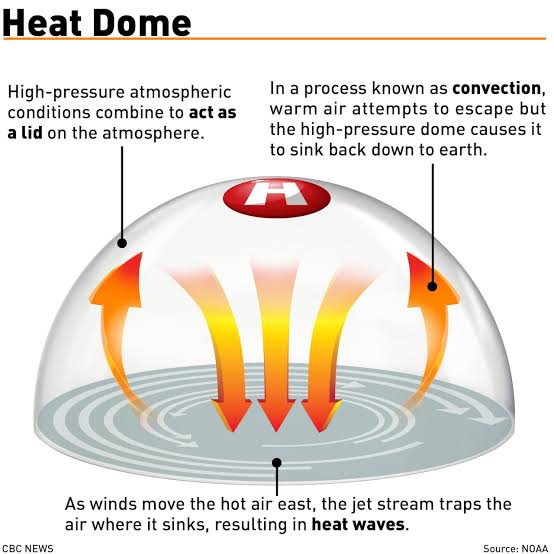
A heat dome is a weather pattern where a large area of high atmospheric pressure becomes stuck over a region, trapping hot air beneath it much like putting a lid on a pot.
How it works: High pressure develops. Air sinks from higher in the atmosphere toward the ground. Sinking air warms. As the air compresses, it heats up (a process called compressional warming). Heat gets trapped. The high-pressure system acts like a dome, preventing cooler air and storm systems from moving in. The ground gets hotter. Sunshine continues heating the land day after day, and the trapped air keeps temperatures climbing. The cycle reinforces itself.
.
Why heat domes are dangerous: Prolonged heat waves lasting days or even weeks. Very warm nights, which reduce the body’s ability to recover from daytime heat. Increased risk of heat exhaustion and heat stroke, especially for older adults, young children, outdoor workers, and people with chronic illnesses. Stress on power grids as air conditioning demand spikes.
2. Is a heat dome the same as a heat wave?
A heat wave is a period of unusually hot weather. A heat dome is one of the atmospheric patterns that can cause a heat wave by keeping hot air trapped over the same area.
Heat wave = the event (extreme heat).
Heat dome: the weather setup that often creates and sustains that event. In recent years, scientists have observed that while heat domes themselves are a natural weather phenomenon. Human caused climate change is making many heat waves associated with them hotter and increasing the likelihood of record-breaking temperatures.
3. What Causes Heat Domes?
Main causes of a heat dome:
- Strong high-pressure system
A large area of high pressure develops in the upper atmosphere. Air under high pressure sinks toward the ground.
- Sinking air warms
As the air sinks, it is compressed. Compressed air becomes warmer, making the surrounding atmosphere hotter.
- Jet stream patterns
The jet stream can slow down or develop large waves. When this happens, the high-pressure system can become “stuck” over one region, causing the heat dome to persist.
- Dry soil and lack of rain
Dry ground has less moisture available for evaporation. Instead of using the Sun’s energy to evaporate water, more energy goes directly into heating the air, making temperatures even higher.
4. Why are heat domes becoming more severe?
Heat domes are natural weather phenomena that have occurred for a long time. However, a warmer global climate means they often start from a higher baseline temperature. As a result, when a heat dome develops today, it can produce higher temperatures, longer-lasting heat waves, and more frequent record-breaking heat events than would have been likely in a cooler climate.
5. How Does a Heat Dome Work with AI?
Here’s an AI-inspired way to understand how a heat dome works. This is an analogy. There isn’t actually an AI controlling the weather.
- An AI Weather Controller:
Normally, the sun heats the ground, warm air rises, cooler air replaces it, and clouds and rain may form. Temperatures stay balanced.
AI Weather Controller: Maintain high pressure, keep air sinking, block cool air, and suppress clouds.
Computer analog: The CPU generates heat. The cooling fan normally removes that heat. If the fan stops working and the case is sealed, heat keeps building inside.
A heat dome is similar: The sun is like the CPU producing heat. The high-pressure system is like a closed computer case with no airflow. Cool air and storms are like the cooling fan that can’t do its job. The result is heat trapped near the ground, causing a prolonged heat wave.
6. How Can You Prepare Safely for Heat Domes?

Preparing for a heat dome means reducing your exposure to extreme heat, staying hydrated, and having a plan if temperatures remain high for several days.
Keep your home cool:
Drink water regularly, even if you don’t feel thirsty. Avoid excessive alcohol and limit sugary drinks, as they can contribute to dehydration.
Avoid the hottest part of the day:
Limit outdoor activities, especially between late morning and early evening when temperatures are often highest.
Prepare before a heat dome arrives:
Follow local weather forecasts and heat alerts. Keep extra drinking water on hand. Test fans and air conditioning before extreme heat begins.
7.Why AI can’t see a record-breaking heat wave coming?
Weather is chaotic:
Tiny differences in today’s. Weather can grow into large differences days or weeks later. This is sometimes called the “butterfly effect.” Even powerful AI models cannot overcome this fundamental limit.
Complex atmospheric interactions:
A persistent high-pressure system (a heat dome) The position of the jet stream Dry soil and low humidity Ocean temperature patterns Small changes in any of these can affect the outcome.
Simple analogy:
Think of AI as a skilled chess player. It can predict the next several moves with high confidence. But predicting every move far into the future becomes much harder because each move changes the game. Weather works in a similar way. AI can often identify that a heat wave is becoming likely.