
What Is SCHG vs QQQ vs VUG: AI Growth ETF Winner?
SCHG vs QQQ vs VUG is a comparison of three popular U.S. growth-focused ETFs for investors seeking long-term exposure to technology, artificial intelligence, and other high-growth companies.
- SCHG: Schwab U.S. Large-Cap Growth ETF, designed to track large-cap U.S. growth stocks. It has a 0.04% expense ratio and 197 holdings as of July 30, 2026.
- QQQ: Invesco QQQ tracks the Nasdaq-100, giving investors concentrated exposure to many of the largest non-financial companies on Nasdaq.
- VUG: Vanguard Growth ETF provides broad exposure to U.S. large-cap growth companies and is another low-cost option.
Why AI Matters
All three funds provide meaningful exposure to companies benefiting from AI, including semiconductor, cloud-computing, software, and digital-platform businesses. SCHG’s recent holdings include NVIDIA, Apple, Microsoft, Amazon, Alphabet, and Broadcom.
Which One Is the Winner?
There is no guaranteed winner for the next decade because future returns depend on valuations, earnings growth, AI adoption, interest rates, and market conditions. However, SCHG can be viewed as a strong all-around AI growth ETF candidate because it combines broad large-cap growth exposure with a very low 0.04% expense ratio.
In simple terms:
SCHG = balanced growth + low cost
QQQ = concentrated Nasdaq/technology exposure
VUG = broad growth + ultra-low cost
Growth ETFs are attracting investors looking for long-term exposure to technology, artificial intelligence, cloud computing, semiconductors, and other high-growth industries.
SCHG, QQQ, and VUG are three popular choices.
They take different approaches to growth investing.
1. SCHG — Low-Cost Growth Exposure
Schwab Asset Management’s SCHG tracks the Dow Jones U.S. Large-Cap Growth Total Stock Market Index. It currently charges a very low 0.04% expense ratio and holds about 197 stocks.Its portfolio includes major AI and technology beneficiaries such as NVIDIA, Apple, Microsoft, Amazon, Alphabet, and Broadcom.
Why it stands out:
- Very low fees
- Broad large-cap growth exposure
- Strong exposure to AI-related companies
- More diversified than a technology-only fund
2. QQQ — Concentrated Nasdaq Growth
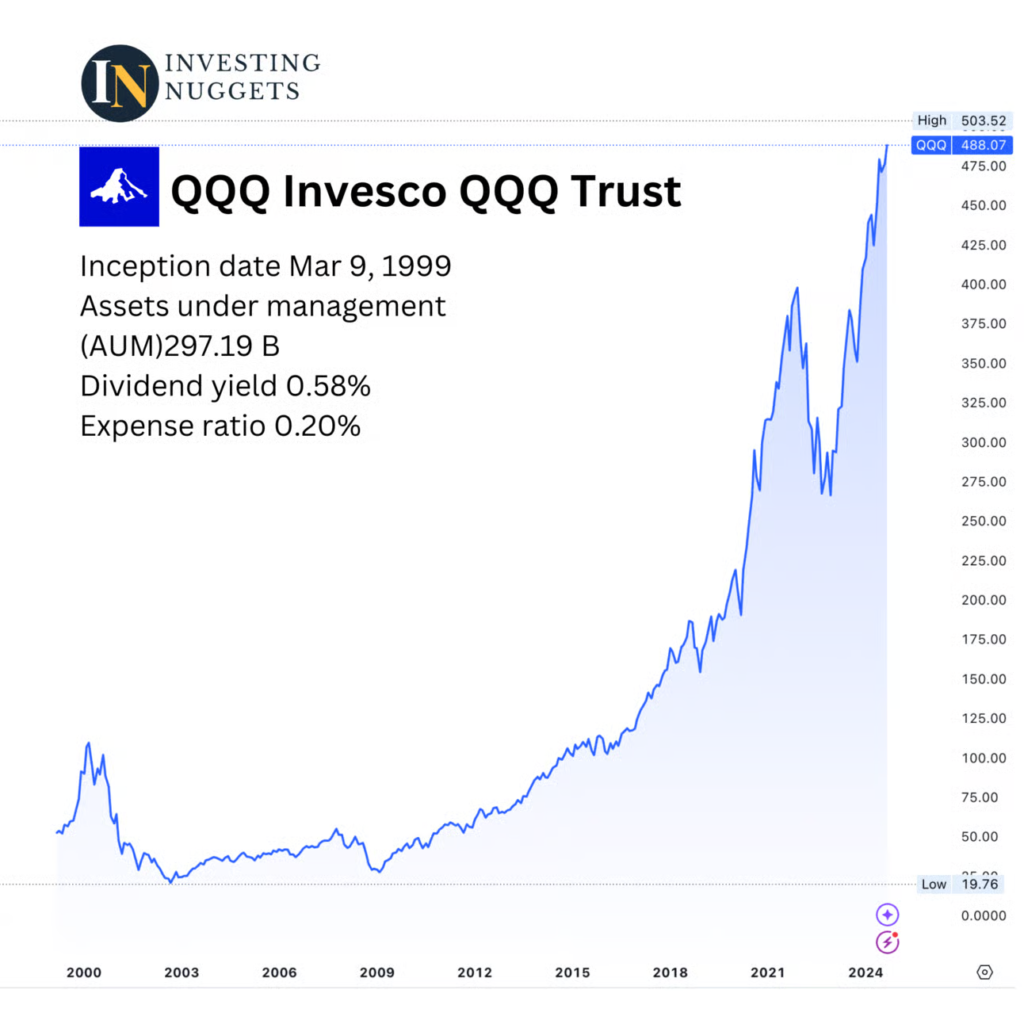
QQQ tracks the Nasdaq-100, giving investors exposure to many of the largest non-financial companies listed on Nasdaq.Its concentration in major technology and communication companies can make it particularly attractive when mega-cap technology and AI stocks outperform. However, that concentration can also increase risk when growth stocks fall.
Best for: Investors who specifically want strong Nasdaq-100 and technology exposure.
3. VUG — Broad, Low-Cost Vanguard Growth
Vanguard’s VUG provides broad exposure to U.S. large-cap growth stocks and has an 0.03% expense ratio, making it slightly cheaper than SCHG.VUG can be attractive for investors who want a straightforward long-term growth ETF while keeping expenses extremely low.
SCHG vs QQQ vs VUG
| ETF | Main Strength | AI/Tech Exposure | Cost |
| SCHG | Large-cap growth | High | 0.04% |
| QQQ | Nasdaq-100 | Very high | Higher than SCHG/VUG |
Which Could Be the Winner?
For a 10-year growth strategy, SCHG is a compelling choice because it combines broad growth exposure, significant participation in AI leaders, and an exceptionally low fee. Its current portfolio includes NVIDIA, Apple, Microsoft, Amazon, Alphabet and Broadcom among its largest holdings. VUG is arguably the strongest alternative for investors prioritizing the lowest cost, while QQQ may appeal most to investors who specifically want concentrated Nasdaq-100 exposure. However, there is no guaranteed winner for the next decade. Past performance does not guarantee future returns, and AI-driven growth stocks can experience substantial volatility.
Bottom line:
SCHG may offer the best balance of AI exposure, diversification, and low costs, while VUG is the fee-focused alternative and QQQ is the more concentrated Nasdaq growth option.
Benefits of SCHG vs QQQ vs VUG: AI Growth ETF Winner
Comparing SCHG, QQQ, and VUG helps investors understand different ways to gain exposure to large U.S. growth companies and the AI-driven technology economy.
1. SCHG — Strong Balance of Growth and Cost
- Low 0.04% expense ratio, helping reduce long-term investment costs.
- Holds 197 stocks, providing broader diversification across large-cap growth companies.
- Significant exposure to AI-related leaders such as NVIDIA, Microsoft, Amazon, Alphabet, and Broadcom.
- Can work well as a core growth ETF because it combines technology exposure with companies from other sectors.
2. QQQ — Strong Technology and AI Exposure
- Provides exposure to the Nasdaq-100, giving investors access to many major technology and innovation companies.
- Benefits when mega-cap technology, semiconductors, cloud computing, and AI companies perform strongly.
- Its concentration can also mean greater exposure to technology-sector volatility.
3. VUG — Low-Cost Long-Term Growth
- Provides broad exposure to U.S. large-cap growth stocks.
- Its low-cost structure makes it attractive for investors focused on long-term compounding.
- It can provide AI exposure without making the portfolio exclusively dependent on technology companies.
Why SCHG Can Stand Out
SCHG offers an appealing combination of low fees, diversification, and substantial exposure to AI leaders. As of July 30, 2026, NVIDIA represented about 9.95% of the fund, while Apple, Microsoft, Amazon, Alphabet, and Broadcom were also among its largest holdings.
Simple takeaway:
SCHG → balanced AI + growth exposure
QQQ → stronger Nasdaq/technology concentration
VUG → broad growth + low-cost approach
For a long-term comparison, SCHG may be the most balanced choice, but there is no guaranteed “winner” for the next decade. Future returns will depend on valuations, earnings growth, AI adoption, interest rates, and market conditions.
What to Include in SCHG vs QQQ vs VUG
- ETF overview: Explain what SCHG, QQQ, and VUG are and how their indexes differ.
- AI exposure: Compare their exposure to NVIDIA, Microsoft, Apple, Amazon, Alphabet, and other AI-related companies.
- Fees: SCHG and VUG have very low expense ratios, while QQQ costs more. Current sources list roughly 0.04% for SCHG, 0.03%–0.04% for VUG, and 0.18% for QQQ.
- Diversification: SCHG and VUG offer broader growth-stock exposure, while QQQ is more concentrated in the Nasdaq-100 and technology-related companies.
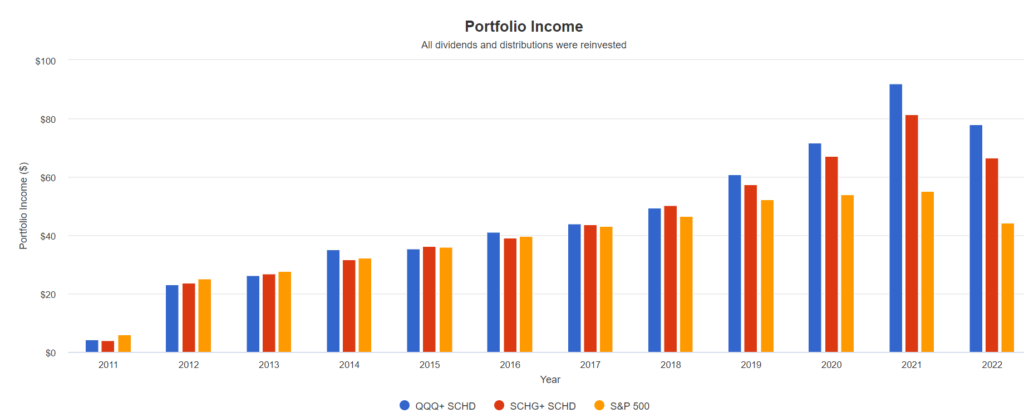
- Long-term performance: Historical data through July 2026 shows QQQ ahead of SCHG and VUG over the previous decade, but past performance does not guarantee future results.
- Risk: Discuss concentration, technology exposure, volatility, valuations, and potential AI-market corrections.
- 10-year outlook: Explain why the eventual winner could depend on AI growth, earnings, interest rates, and future valuations.
Strong Conclusion
SCHG vs QQQ vs VUG is less about finding a guaranteed winner and more about choosing the right balance of AI exposure, diversification, cost, and risk. SCHG can be attractive as a balanced low-cost growth option, QQQ offers stronger Nasdaq/technology concentration, and VUG provides broad growth exposure at an exceptionally low fee.