








Democratizing Generative AI means making generative artificial intelligence more accessible to people and organizations, regardless of their technical background. With easy-to-use AI tools, cloud platforms, pretrained models, and open-source technologies, more users can create content, analyze information, automate tasks, and solve problems without needing advanced programming skills.
However, the idea of AI democratization is more complex than simply making AI available to everyone. The concept can refer to broader access to AI tools, knowledge, skills, and computing capabilities, while also raising questions about cost, data privacy, security, accuracy, and responsible use.
Gartner highlighted democratized generative AI as a major technology trend in its 2026 report. According to Gartner, the combination of massively pretrained models, cloud computing, and open-source technology is helping make generative AI accessible to workers worldwide. Gartner also emphasized that GenAI can democratize access to organizational knowledge and skills through conversational interfaces and AI-powered applications.
Multiple Meanings of AI Democratization
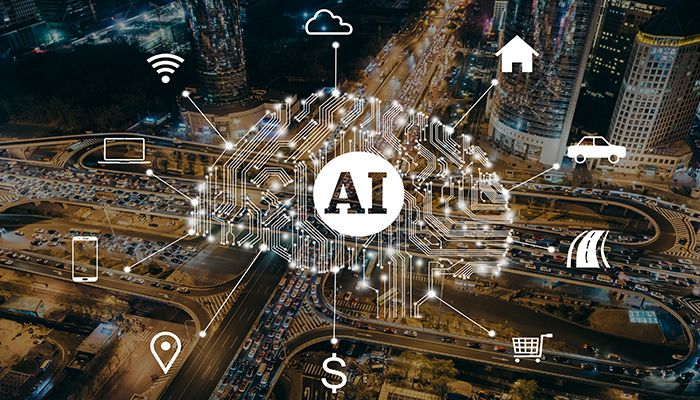
So far, we have discussed the democratization of AI use, which focuses on making AI technology accessible to a broader range of people. But is accessibility the only meaning behind the term AI democratization?
According to research by Elizabeth Seger and her co-authors, the term has several distinct meanings. Their research identifies four types of AI democratization, each focusing on a different aspect of access, participation, benefits, and decision-making.
These four types are:
- Democratization of AI Use – Making AI systems accessible to a wide range of people so they can use and benefit from the technology.
- Democratization of AI Development – Giving more people opportunities to participate in designing, developing, and improving AI systems.
- Democratization of AI Benefits or Profits—Promoting a broader and more equitable distribution of the economic value created through AI.
- Democratization of AI Governance – Giving a wider range of stakeholders a meaningful role in decisions about how AI is developed, deployed, regulated, and controlled.
These concepts can overlap, but they do not always lead to the same outcome. For example, making powerful AI models widely available may support AI development, while governance considerations could support restricting access to certain systems because of potential risks.
Democratization of AI Use
The democratization of AI use focuses on making AI technology easier to access and use for a broad range of people and organizations. The goal is to ensure that the benefits of artificial intelligence are not limited to technical experts or large technology companies but can be experienced by a much wider audience.
Positive Impacts of Democratization of AI Use
- Improves access to AI technology: User-friendly AI tools allow people with different levels of technical knowledge to benefit from artificial intelligence.
- Broadens access to AI benefits: More individuals and organizations can use AI to improve productivity, creativity, decision-making, and everyday workflows.
- Creates financial opportunities: Businesses can integrate AI into their operations to automate repetitive tasks, improve efficiency, reduce costs, and create new sources of value.
Overall, the democratization of AI use helps make technological progress more inclusive. By lowering technical barriers and providing easier access to AI-powered tools, organizations, and individuals can incorporate artificial intelligence into their daily activities and workflows.
Democratization of AI Development
The democratization of AI development focuses on making it easier for a broader range of people to participate in creating, improving, and shaping artificial intelligence technologies. Instead of limiting AI development to large technology companies, specialized researchers, or highly skilled programmers, this approach aims to lower technical and financial barriers.
Think of it as opening the AI development playground to more participants. With accessible development platforms, open-source models, educational resources, and no-code or low-code tools, individuals, startups, researchers, and smaller organizations can contribute their ideas and build AI-powered solutions.
Key Benefits of Democratized AI Development
- Encourages innovation: More people can experiment with AI and introduce new ideas.
- Reduces technical barriers: Accessible tools allow users with different skill levels to participate in AI development.
- Expands diverse perspectives: Contributions from different communities can help create AI systems that address a wider range of needs.
- Supports smaller organizations: Startups and independent developers can build AI solutions without requiring the resources of major technology companies.
- Accelerates AI progress: A larger and more diverse development community can contribute to faster experimentation and technological advancement.
Democratization of AI Profits
The democratization of AI profits focuses on ensuring that the economic benefits created by artificial intelligence are distributed more broadly rather than being concentrated among a small number of companies or individuals. The goal is to create a more inclusive AI ecosystem in which people who contribute to the development, deployment, or improvement of AI can have a meaningful share in the value it generates.
Imagine a collaborative AI project involving data scientists, developers, engineers, researchers, and end users who provide feedback and help improve the system. In a traditional model, most of the financial gains might flow to the organization that owns the technology. Under a more democratized approach, the economic value generated by AI could be shared more broadly among contributors and communities.
Key Benefits of Democratizing AI Profits
- Promotes fairer wealth distribution: AI-generated economic value can reach a broader group of people.
- Encourages participation: Contributors have greater incentives to participate when they can benefit from the value they help create.
- Supports inclusive growth: Smaller businesses, workers, developers, and communities can have greater opportunities to benefit from AI.
- Reduces economic concentration: Sharing AI-related benefits can help prevent excessive wealth and market power from accumulating among a few organizations.
- Builds a more inclusive AI ecosystem: A wider distribution of AI benefits can encourage collaboration and long-term innovation.
Democratization of AI Governance

The democratization of AI governance focuses on making AI-related decision-making more inclusive, transparent, and representative. It aims to ensure that decisions about how artificial intelligence is developed, deployed, regulated, and distributed reflect the needs, values, and interests of the people and communities affected by these technologies.
Conclusion
The democratization of AI is making artificial intelligence more accessible to individuals, employees, businesses, and communities. However, it goes beyond simply providing access to AI tools. It also includes democratizing AI development, profits, and governance, ensuring that more people can participate in and benefit from the growth of artificial intelligence.
Professionals need to understand the capabilities of AI, identify practical use cases, and apply AI effectively to achieve meaningful business outcomes. For this reason, business leaders should make strategic investments in AI tools, employee training, and digital skills development.
Businesses should also educate their employees about what artificial intelligence is and how it can be applied to everyday tasks. With the right training and accessible tools, employees can improve productivity, automate repetitive work, and make better use of AI-driven insights.