AI automation combines artificial intelligence with automation to perform tasks, analyze data, identify patterns, and make decisions with limited human intervention. It can handle repetitive activities such as data entry, invoicing, customer support, inventory management, and pricing, allowing employees to focus on more strategic work.
Unlike traditional automation, which relies on predefined rules, AI-powered automation can analyze new information and adapt its actions. Technologies such as machine learning (ML), natural language processing (NLP), generative AI, and large language models (LLMs) make these systems more capable of understanding information and responding to changing situations.
For example, a traditional chatbot may provide a fixed response to a customer question. An AI-powered virtual agent can understand the customer’s intent, analyze available information, and provide a more relevant response or take an appropriate action.
Overall, AI automation helps businesses improve efficiency, reduce repetitive work, accelerate decision-making, and create more responsive customer experiences.
1. How Does AI Automation Work?
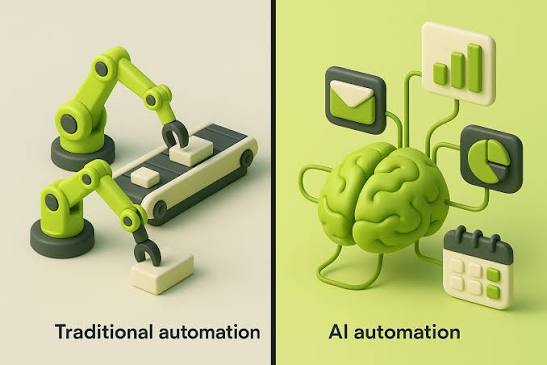
AI automation works by combining artificial intelligence with automated workflows to perform tasks, analyze information, recognize patterns, and make decisions with minimal human intervention. At its core, it relies on algorithms that process data, identify patterns, and determine what action should be taken.
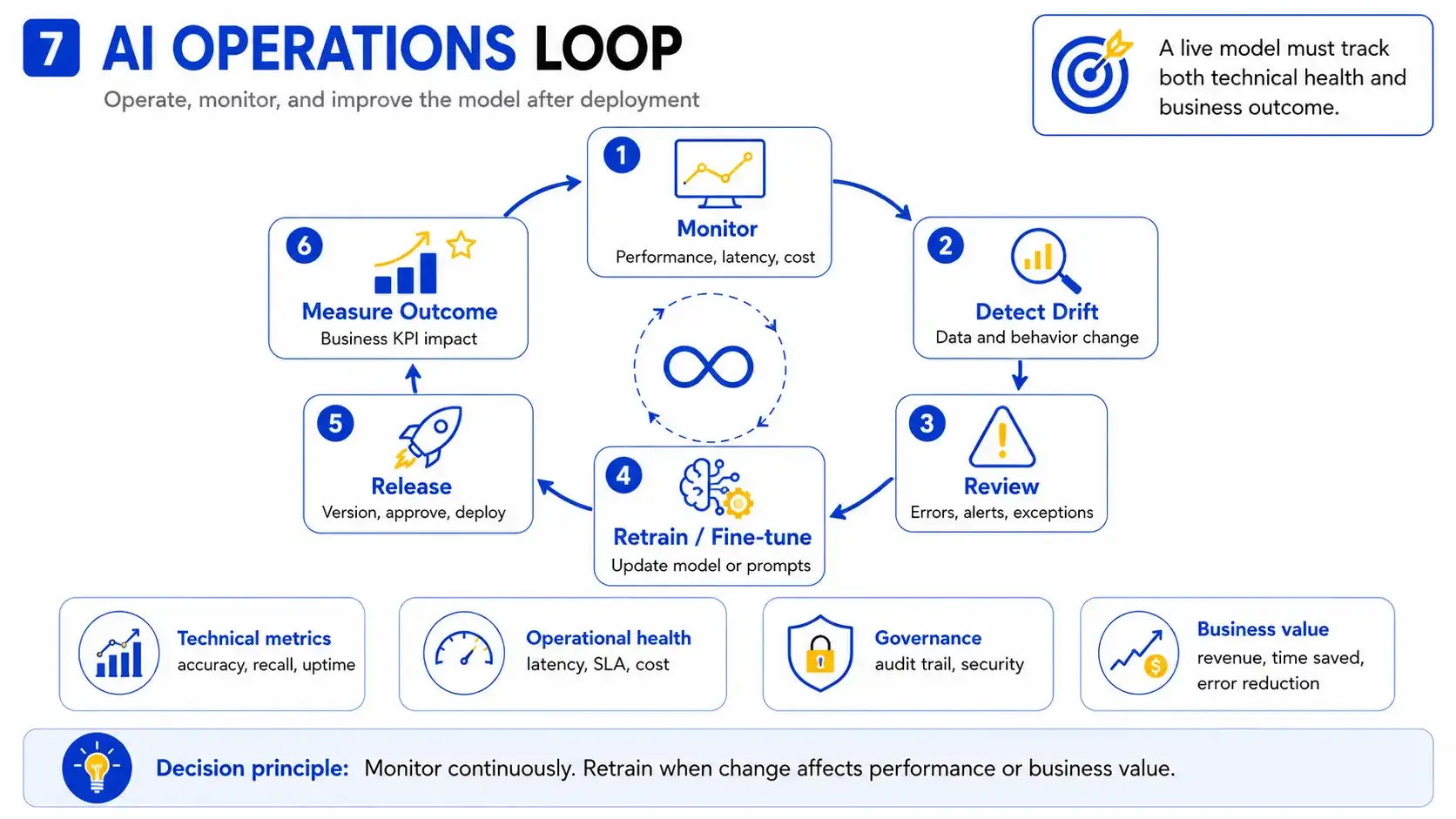
Human involvement remains important. People can review AI-generated decisions, provide feedback, correct mistakes, and help improve system performance. Through continuous learning and updated data, AI systems can become more accurate and effective over time.
Several technologies work together to power AI automation, including:
- Machine learning (ML): Helps systems learn from data and identify patterns.
- Natural language processing (NLP): Enables AI to understand and process human language.
- Generative AI: Creates text, images, code, and other content based on user inputs.
- Large language models (LLMs): Help AI understand context and generate human-like responses.
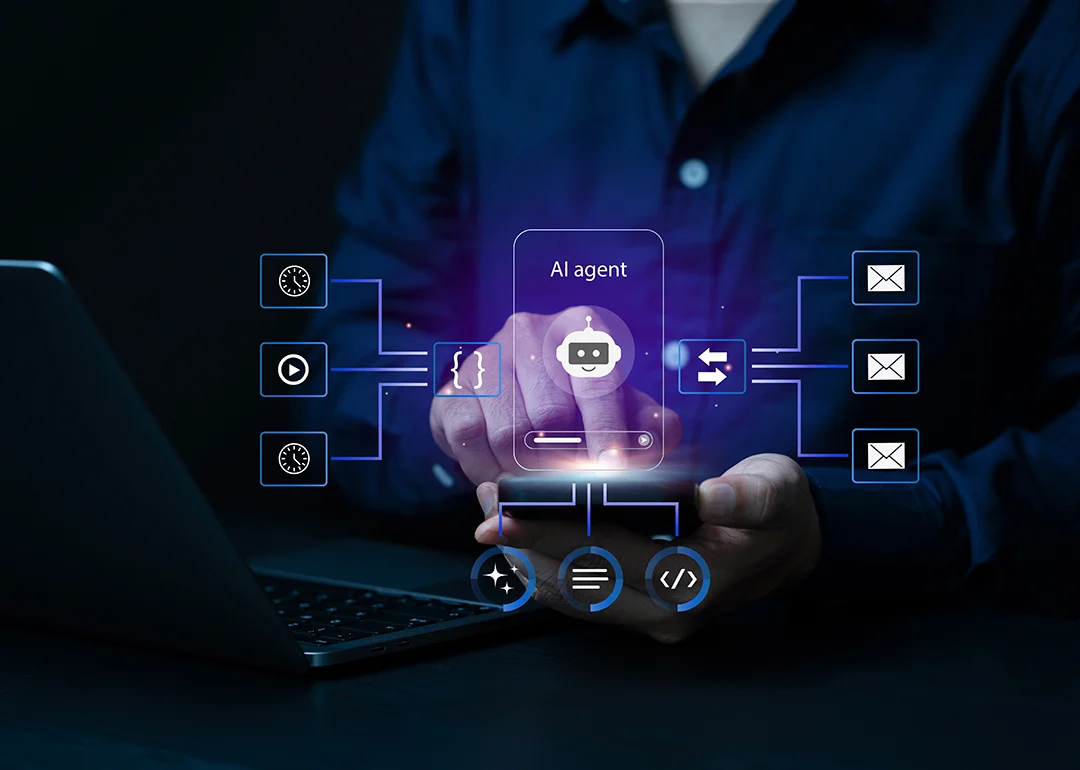
- AI agents: Can interpret goals, decide what actions to take, and execute tasks across connected systems.
- Cloud computing: Provides the infrastructure and processing power needed to deploy AI automation at scale.
2. How Do AI Agents Differ From Traditional Automation Tools?
AI agents and traditional automation tools differ mainly in how they handle information, make decisions, and respond to changing situations.
Traditional automation works best for repetitive, predictable tasks that follow predefined rules. For example, an RPA system can automatically copy data between applications, generate reports, or process invoices according to fixed instructions.
AI agents, on the other hand, can handle more complex and dynamic tasks. They use technologies such as machine learning (ML), natural language processing (NLP), and generative AI to understand context, interpret information, and determine appropriate actions.
For example, a traditional chatbot may recognize specific keywords in a question such as “payment” or “app.” An AI agent can understand the meaning behind a message such as, “I’m not sure how to make a payment on the app,” and provide a context-aware response or take the next appropriate action.
AI agents can also analyze customer sentiment and urgency to prioritize support tickets. This makes them particularly useful for situations where decisions cannot be handled effectively through simple if-then rules.
Key Differences
| Traditional Automation | AI Agents |
| Follows predefined rules | Makes context-based decisions |
| Best for repetitive tasks | Handles complex workflows |
| Works with structured inputs | Can process unstructured data |
| Limited adaptability | Can adapt to changing situations |
| Requires predefined workflows | Can determine appropriate actions |
| Keyword- or rule-dependent | Uses context and language understanding |
3. Benefits of AI Automation
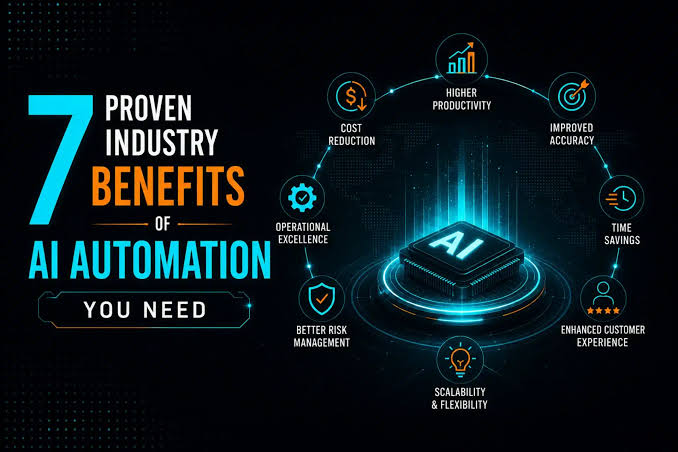
AI automation offers several advantages over traditional automation by combining intelligent decision-making with automated workflows. It can reduce repetitive work, improve accuracy, accelerate processes, and allow employees to spend more time on strategic and creative activities.
AI-powered digital workers can also support tasks such as data analysis, document processing, customer service, and workflow management. Unlike basic software bots, AI systems can understand context, identify patterns, and adapt to changing information.
Key Benefits of AI Automation
- Scalability: AI automation can handle growing workloads and increasing volumes of data without requiring a proportional increase in manual effort.
- Speed: AI-powered systems can process information and respond to customers or employees much faster than many manual processes.
- Accuracy: Automation reduces human errors in repetitive tasks such as data entry, document processing, quality checks, and data analysis.
- Cost savings: Automating routine activities can reduce operational costs and allow employees to focus on higher-value responsibilities.
- Better decision-making: AI can analyze large datasets, identify patterns, and provide insights that support faster and more informed decisions.
- 24/7 availability: AI-powered systems can operate continuously, helping businesses provide services and support outside normal working hours.
- Handling complex tasks: AI automation can manage workflows that require pattern recognition, contextual understanding, and real-time decision-making.
- Improved employee productivity: By taking over repetitive responsibilities, AI gives employees more time for innovation, problem-solving, and strategic work.
4. The Future of AI Automation
The future of AI automation is moving toward more intelligent, autonomous, and adaptable systems. AI agents are already transforming areas such as customer service, sales, marketing, commerce, and CRM by handling routine interactions, qualifying leads, analyzing information, and supporting business workflows.
As these systems become more capable, businesses will increasingly use AI agents as a digital workforce that can operate around the clock and scale according to demand. Instead of simply following predefined instructions, future AI systems will be better able to understand context, reason through problems, plan tasks, and take appropriate actions.
5. What to Expect From AI Automation
- More autonomous AI agents: AI agents will manage increasingly complex workflows with less human intervention.
- Smarter decision-making: Advanced AI will improve its ability to analyze data, recognize patterns, and recommend or execute actions.
- Greater personalization: AI systems will deliver more relevant customer experiences by understanding individual needs and context.
- Human-AI collaboration: Employees will increasingly work alongside AI, using it to handle routine work while focusing on creativity, strategy, and problem-solving.
- Continuous improvement: AI systems will become better at learning from feedback, new data, and changing business conditions.
- Expansion across industries: AI automation will continue spreading across healthcare, finance, retail, manufacturing, education, customer service, and other sectors.
Conclusion
AI automation is transforming how businesses manage tasks, analyze data, and make decisions. By combining machine learning, natural language processing, generative AI, and AI agents, organizations can automate repetitive work while improving speed, accuracy, scalability, and productivity.
Unlike traditional automation, AI-powered systems can understand context, adapt to changing information, and handle more complex workflows. As the technology continues to advance, human oversight will remain important to ensure responsible and effective use.