What Is Mastering Advanced Machine Learning Tools?
Mastering Advanced Machine Learning Tools means developing the knowledge and practical skills needed to use sophisticated tools and technologies for building, training, testing, deploying, and optimizing machine learning models.
These tools can help with:
Data preparation: Cleaning, transforming, and organizing datasets.
Model development: Building advanced ML and deep learning models.
Training and optimization: Improving model accuracy and performance.
Automation: Streamlining repetitive machine learning workflows.
Model deployment: Putting trained models into real-world applications.
Monitoring: Tracking model performance and detecting problems.
AI experimentation: Testing different algorithms, parameters, and approaches.
In simple terms, mastering advanced machine learning tools means learning how to use modern ML technologies effectively to turn data into accurate, useful, and scalable AI solutions.
Mastering Advanced Machine Learning: Best Tools
Here are some of the most useful tools to learn for advanced machine learning:
- Torch — Excellent for deep learning, neural networks, research, and custom model development.
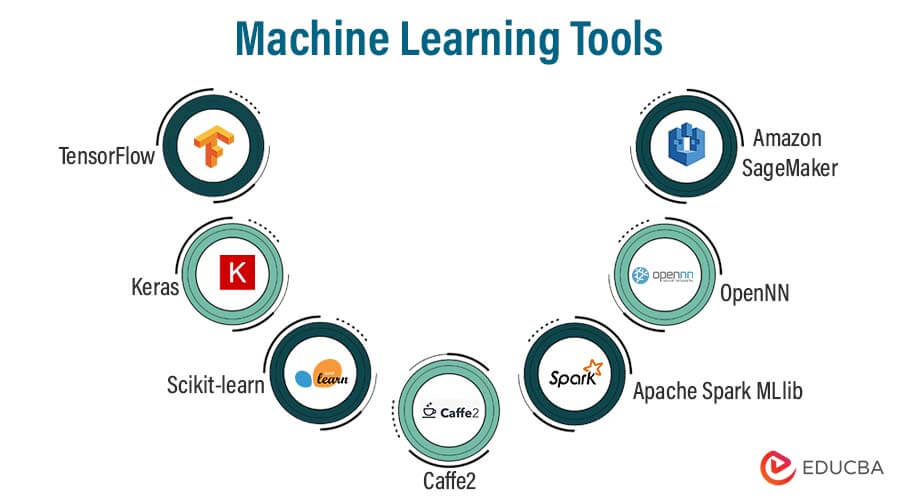
- TensorFlow & Keras — Useful for building, training, and deploying machine learning models at scale.
- Scikit-learn — A strong choice for traditional ML tasks such as classification, regression, clustering, and preprocessing.
- Hugging Face Transformers — Valuable for NLP, transformer models, and generative AI applications.
- MLflow — Helps track experiments, evaluate models, manage versions, and deploy models across the ML lifecycle.
- XGBoost — Powerful for structured or tabular-data prediction problems.
- Jupyter Notebook — Useful for interactive experimentation, data analysis, and model development.
- Pandas & NumPy — Essential foundations for data manipulation, numerical computing, and preprocessing.
Best Learning Combination
Beginner → Scikit-learn + Pandas + NumPy
Deep Learning → PyTorch or TensorFlow/Keras
Generative AI → Hugging Face + PyTorch
Production ML → MLflow + cloud/deployment tools
How Do the Best Advanced Machine Learning Tools Work?
Mastering advanced machine learning tools involves using different technologies together to move from raw data to a trained and deployed model.
- Collect Data – Gather relevant datasets from databases, APIs, files, or other sources.
- Prepare Data – Use tools such as Pandas, NumPy, and Scikit-learn to clean, transform, and organize the data.
- Build the Model – Frameworks such as PyTorch and TensorFlow help create neural networks and other ML models.
- Train the Model – Feed prepared data into the model and adjust parameters so it learns useful patterns.
- Evaluate Performance – Test the model using metrics such as accuracy, precision, recall, or F1 score.
- Optimize the Model – Tune hyperparameters and improve the model’s speed, accuracy, and efficiency.
- Track Experiments – MLflow can help record experiments, metrics, models, and versions.
- Deploy the Model – Move the trained model into an application, website, API, or business workflow.
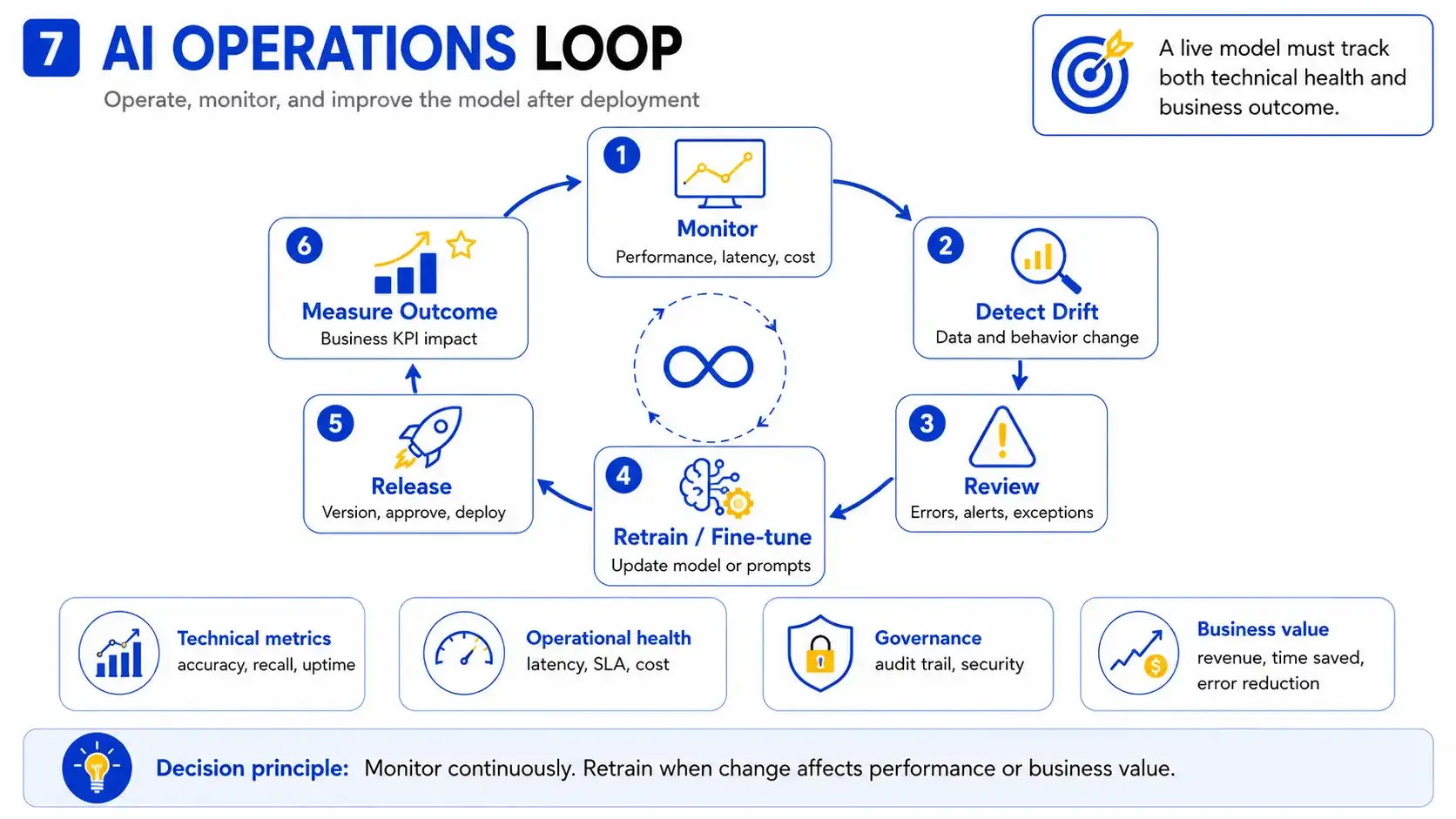
- Monitor and Improve – Continuously check performance and retrain the model when data or requirements change.
In simple terms:
Data → Preparation → Model Building → Training → Evaluation → Optimization → Deployment → Monitoring
Mastering Advanced Machine Learning Tools: Detailed Guide
Mastering Advanced Machine Learning Tools means learning how to use modern software frameworks, libraries, and platforms to build, train, evaluate, optimize, and deploy machine learning models effectively.
1. Data Preparation Tools
Machine learning starts with high-quality data. Tools such as NumPy, Pandas, and Scikit-learn help clean datasets, handle missing values, transform features, and prepare data for training.
2. Machine Learning Frameworks
Frameworks such as PyTorch, TensorFlow, and Keras provide the infrastructure for developing advanced ML and deep-learning models. They support neural networks, model training, optimization, and large-scale experimentation.
3. Natural Language Processing Tools
For language-based AI, tools such as Hugging Face Transformers make it easier to work with modern transformer models for text classification, summarization, question answering, translation, and generative AI.
4. Model Training and Optimization
Advanced tools allow developers to experiment with different architectures, learning rates, batch sizes, optimizers, and other hyperparameters. The goal is to produce a model that performs accurately while using computing resources efficiently.
5. Model Evaluation
After training, models must be tested on unseen data. Metrics such as accuracy, precision, recall, F1-score, and mean squared error help determine whether a model is performing effectively.
6. Experiment Tracking
Tools such as MLflow help organize machine-learning experiments by tracking parameters, metrics, datasets, and model versions. This makes it easier to compare different experiments and reproduce successful results.
7. Model Deployment
A trained model becomes useful when it can operate in a real application. Deployment tools and cloud platforms can help expose models through APIs, websites, mobile applications, or automated business systems.
8. Monitoring and Maintenance
Machine-learning models need continuous monitoring after deployment. Developers can track accuracy, latency, resource consumption, and changes in incoming data. Models may need to be retrained when their performance decreases.
9. Practical Learning Approach
Python → NumPy & Pandas → Scikit-learn → PyTorch/TensorFlow → Hugging Face → MLflow → Deployment → Monitoring
Conclusion
Mastering advanced machine learning tools is not simply about knowing many software libraries. It is about understanding when and how to use each tool throughout the complete ML lifecycle from preparing data and training models to deploying, monitoring, and improving AI systems.