










1.Computer Vision Systems
Computer Vision Systems by AI Technologies, Future in 2026 that focuses on developing computational methods that enable computers to understand, analyze, and interpret the content of digital images and videos. Its primary goal is to allow computers to “see” and understand visual information captured by cameras or sensors, similar to the way humans perceive the world.
2.computers is a significant challenge.
This is due to the vast complexity and variability of the real world, including differences in lighting, object shapes, viewpoints, backgrounds, and environmental conditions. As a result, computer vision remains one of the most challenging and rapidly advancing fields in computer science and artificial intelligence. Similarly, modern computer vision systems use machine learning an
3.AI Computer vision combine image
AI Computer vision combine image processing algorithms with AI to detect, classify, and analyze objects and their surroundings using data captured from cameras or sensors. These systems can process large amounts of visual information in real time, making them useful for tasks such as product inspection, infrastructure monitoring, and defect detection.
4.How Modern working in computer
Due to their ability to operate with high speed, accuracy, consistency, objectivity, and scalability, computer vision systems can often perform visual inspection tasks beyond human capabilities. Modern deep learning models have achieved human-level or higher accuracy in real-world image recognition tasks.This capability is widely used in safety monitoring and equipment inspection systems, particularly in industries. where computer vision can help ensure workers follow safety requirements and reduce the risk of accidents.
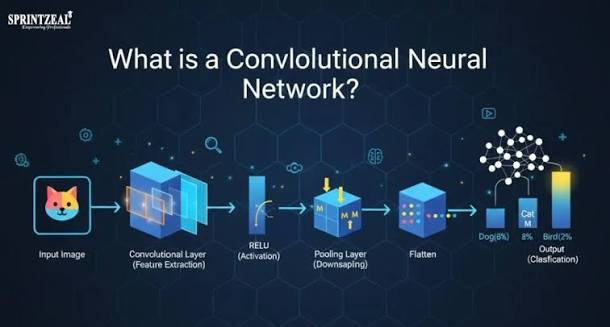
which is a specialized subset of machine learning. Many of the most successful computer vision systems are based on Convolutional Neural Networks (CNNs), a type of deep neural network designed specifically for analyzing visual data.
5.What is CNN?
CNNs consist of multiple layers that allow computers to learn meaningful patterns and context from images. When provided with enough training data, a CNN can learn to distinguish between different images,
The process begins by converting images into collections of pixels. These pixels are analyzed and labeled through a process called image annotation, where important features and objects are identified for training.
6.CNN details by AI computer vision:
During training, the AI model compares its predictions with the correct labels and continuously adjusts its internal parameters to improve accuracy. Through repeated iterations, the model learns to make more reliable predictions about what it is “seeing.”
In summary, CNN-based computer vision systems learn from large amounts of annotated image data, gradually improving their ability to recognize, classify, and understand visual information.
conclusion:
Computer Vision is a rapidly growing field of AI that enables to understand visual information using machine learning and deep learning techniques By leveraging large datasets and CNNs, computer vision systems can recognize objects, defects, identify faces, and perform complex visual tasks with remarkable accuracy. Its applications continue to expand across healthcare, manufacturing, security, transportation, agriculture, and many other industries, it one of the most impactful technologies in modern AI.