







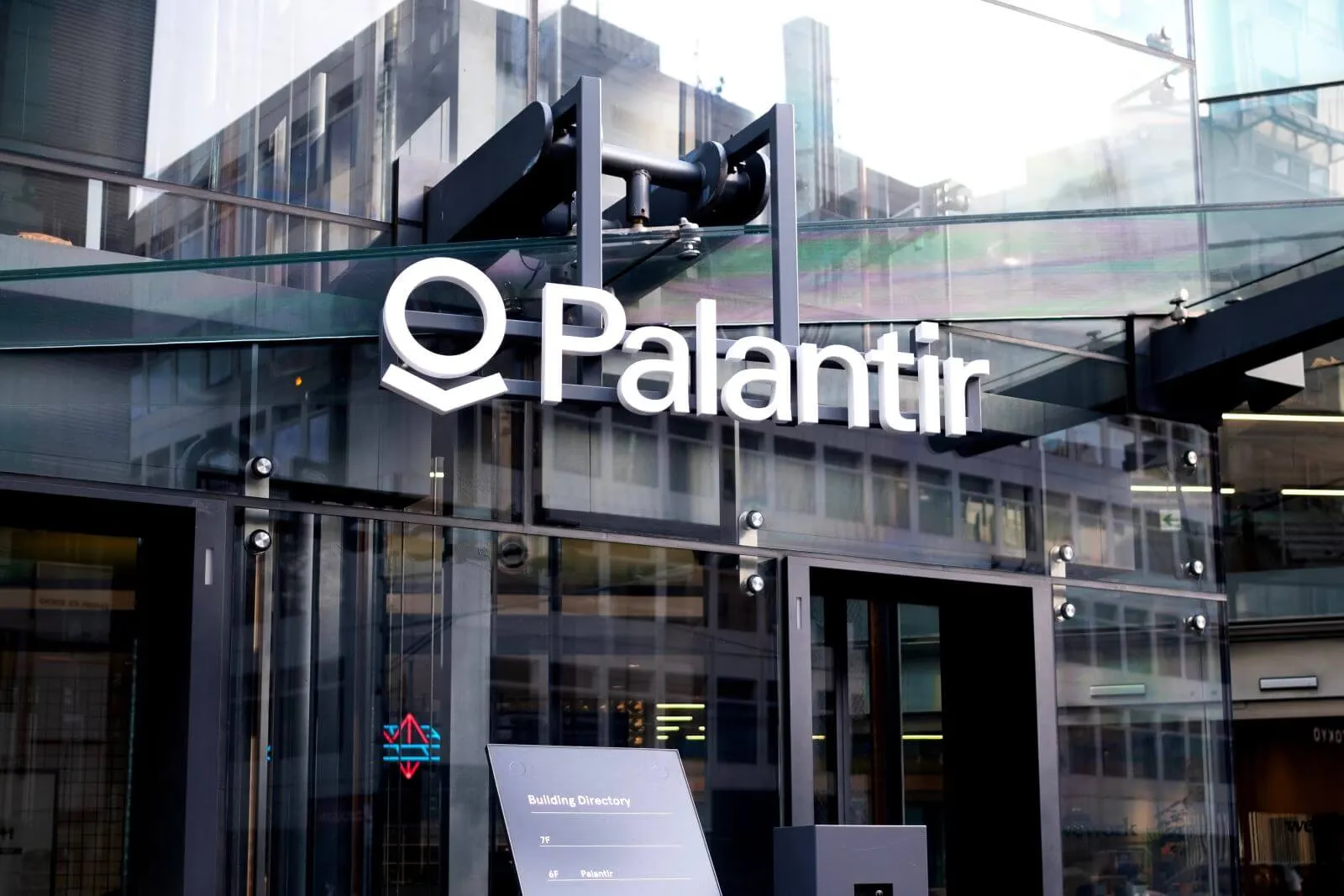
Palantir: What is it?
Palantir Technologies’ client CTOs sometimes question me during launch calls why they should spend money on an additional system on top of their current ones. I understand, and I caution companies against using this software as a simple ML sandbox or just another BI dashboard.
In actuality, we are implementing a basic infrastructure akin to an operating system that unifies your models, workflows, and data into a single layer. Every business unit’s automated decision-making, controlled data applications, and real-time operational activities are powered by the same layer.
In order to establish the ideal environment for coordinating generative AI, the vendor’s developers performed a killer architectural shift during the past few years. They allow you to maintain paranoid control while utilizing the brains of contemporary language models.
Palantir Technologies: What are they?
In my opinion, the platform is built on four main pillars: process automation, predictive analytics, and a semantic ontology that sits atop the data input and pipeline infrastructure. Connecting all of this to your existing IT system is a huge undertaking that calls for some extremely skilled data engineering and specialized interfaces. However, the results of these deployments are astounding. Predictive automation and AI solutions reduce operational downtime by 40%, but proper integration is essential to maintaining zero downtime. Let’s examine the source of this magic.
Integration of data
We start by discussing pipeline infrastructure setup and data ingestion. Foundry must establish connections with your extremely dispersed ERP estates, SQL and NoSQL databases, data lakes, real-time IoT streams, document repositories, and external APIs before we can even begin to work with AI.
We integrate all of those different information sources into a single, controlled environment. To put it another way, we basically construct the large pipes that sustain the entire system.
The ontology of semantics
We construct the ontology on top of the integration layer after it is stable. The datasets created here are mapped onto the real-world things and processes they represent via this semantic and operational layer.
Here, we address two different dimensions.
Semantic elements, which include objects, properties, and linkages, make up the first type of data. These are the nouns that stand for the primary elements of your company, such as the production line at your factory, the delivery car, customer orders, batches of raw materials, employees, etc. Every object type has properties derived from structured data, streaming feeds, model outputs, or any mix of the three and is supported by datasets from the integration layer.
Analytical prediction
Businesses can now finally start playing offense rather than merely putting out fires after the fact thanks to this section of the engine, which crunches through enormous volumes of previous records and produces accurate predictions in real time.
The future status of your system is highlighted by built-in machine learning models that continuously examine telemetry. For instance, you will be informed ahead of time when a specific production belt or pump will malfunction or when a warehouse’s inventory of parts is ready to run out.
Automation of enterprise workflow
This is the precise moment when aggressive commercial action is transformed from raw analytics. With little to no human intervention, the system begins pushing actions that completely change the situation in production.
For instance, IoT sensors provide the platform with information about a cargo vehicle that is stuck in transit and is probably going to miss a strict SLA. In addition to sending an API trigger straight to your ERP system, the platform will issue a red alert.
The ultimate objective is to eliminate as much human involvement as possible from regular decision-making. The logistics can be immediately rerouted, the shipment can be sent to a backup warehouse, and the system can automatically submit a directive into the client’s SAP.
Palantir platforms and products
We carefully apply the Palantir ecosystem’s cleverly separated specialized modules to address particular business concerns. The Palantir software is not required to be purchased entirely at once. Start small, demonstrate its worth, and then increase. We construct the architecture using Lego pieces, where each component fits into the next without disrupting the existing structure.
Let’s begin with the historical background before seamlessly transitioning to the absolute enterprise hits.
Gotham
The government and intelligence services were the original target market for this monstrous product. I only bring it up to make one point: this is where the military-grade, paranoid security that underpins the entire platform began. Gotham was built to manage extremely high classified loads and classified data.
The Foundry
Based on my own experience with Palantir Technologies, I am certain that Foundry is the primary backend brain of the B2B market. Additionally, it serves as a very potent sandbox where our data engineers can collaborate with your analysts to break down data silos, develop a unique ontology, and link raw logic from enterprise systems to real-time data flows.
I want to remind everyone that AIP services are integrated across all Foundry tiers. To put it another way, every engineer on every team now has easy access to the full data pipeline and the AIP services.
We utilize the following module to reliably push upgrades throughout such a big infrastructure without disrupting production.
The provider offers far better solutions for your regular business demands, even though its data isolation standards are far superior to those of traditional technologies.
Apollo
For DevOps developers, Apollo is the fundamental CI/CD technology that helps solve server infrastructure issues. Because Apollo is used natively by all three platforms—Gotham, Foundry, and AIP—you won’t need to depend on a unicorn expert for any product upgrades.
Apollo automates the safe deployment of machine learning models to bare-metal physical servers, edge devices on manufacturing facility floors, and AWS and Azure cloud environments. There is no manual intervention at any stage of the operation; all three deployment methods take place concurrently.
Platform for Artificial Intelligence
I completely get why there is a lot of anxiety from a security perspective when company secrets are carelessly dumped into public ChatGPT and other AI bot systems. In order to elegantly alleviate the severe anxiety of data leakage to the web, we wire up the AIP module.
The AIP keeps all AI activity inside a closed boundary while safely orchestrating strong public LLMs (like GPT or Claude) directly over your corporate ontology. As a result, AI serves as a highly intelligent and safe gateway that lets you access sophisticated analytics using simple human language without disclosing your company’s trade secrets.
Rubix
Gotham, Foundry, and AIP all rely natively on Rubix, which is the foundation of everything in Palantir. It serves as the internal execution engine that powers the complete Palantir product suite and is not offered for sale separately from either of those products. Without it, the Palantir ecology would not be able to function.
Rubix supplies the fundamental infrastructure (technically, I would describe to it as an infrastructure substrate) that gives the platform its remarkable consistency of execution across entirely diverse deployment scenarios. The main platforms may be seamlessly and securely deployed on AWS, Azure, or on-premises thanks to the extensive backend services, which also help to reduce backend complexity.
Palantir use scenarios in the real world
I would characterize Palantir’s architecture as very adaptable and capable of handling a vast variety of data kinds, including global banking transactions, intricate supply chains, and varied medical procedures.
AML and banking
In addition to making KYC much simpler and quicker for analysts, the Palantir technology can detect hidden, multilevel anti-money laundering (AML) networks. In real time, machine models go through international financial movements, identify anomalies, and place those anomalies in a triage queue so that the compliance team can look into them and potentially take action before regulators call. And believe me, they will ultimately knock on your door in the financial industry.
Predictive maintenance and energy
With an incredible return on investment, predictive maintenance is a veritable goldmine. Using raw telemetry data extracted from IoT sensors installed on offshore oil rigs or aviation engines, the system may predict equipment wear and tear long before a real malfunction occurs. Predictive maintenance enables businesses to plan the replacement or repair of vital components in order to prevent unforeseen, catastrophic downtime that could cause large financial losses.
Medical care
In this specialty, we concentrate on improving the internal supply chain by giving the system the ability to precisely allocate vital resources. For example, in larger hospital systems, the system keeps track of all your essential pharmaceutical stocks, personnel levels, and available bed capacity to ensure that your clinic runs as efficiently as possible, much like a well-tuned machine.
Supply chain and logistics
Large logistics hubs are able to view their supply routes from above. The dispatcher will receive an immediate alert to take action and address the issue in the event of a storm in the sea or a staff strike at a port.
The alternate routes are automatically calculated by the system, which immediately updates the ERP. Large container ships can be rerouted in real time by dispatchers using this data, saving hundreds of millions of dollars in contracts that would have otherwise been lost.
Why businesses use Palantir with Innowise

95% of generative AI pilots at large corporations are actively failing, according to an MIT study reported by Fortune. This product will always be merely an expensive and pointless toy in your stack if the Palantir integration isn’t driven by the correct engineers.
In addition to our extensive technical knowledge with Palantir, we offer enormous worldwide distribution capabilities. Large businesses trust Innowise with their digital transitions for just this reason:
We have 20 offices across the globe to give your projects a reliable and safe infrastructure.
After the first successful deployment, businesses genuinely trust us again and again because we have a staggering 93% recurring client rate.
Junior-level errors in your codebase are significantly reduced because 85% of our developers are middle- and senior-level engineers.
We retain more than 100 IT consultants to help you with your business design right from the start.
Only the best 5% of engineers are hired by Innowise.
We can ramp up engineering teams in only one to two weeks thanks to our management system.
Engineers with certification
With all three official Palantir Foundry certifications, our team is full of highly skilled data engineers, technical leads, and architects who understand the nuances of implementing complex cloud infrastructures.
We don’t attempt to learn the fundamentals on the client’s dime and have a thorough understanding of the internal logic of vendor solutions. By creating native Python and PySpark code directly inside Foundry’s Code Repositories, we provide professional Palantir services. We rely solely on the meticulous, practical technical know-how of our development teams.
ML integration with custom ontology
We handle the most difficult backend tasks that other integrators typically steer clear of. Our team uses code repositories and pipeline builders to build end-to-end data pipelines.
We use PySpark for large-scale transformations on multi-terabyte datasets with intricate joins and significant aggregation logic. Lightweight computation engines are available and frequently more practical than spinning up a full Spark task for simpler row-level operations or when speed is more important than raw throughput.
In many situations, these engines do the task in a fraction of the time, spin up faster, and use far less computing power. I frequently hear about teams using Spark out of habit and overspending their compute budget on tasks that didn’t require it.
Additionally, we employ incremental pipelines in Pipeline Builder, which, instead of repeatedly doing full refreshes, simply handle the data that has actually changed. This alone can reduce pipeline runtime by an order of magnitude on large datasets. Furthermore, we immediately incorporate Foundry AIP capabilities into operational processes and workshops, enabling AI to precisely support your analysts in intricate, regulated contexts.
Optimization and implementation
We establish dependable CI/CD pipelines to securely implement all upcoming platform updates during the production phase. By reworking full-refresh data pipelines into incremental processing flows and restructuring legacy code into Foundry-native pipelines, our Palantir engineers optimize current workloads while drastically lowering compute utilization.
Additionally, we employ Medallion architecture layers to enhance analytical performance and data quality. We even designed logic to reduce needless external API screening calls as part of our targeted optimizations.
Please don’t hesitate to contact us if you need to add this power to your company infrastructure. We can either update your outdated solution or create the ideal design from scratch.