Artificial Intelligence (AI) has become an integral part of modern life, and education is no exception. From personalized learning platforms to intelligent tutoring systems, AI is transforming the way students learn and teachers teach. As technology continues to evolve, its influence on Science, Technology, Engineering, and Mathematics (STEM) education is becoming increasingly significant.
AI-powered technologies are creating dynamic learning environments that offer personalized support, real-time feedback, and interactive learning experiences. These innovations are helping students develop the knowledge and skills needed to succeed in an increasingly digital world.
Why STEM Education Needs Innovation
STEM subjects are essential for technological advancement, yet traditional teaching methods often struggle to meet the diverse needs of today’s learners. Many classrooms still rely on standardized instruction, which does not accommodate different learning styles or individual learning speeds.
One of the biggest challenges is that students learn at different paces. While some quickly grasp scientific theories and mathematical concepts, others require additional time, practice, and guidance. However, teachers often have limited time and resources to provide individualized support for every student.
Maintaining student engagement is another significant challenge. Long lectures and textbook-based instruction can make complex STEM concepts difficult to understand and less appealing. In addition, limited access to laboratory facilities and hands-on experiences can hinder the development of practical problem-solving skills.
These challenges highlight the growing need for innovative, technology-driven learning solutions. AI is helping address these issues by creating smarter, more flexible, and more effective educational experiences.
1. AI-Powered Personalized Learning
One of the most transformative applications of AI in STEM education is personalized learning. Unlike traditional classrooms that follow a fixed curriculum, AI-powered platforms adapt learning experiences to each student’s strengths, weaknesses, and pace.
Using advanced algorithms, these platforms analyze student performance and continuously adjust lesson difficulty, recommend relevant learning materials, and identify areas that require additional practice.
Another major advantage is real-time feedback. Instead of waiting days or weeks for assessments, students receive immediate evaluations of their work. AI systems can identify mistakes, explain concepts, and provide targeted recommendations for improvement.
Personalized learning also increases student engagement by allowing learners to progress at their own pace while receiving support tailored to their individual needs.
Although AI enhances personalized learning, many students still benefit from additional human guidance. For example, students studying chemistry often seek one-on-one tutoring to deepen their understanding, prepare for examinations, and receive personalized instruction that complements AI-based learning.
As educational technology continues to evolve, AI-powered learning systems will become even more intelligent, providing increasingly personalized learning experiences for students worldwide.
2. Challenges of AI Integration in Education
Despite its many benefits, integrating AI into education also presents several important challenges.
Data privacy remains a major concern. Since AI systems collect and analyze large amounts of student information, educational institutions must implement strong security measures to protect sensitive data.
Another challenge is algorithmic bias. If AI models are trained on incomplete or biased datasets, they may produce unfair or inaccurate outcomes. Developers, educators, and policymakers must work together to ensure AI systems are transparent, ethical, and equitable.
The digital divide also presents a significant obstacle. Many students still lack access to reliable internet connections, computers, or other devices necessary for AI-supported learning. Without addressing these inequalities, the benefits of AI cannot be shared equally.
Most importantly, AI should never replace human interaction in education. Teachers play an irreplaceable role in motivating students, fostering creativity, encouraging collaboration, and developing critical thinking and emotional intelligence—qualities that technology alone cannot replicate.
3. Building a Balanced Educational Environment
While technological innovation is essential, maintaining a balanced educational approach is equally important. Schools should view AI as a powerful teaching assistant rather than a replacement for educators.
Alongside technical knowledge, students should continue developing creativity, communication skills, emotional intelligence, collaboration, and critical thinking.
By combining AI-powered tools with effective teaching practices and human oversight, educational institutions can maximize the benefits of technology while minimizing potential risks.
This balanced approach leads to improved learning outcomes and better prepares students for the demands of the modern workforce.
4. The Future of AI in STEM Education
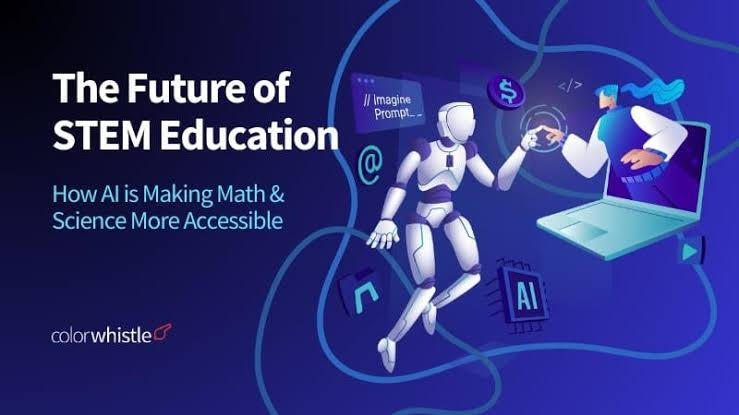
The future of AI in STEM education is highly promising. Intelligent classrooms, predictive learning analytics, virtual laboratories, and AI-powered tutoring systems will continue transforming how students learn and how educators teach.
AI will also improve educational accessibility, enabling students from diverse backgrounds to acquire valuable STEM knowledge regardless of their location or circumstances.
As industries continue evolving, lifelong learning will become increasingly important. AI-powered learning platforms will help professionals continuously update their skills and remain competitive in a rapidly changing job market.
Rather than creating a future where humans compete with machines, AI is paving the way for meaningful collaboration between educators, learners, and intelligent technologies.
Conclusion
Artificial intelligence is reshaping STEM education in ways that were once unimaginable. From personalized learning pathways and intelligent tutoring systems to virtual laboratories and predictive analytics, AI is making education more engaging, efficient, and accessible.
Although challenges such as data privacy, algorithmic bias, and unequal access remain, the advantages of AI continue to drive innovation across the education sector. Nevertheless, technology cannot replace the essential role of teachers, whose guidance, mentorship, and human connection remain at the heart of effective education.
The most successful educational model combines the strengths of AI with the expertise and empathy of educators. By embracing this balanced approach, schools can equip students with the knowledge, skills, and adaptability needed to thrive in the future.