Artificial intelligence (AI) is transforming how businesses engage with customers. From personalized product recommendations and tailored email campaigns to AI-generated gift suggestions, organizations increasingly rely on machine learning to deliver customized experiences at scale. The primary objective is to make every customer feel understood by providing relevant content, products, and services that align with their individual preferences.
However, personalization extends beyond delivering the right product at the right time. It also involves building meaningful relationships based on trust, relevance, and genuine customer value. As AI assumes a larger role in customer engagement, businesses face a critical challenge: how can they leverage automation to enhance personalization without compromising the authenticity that customers expect?
1. Why Personalization Matters
Modern consumers expect brands to recognize their preferences, understand their needs, and provide relevant experiences across multiple touchpoints. Generic marketing messages are becoming less effective, whereas personalized interactions often lead to higher customer engagement, stronger brand loyalty, and increased customer satisfaction.
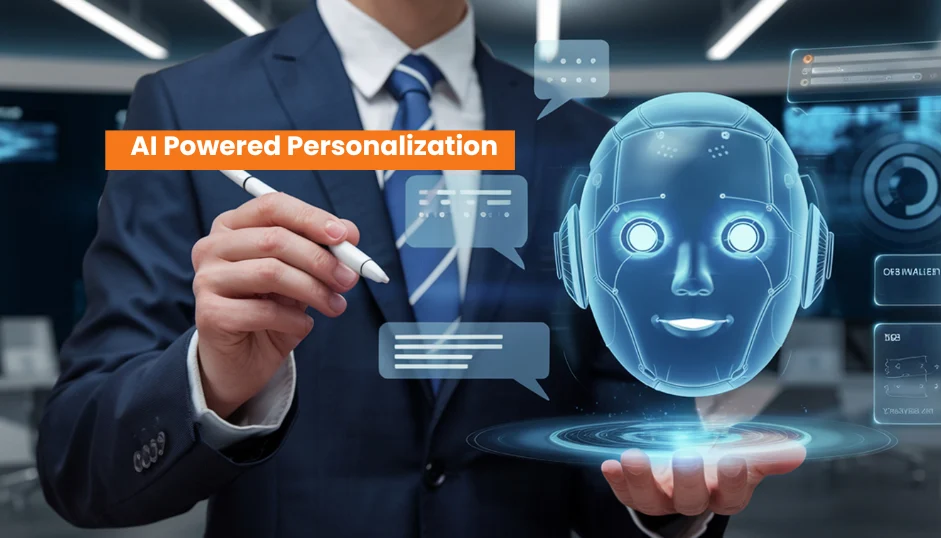
AI-powered personalization enables businesses to analyze customer data—including browsing behavior, purchase history, and previous interactions—in real time to generate highly relevant recommendations. Nevertheless, personalization is most effective when it prioritizes customer needs rather than focusing solely on increasing sales. Maintaining this balance is essential for creating experiences that customers perceive as both valuable and authentic.
2. AI Makes Personalization Scalable
One of AI’s greatest advantages is its ability to deliver personalized experiences at scale. Unlike traditional personalization methods, which often require significant time and human effort, AI can analyze vast amounts of customer data and generate tailored recommendations for thousands—or even millions—of customers simultaneously.
Businesses across various industries are already leveraging these capabilities. Retailers use AI to recommend products based on customers’ browsing behavior and purchase history, while streaming platforms suggest movies, television shows, and music that align with individual viewing and listening preferences. Similarly, customer service teams employ AI-powered chatbots that can recognize returning customers, recall previous interactions, and provide faster, more relevant assistance.
By automating data analysis and decision-making, AI enables organizations to improve operational efficiency while delivering the personalized experiences that modern consumers increasingly expect. When implemented effectively, scalable personalization can enhance customer convenience, strengthen engagement, and contribute to higher levels of customer satisfaction
3. Expert Insight: Personalization Should Strengthen Relationships
According to Chris Wu, founder of GiftisLove, personalization is particularly valuable in industries where purchases carry emotional significance. While AI can analyze customer preferences and simplify the process of selecting meaningful gifts, the overall experience should remain thoughtful and authentic rather than feeling purely automated.
In the gifting industry, technology is most effective when it reduces friction without replacing human intention. AI-powered recommendation systems can identify products that align with a customer’s interests, preferences, and purchasing behavior, making the selection process more efficient. However, meaningful gifting ultimately depends on understanding personal relationships, special occasions, and the unique stories behind each purchase.
Wu emphasizes that AI should serve as a tool to support, rather than replace, human decision-making. By combining intelligent recommendations with genuine emotional understanding, businesses can create personalized experiences that strengthen customer relationships and preserve the authenticity that makes gifts meaningful.
4. The Risk of Losing Authenticity
Although AI has significantly improved the accuracy and efficiency of personalization, an overreliance on automation can make customer interactions feel impersonal and overly scripted. When personalized emails, product recommendations, or marketing messages appear to be generated solely by algorithms without genuine understanding, customers may perceive them as artificial rather than meaningful.
Excessively data-driven personalization can also raise concerns about privacy and trust. If customers feel that businesses are relying too heavily on their personal information or making recommendations that seem intrusive, the intended benefits of personalization may be undermined. Instead of fostering stronger relationships, poorly executed AI-driven interactions can reduce customer confidence and engagement.
To maintain authenticity, businesses must strike a balance between technological efficiency and human connection. While customers value relevant and personalized experiences, they also expect sincerity, empathy, and transparency. AI should therefore complement human-centered customer engagement rather than replace the genuine interactions that build long-term trust and loyalty.
5. Expert Insight: AI Should Support Human Strategy, Not Replace It
According to industry experts, AI delivers the greatest value when it enhances human expertise rather than replacing it. While AI can rapidly analyze large volumes of customer data, identify patterns, and automate routine tasks, it lacks the emotional intelligence, empathy, and contextual judgment that are essential for building genuine customer relationships.
Businesses should therefore view AI as a decision-support tool instead of a substitute for human strategy. Marketing teams can use AI to generate insights, predict customer preferences, and personalize communications, while human professionals ensure that messaging reflects the brand’s values, tone, and understanding of customers’ unique needs.
This collaborative approach enables organizations to combine the efficiency and scalability of AI with the authenticity and emotional connection that only people can provide. By keeping human judgment at the center of customer engagement, businesses can deliver personalized experiences that increase customer satisfaction while preserving trust, credibility, and long-term loyalty
6. Expert Insight: Trust Is the Foundation of Personalization

Industry experts emphasize that successful personalization begins with trust. While AI can deliver highly relevant recommendations and customized experiences, customers are more likely to respond positively when they understand how their data is being collected and used. Transparency in AI-driven personalization helps foster confidence and strengthens long-term customer relationships.
Trust is built when businesses use customer data responsibly, communicate their data practices clearly, and provide customers with meaningful control over their privacy preferences. Rather than relying solely on algorithms to maximize engagement, organizations should ensure that personalization reflects customers’ interests while respecting their expectations for privacy and ethical data use.
Ultimately, personalization is most effective when it combines intelligent technology with openness, fairness, and respect for the customer. By making trust the foundation of AI-driven personalization, businesses can enhance customer satisfaction while maintaining the authenticity and credibility that encourage long-term loyalty.
7. The Future of AI Personalization
Artificial intelligence will continue to reshape customer experiences as predictive models become increasingly sophisticated. Advances in machine learning and data analytics will enable businesses to anticipate customer needs more accurately, deliver highly relevant recommendations, and reduce friction throughout the customer journey. As AI capabilities evolve, personalization is likely to become faster, more precise, and more seamlessly integrated into everyday interactions.
However, the organizations that achieve lasting success will not necessarily be those with the most advanced algorithms. Instead, they will be the ones that effectively combine AI-driven efficiency with genuine human engagement. While automation can enhance speed, consistency, and scalability, meaningful customer relationships are built through empathy, trust, and authentic communication.
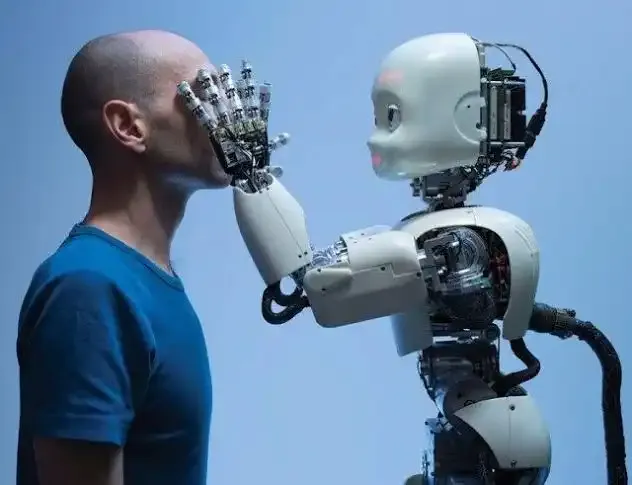
Technology excels at identifying patterns and generating insights, but people create emotional connections. AI can recommend a gift, answer a customer inquiry, or personalize a marketing offer, yet authenticity comes from understanding customers as individuals rather than as data points. The future of personalization will therefore depend on striking the right balance between intelligent automation and human-centered experiences, ensuring that AI enhances customer satisfaction without diminishing the authenticity that fosters long-term loyalty.
Conclusion
AI-generated personalization has the potential to significantly enhance customer satisfaction by delivering faster, more relevant, and more convenient experiences. By leveraging data-driven insights, businesses can better anticipate customer needs, improve engagement, and create personalized interactions at a scale that would be difficult to achieve through human effort alone. However, technology by itself cannot establish the trust and emotional connection required to build lasting customer relationships.
As Chris Wu emphasizes, personalization should preserve the emotional value behind customer interactions, particularly in industries where purchases carry personal significance. Vince Tint highlights that AI is most effective when it supports human strategy rather than replacing it, enabling businesses to combine analytical capabilities with empathy and sound judgment. Similarly, Marc Caposino underscores that trust, transparency, and the responsible use of customer data are fundamental to successful AI-driven personalization.
Ultimately, the future of customer engagement is not about choosing between AI and authenticity. It is about integrating intelligent automation with genuine human understanding to create experiences that are both personalized and meaningful. Businesses that strike this balance will be better positioned to strengthen customer relationships, foster long-term loyalty, and deliver sustainable value in an increasingly AI-driven marketplace.