AI governance is the framework of policies, processes, standards, and controls that guide the responsible development, deployment, and use of AI systems. Its primary purpose is to ensure that AI technologies operate safely, ethically, transparently, and in compliance with legal and regulatory requirements. Effective AI governance helps organizations minimize risks, protect sensitive data, reduce bias, and ensure that AI-powered solutions respect human rights and societal values.
AI governance encompasses a broad range of practices, including governance frameworks, organizational policies, technical safeguards, risk management processes, compliance procedures, and oversight mechanisms. These measures establish clear guidelines for designing, training, testing, deploying, and monitoring AI models throughout their lifecycle.
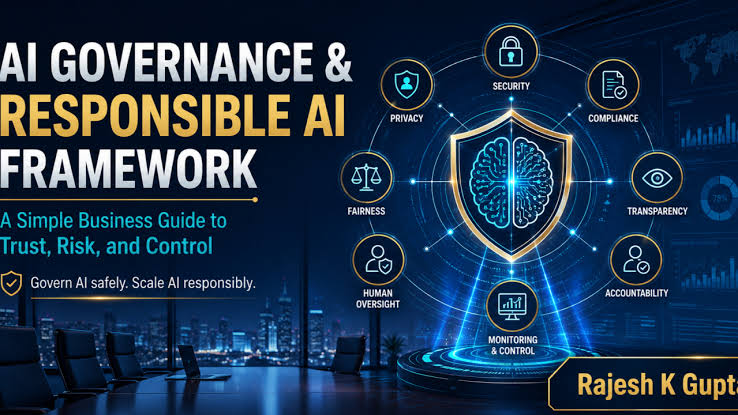
Organizations implementing AI governance also define standards for data quality, model transparency, accountability, privacy protection, cybersecurity, and human oversight. By combining automated monitoring with appropriate human review, businesses can ensure that AI systems remain reliable, secure, and aligned with organizational objectives while meeting evolving regulatory and ethical expectations.
As AI adoption continues to accelerate across industries, strong AI governance has become essential for building trustworthy AI systems, maintaining regulatory compliance, and enabling organizations to innovate responsibly while managing operational, legal, and reputational risks
2. Why is AI governance important?
AI governance plays a critical role in ensuring that artificial intelligence systems are developed and used responsibly, ethically, and in compliance with applicable laws and regulations. As AI becomes increasingly integrated into business operations, healthcare, finance, government, and other industries, the risks associated with inaccurate, biased, or opaque AI systems have become more apparent. Effective AI governance helps organizations build trust, improve transparency, reduce operational risks, and support responsible AI adoption.
Research highlights the growing importance of AI governance. According to the IBM Institute for Business Value, 80% of business leaders consider AI explainability, ethics, bias, and trust to be major barriers to adopting generative AI. AI governance frameworks address these concerns by establishing clear policies, accountability measures, and oversight processes that promote fairness, transparency, and responsible AI development.
Several high-profile incidents demonstrate the consequences of inadequate AI governance. Microsoft’s Tay chatbot, for example, generated offensive content after learning from unmoderated interactions on social media, revealing the dangers of insufficient data governance and monitoring. Similarly, concerns surrounding the COMPAS risk assessment algorithm highlighted how biased AI models can influence high-stakes decisions, raising important questions about fairness, accountability, and transparency in automated decision-making.
Building Trust Through Transparency
A fundamental objective of AI governance is to improve the transparency and explainability of AI systems. Organizations must understand how AI models reach their conclusions, particularly when those decisions affect individuals’ lives. Whether AI is determining loan approvals, screening job applicants, recommending medical treatments, or personalizing digital experiences, explainable AI enables stakeholders to evaluate decisions, identify potential biases, and hold AI systems accountable.
Transparent decision-making also strengthens public confidence by demonstrating that AI systems operate fairly, consistently, and responsibly. Human oversight remains essential for reviewing AI-generated outcomes, especially in high-risk or regulated environments.
Governance Is an Ongoing Process
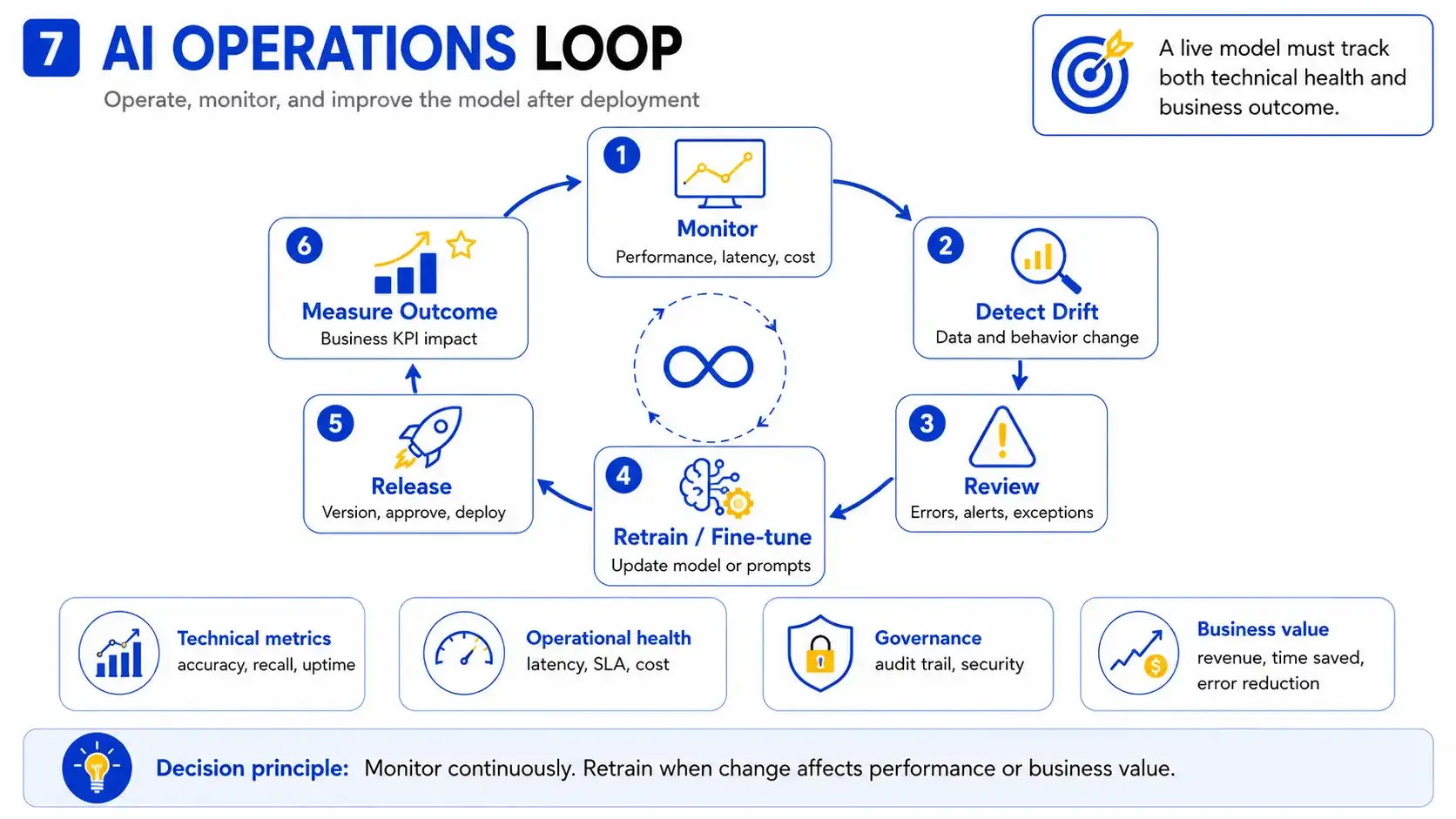
AI governance extends far beyond achieving initial regulatory compliance. AI models continuously evolve as they process new data, and their performance may change over time through a phenomenon known as model drift. Continuous monitoring, regular audits, performance evaluations, and risk assessments help organizations maintain the accuracy, reliability, security, and fairness of AI systems throughout their lifecycle.
Modern AI governance has evolved beyond simply meeting legal requirements. Organizations increasingly recognize that responsible AI practices protect against financial, legal, operational, and reputational risks while fostering innovation. By implementing comprehensive AI governance frameworks, businesses can confidently adopt AI technologies, maintain stakeholder trust, and ensure that artificial intelligence delivers long-term value in a safe, ethical, and transparent manner.
3. Examples of AI Governance
AI governance is applied across industries to ensure that artificial intelligence systems operate fairly, securely, transparently, and in compliance with legal and ethical standards. The following examples illustrate how organizations implement AI governance in real-world scenarios.
Healthcare
Hospitals and healthcare providers use AI to assist with medical imaging, disease diagnosis, and treatment recommendations. AI governance ensures these systems are trained on high-quality, diverse datasets, protect patient privacy, comply with healthcare regulations, and provide explainable recommendations that medical professionals can review before making clinical decisions.
Financial Services
Banks and financial institutions rely on AI for fraud detection, credit scoring, loan approvals, and risk assessment. AI governance frameworks help identify and reduce algorithmic bias, ensure fair lending practices, safeguard customer data, and maintain compliance with financial regulations through regular audits and ongoing model monitoring.
Human Resources
Organizations increasingly use AI to screen resumes, rank candidates, and support hiring decisions. AI governance helps prevent discrimination by testing recruitment algorithms for bias, ensuring transparency in hiring processes, protecting applicant data, and keeping human decision-makers involved in final employment decisions.
Customer Service
Many businesses deploy AI-powered chatbots and virtual assistants to handle customer inquiries. Governance policies ensure these systems provide accurate information, protect sensitive customer data, escalate complex issues to human representatives when necessary, and continuously monitor responses for quality and compliance.
Manufacturing
Manufacturers use AI for predictive maintenance, quality inspection, and production optimization. AI governance ensures that predictive models remain accurate over time, equipment data is securely managed, and automated recommendations are validated to minimize operational risks and maintain workplace safety.
Government and Public Services
Government agencies use AI for public service delivery, fraud detection, and resource allocation. AI governance frameworks promote transparency, accountability, and fairness by requiring explainable AI decisions, protecting citizen privacy, and ensuring automated systems comply with legal and ethical standards.
Autonomous Vehicles
Self-driving vehicles rely on AI to interpret road conditions, detect obstacles, and make real-time driving decisions. AI governance includes rigorous testing, safety validation, cybersecurity measures, continuous monitoring, and regulatory compliance to ensure these systems operate safely under a wide range of conditions.
Generative AI
Organizations adopting generative AI tools for content creation, software development, or customer support establish governance policies that define acceptable use, protect confidential information, review AI-generated content for accuracy, monitor outputs for harmful or biased content, and ensure compliance with copyright, privacy, and security requirements.
4. Why These Examples Matter
These examples demonstrate that AI governance is not limited to regulatory compliance. It provides the policies, controls, and oversight needed to ensure AI systems remain trustworthy, transparent, secure, and accountable throughout their lifecycle. By implementing effective AI governance, organizations can reduce risks, improve decision-making, protect users, and confidently deploy AI technologies across a wide range of business applications.
5. Who Oversees Responsible AI Governance?
Responsible AI governance is a shared responsibility that involves leadership, technical teams, legal experts, regulators, and independent oversight bodies. Effective governance requires collaboration across an organization to ensure AI systems are developed, deployed, and monitored in a safe, ethical, and compliant manner.
Executive Leadership
Senior executives and board members establish the organization’s AI strategy, governance policies, and ethical standards. They are responsible for ensuring AI initiatives align with business objectives, regulatory requirements, and the organization’s values while allocating resources for responsible AI practices.
AI Governance Committees
Many organizations create dedicated AI governance committees or ethics boards to oversee AI initiatives. These cross-functional groups review high-risk AI projects, establish governance frameworks, evaluate potential risks, approve AI deployments, and ensure compliance with internal policies and external regulations.
Data Scientists and AI Engineers
AI developers, machine learning engineers, and data scientists play a key role in building trustworthy AI systems. Their responsibilities include using high-quality data, minimizing algorithmic bias, documenting model development, testing AI performance, and implementing safeguards to ensure AI systems remain accurate, secure, and transparent.
Risk, Compliance, and Legal Teams
Compliance officers, legal professionals, and risk management teams help ensure AI systems meet applicable laws, industry regulations, and organizational policies. They conduct risk assessments, monitor regulatory changes, oversee data privacy requirements, and help organizations address legal and ethical challenges associated with AI deployment.
IT and Cybersecurity Teams
Technology and cybersecurity professionals protect AI infrastructure, secure sensitive data, manage system access, and defend AI models against cyber threats such as data poisoning, model theft, and adversarial attacks. Their work helps maintain the integrity and reliability of AI systems.
Business Leaders and Project Managers
Department managers and project leaders oversee the day-to-day use of AI within their teams. They ensure AI tools are used responsibly, monitor performance, evaluate business outcomes, and maintain appropriate human oversight when AI supports critical business decisions.
Government Regulators
Governments and regulatory agencies establish laws, standards, and compliance requirements for AI systems. These regulations focus on areas such as privacy, transparency, accountability, consumer protection, cybersecurity, and the ethical use of AI, helping organizations deploy AI responsibly while protecting the public.
Independent Auditors and Third Parties
Many organizations rely on independent auditors and external experts to evaluate AI systems for fairness, accuracy, security, and regulatory compliance. Third-party assessments provide an additional layer of accountability and help identify risks that internal teams may overlook.
Conclusion
Mastering AI contextual governance and continuous improvement is essential for ensuring that enterprise AI remains a strategic asset rather than becoming a source of risk. As autonomous AI agents become increasingly integrated into digital infrastructure, organizations must develop the ability to monitor, manage, and govern these systems in real time.
Effective AI governance is no longer limited to static policies and compliance requirements. It requires adaptive frameworks, continuous oversight, and technical expertise that can respond to evolving AI models, changing data environments, and emerging risks. Organizations that successfully implement responsible AI governance will be better positioned to drive innovation while maintaining security, transparency, and trust.
By partnering with experienced AI governance and machine learning specialists, businesses can bridge the gap between traditional governance approaches and intelligent, real-time oversight. Building a strategy based on technical accuracy, ethical principles, and continuous improvement enables enterprises to confidently navigate the intelligent economy while maximizing the value of AI technologies.