1. What is AI in project management?
AI in project management refers to the use of artificial intelligence technologies to improve how projects are planned, executed, monitored, and delivered. By automating repetitive tasks, analyzing large volumes of project data, and generating actionable insights, AI helps project managers make informed decisions, reduce manual effort, and increase the likelihood of project success.
Modern AI-powered project management tools leverage technologies such as machine learning (ML), natural language processing (NLP), generative AI, predictive analytics, and intelligent automation. These capabilities enable AI assistants to function as virtual copilots, helping teams prioritize tasks, allocate resources, forecast risks, monitor project progress, and streamline workflows.
Unlike traditional project management methods that rely on static plans and manual updates, AI-driven solutions continuously analyze real-time data to adapt to changing project conditions. This dynamic, data-driven approach improves productivity, enhances collaboration among team members and stakeholders, and allows organizations to deliver projects more efficiently while maintaining quality and meeting deadlines.
2. Why AI is important for project management
Project management is the process of planning, organizing, and executing initiatives to achieve specific business objectives within defined constraints such as time, budget, and scope. Whether launching a new product, implementing software, or managing large-scale construction projects, effective project management helps organizations deliver successful outcomes while minimizing risks. Poor project management, on the other hand, can result in missed deadlines, budget overruns, inefficient resource allocation, and costly project failures.
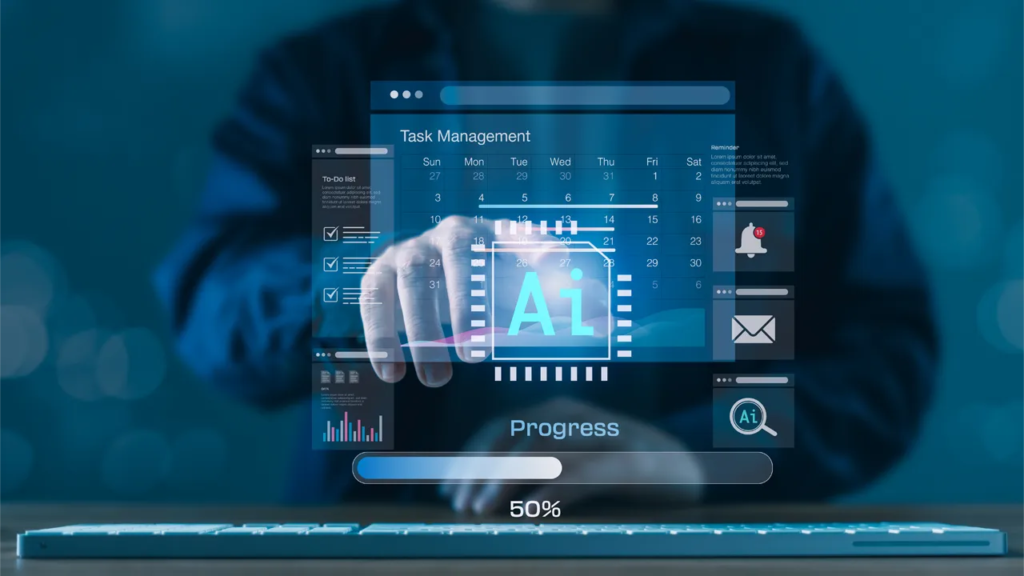
Artificial intelligence (AI) is reshaping project management by introducing intelligent, data-driven capabilities that improve planning, execution, and decision-making. AI-powered tools can analyze historical and real-time project data, identify potential risks, automate repetitive administrative tasks, and provide predictive insights that help project managers make faster and more informed decisions. As a result, teams can improve productivity, optimize resource allocation, and deliver projects more efficiently.
The adoption of AI in project management is accelerating rapidly. According to Gartner, by 2030, up to 80% of routine project management tasks are expected to be managed by AI-powered systems. Similarly, research from the Association for Project Management found that 70% of project professionals reported their organizations were already using AI, a significant increase from 36% just two years earlier. As AI technologies continue to evolve, their role in project management will expand, enabling organizations to manage increasingly complex projects with greater speed, accuracy, and confidence.
3. Benefits of AI in Project Management
AI is transforming project management by automating routine tasks, improving decision-making, and helping teams deliver projects more efficiently. By combining automation with data-driven insights, AI-powered project management tools enable organizations to optimize workflows, reduce risks, and increase productivity. Some of the key benefits include:
Greater Efficiency
AI-powered project management software automates repetitive and time-consuming tasks such as scheduling, task assignments, progress tracking, and status reporting. This reduces administrative workloads, allowing project managers and team members to focus on strategic planning, problem-solving, and high-value activities.
Improved Communication
AI enhances collaboration by providing intelligent chatbots, virtual assistants, and natural language processing (NLP) tools such as ChatGPT that deliver instant responses, summarize meetings, answer project-related questions, and keep stakeholders informed. These capabilities improve transparency, reduce communication delays, and strengthen collaboration across teams.
Better Decision-Making
AI continuously analyzes real-time project data to identify trends, monitor performance, evaluate resource utilization, and recommend actionable improvements. With access to timely insights, project managers can make faster, more informed decisions and adapt quickly to changing project requirements.
Smarter Risk Prediction
Using machine learning and predictive analytics, AI examines historical project data to identify patterns and forecast potential risks, including budget overruns, schedule delays, and resource constraints. Early risk detection enables teams to take proactive measures, minimize disruptions, and improve the likelihood of successful project delivery.
Conclusion
Artificial intelligence is transforming project management by making planning, execution, and monitoring more efficient, accurate, and data-driven. From automating repetitive tasks and optimizing resource allocation to predicting risks and providing real-time insights, AI empowers project managers to make smarter decisions and improve project outcomes. Rather than replacing human expertise, AI acts as an intelligent assistant that enhances productivity, streamlines collaboration, and enables teams to focus on strategic initiatives.
As AI technologies continue to evolve, their role in project management will only become more significant. Organizations that adopt AI-powered project management software can improve operational efficiency, reduce costs, minimize project risks, and deliver successful projects faster. By combining human judgment with AI-driven insights, businesses can better navigate complex projects, adapt to changing priorities, and gain a competitive advantage in an increasingly digital world.