
1.What is Management Software?
Management software is a type of software designed to help individuals and organizations plan, organize, monitor, and control their work, resources, and business processes. It centralizes information and automates routine tasks, making operations more efficient and improving decision-making.
Example:
Organize projects and assign tasks. Track employee attendance and performance. Manage customer information and sales. Monitor inventory and orders. Handle accounting, invoicing, and financial reporting. Schedule appointments and allocate resources. Generate reports and analytics for better decision-making.
Benefits
Improves productivity by reducing manual work. Enhances collaboration among teams. Reduces errors through automation. Saves time and operational costs. Provides real-time insights for informed decisions. Helps organizations scale as they grow
Types of management software:
Project Management Software: Plans and tracks projects and tasks. Customer Relationship Management (CRM): Manages customer interactions and sales. Enterprise Resource Planning (ERP): Integrates finance, HR, inventory, and operations.
Human Resource Management Software (HRMS): Handles employee records, payroll, and attendance.
Inventory Management Software: Tracks stock levels and orders. Learning Management System (LMS):Manages training and educational courses.
Management software is a digital tool that helps organizations manage their people, processes, and resources more effectively by organizing information, automating tasks, and providing actionable insights.
2.How do Management Software work with AI Knowledge?
Management software that incorporates Artificial Intelligence (AI) goes beyond storing and organizing data. It analyzes information, identifies patterns, automates tasks, and provides intelligent recommendations to help users make better decisions.
AI Works in Management Software
Data Collection:The software gathers data from users, databases, sensors, emails, or connected applications.
Example: A project management system collects task progress, deadlines, and team performance
Pattern Recognition:AI identifies trends and patterns.
Example: It detects that projects with delayed approvals are more likely to miss deadlines.
Decision Support:AI suggests the best actions for managers.
Continuous Learning: Machine learning models improve over time as they process more data, making predictions and recommendations increasingly accurate
1.AI Technologies Used:
Machine Learning (ML): Learns from historical data to make predictions.
Natural Language Processing (NLP): Understands and generates human language for chatbots and document analysis.
Computer Vision: Recognizes objects or text in images and videos.
Generative AI: Creates reports, summaries, emails, and other content from prompts.
2.AI in School Management Software:
Automatically records attendance using facial recognition or QR codes. Predicts students who may need additional academic support. Answers common student and parent questions through an AI chatbot. Generates report cards and performance summaries. Optimizes class schedules based on teacher and classroom availability
3.Benefits of AI in Management Software:
Saves time by automating repetitive work. Improves decision-making with data-driven insights. Reduces human errors. Increases productivity. Enhances customer and employee experiences. Provides real-time dashboards and alerts
How to explain AI Knowledge for 2026?
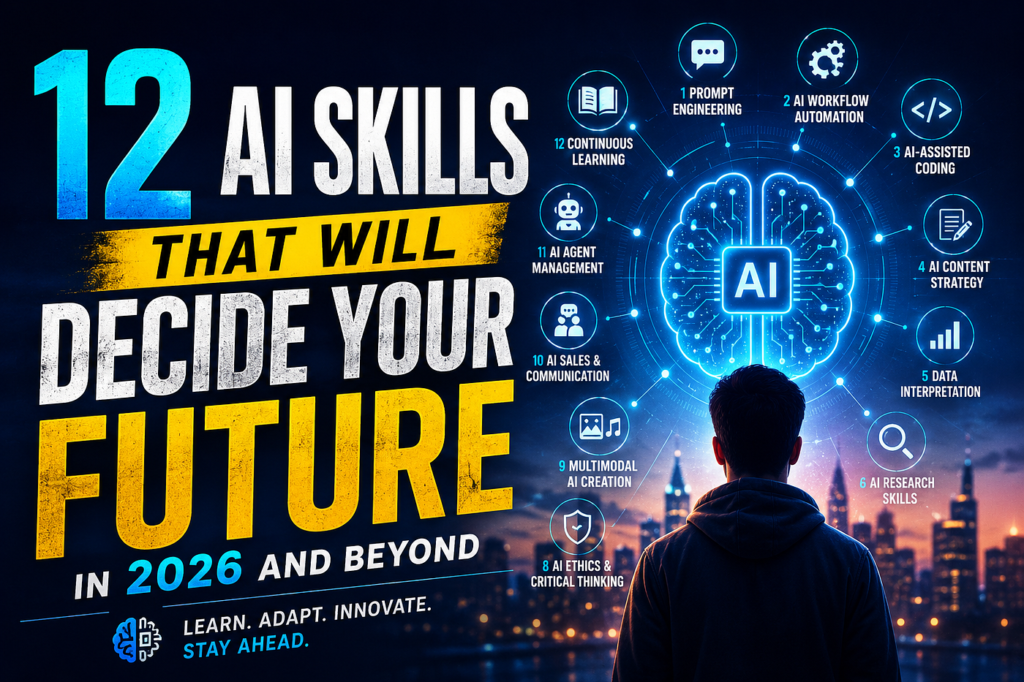
AI Knowledge in 2026:
In 2026, AI will be widely used across industries to improve productivity, automate routine work, and help people make better-informed decisions. Modern AI systems can analyze large amounts of information, generate text and images, write code, summarize documents, answer questions, and assist with planning and forecasting.
1.AI Applications in 2026
Healthcare: Assisting with diagnosis and clinical documentation.
Education: Personalized learning and AI tutoring.
Business: Customer support, data analysis, and workflow automation.
Manufacturing: Predictive maintenance and quality inspection.
Finance: Fraud detection and financial forecasting.
Agriculture: Crop monitoring and yield prediction.
Transportation: Route optimization and driver assistance. Software
Development: Code generation, testing, and debugging
2.Benefits of AI
Automates repetitive tasks. Improves productivity and efficiency. Supports better decision making with data analysis. Reduces errors in many routine processes. Provides personalized recommendations. Helps organizations respond more quickly to changing conditions.
Final Thoughts:
Management software has evolved from being a simple record-keeping and task management tool into an intelligent business platform. By integrating Artificial Intelligence (AI), modern management software can automate routine processes, analyze large volumes of data, predict future trends, and provide actionable recommendations that help organizations make better decisions. In 2026, AI-powered management software is becoming an essential part of businesses across industries, including healthcare, education, manufacturing, finance, retail, and government. The future of management software lies in combining human expertise with AI capabilities.