An AI Operating Model is a structured framework that explains how an organization develops, manages, implements, and uses artificial intelligence (AI) to achieve its business goals. It combines people, processes, technology, data, and governance to make AI solutions work effectively across different business departments. In 2026, organizations are increasingly adopting AI operating models to improve efficiency, support innovation, and remain competitive in a rapidly changing digital environment.
1. How Does an AI Operating Model Work?
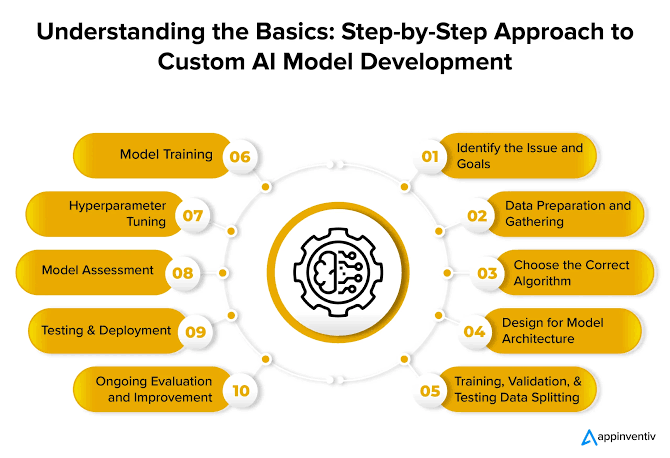
An AI operating model works by connecting different business activities with intelligent technologies. It provides a clear process for identifying opportunities, developing AI solutions, and measuring their performance.
Here are the major steps:
1. Identify Business Goals
Businesses first identify the problems they want AI to solve, such as customer service delays, operational costs, or inefficient workflows.
2. Collect and Manage Data
AI systems require reliable data to generate useful results. Organizations collect, organize, clean, and protect information before using it.
3. Select the Right AI Technologies
Businesses choose suitable AI tools, including machine learning, natural language processing, predictive analytics, and generative AI.
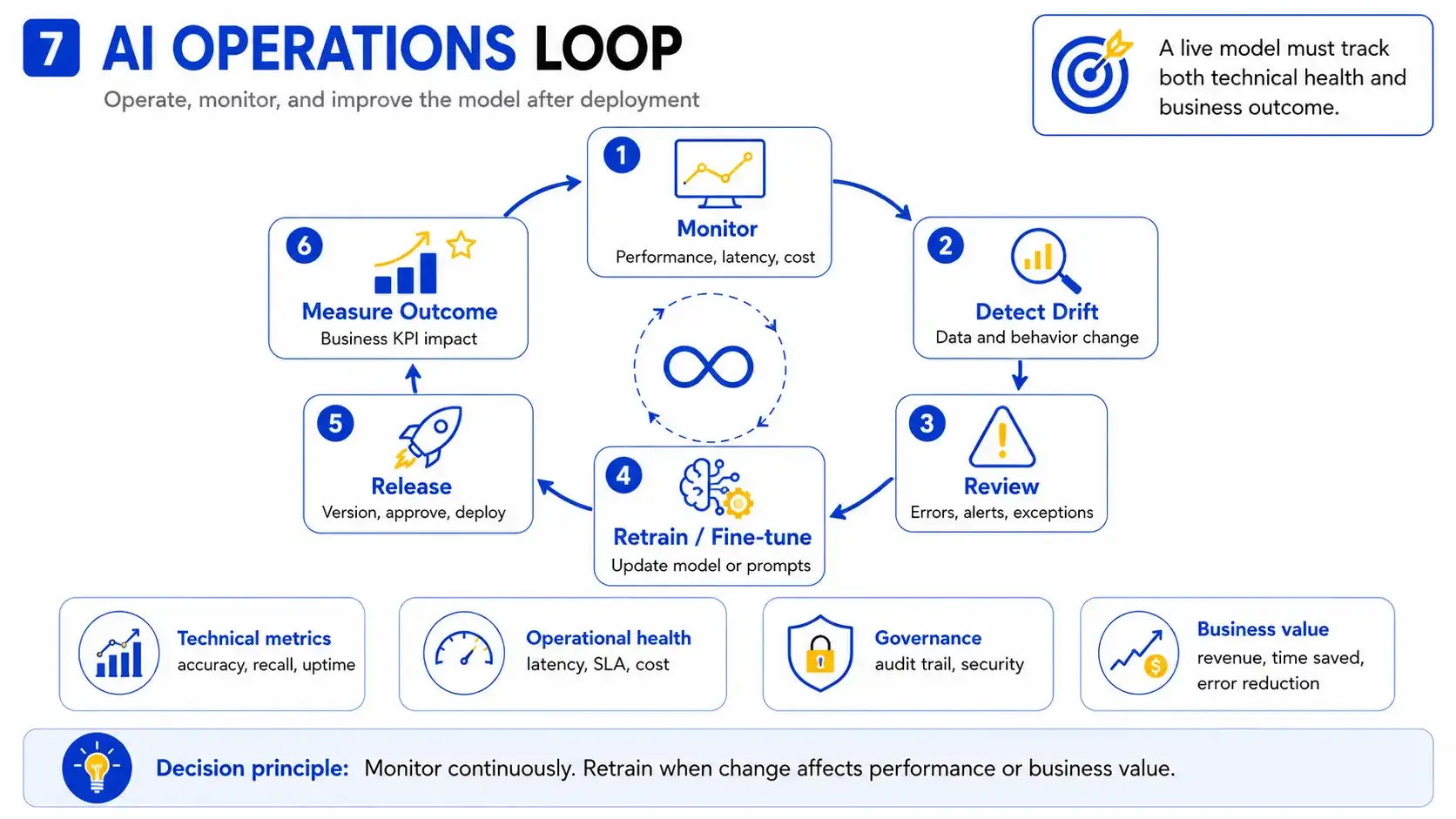
4. Monitor AI Performance
Organizations regularly evaluate AI accuracy, efficiency, security, and business outcomes.
2.Types of AI Operating Models
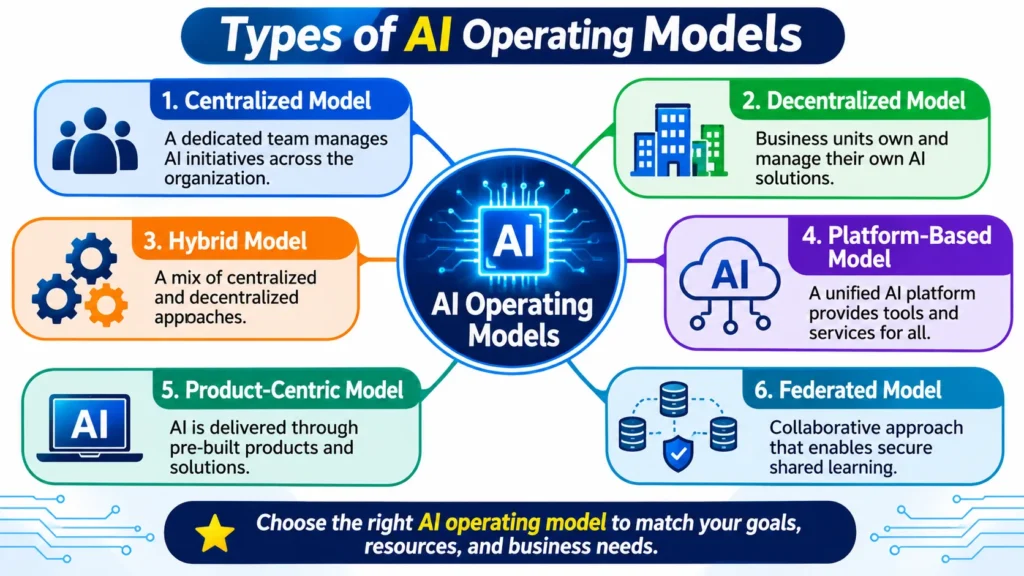
Different organizations choose different operating models depending on their size, business goals, and technical capabilities.
1. Centralized AI Operating Model
A central AI team manages AI strategy, development, governance, and implementation across the organization.
Best for: Organizations seeking consistent standards and centralized control.
2. Decentralized AI Operating Model
Individual departments manage their own AI projects and solutions.
Best for: Businesses that need flexibility and department-specific innovation.
3. Federated AI Operating Model
A central team establishes standards while individual departments develop and manage AI applications.
Best for: Large organizations with multiple business units.
4. Hybrid AI Operating Model
Combines centralized management with decentralized execution.
Best for: Businesses that need both control and flexibility.
3.Benefits of an AI Operating Model
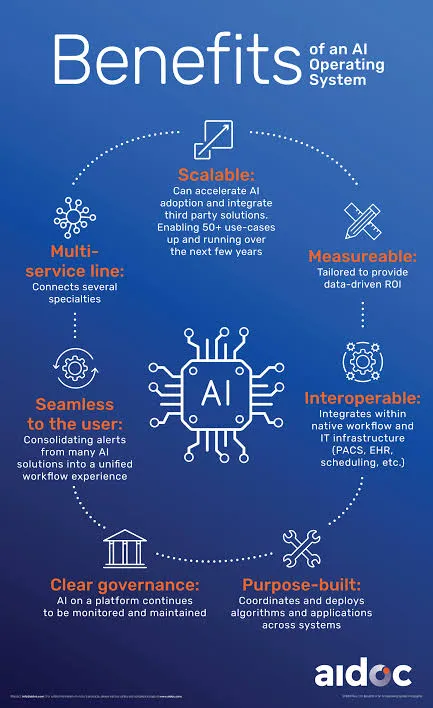
Implementing an AI operating model offers several advantages.
- Improved Productivity Automates repetitive tasks and saves employees valuable time.
- Better Decision-Making Uses data analysis and predictive insights to support business decisions.
- Reduced Operational Costs Helps organizations optimize resources and minimize unnecessary expenses.
- Enhanced Customer Experience Supports personalized recommendations and faster customer service.
- Business Innovation Encourages organizations to develop new products, services, and business opportunities.
- Improved Efficiency Streamlines workflows and reduces manual processes.
4.Challenges of Implementing an AI Operating Model
Although AI offers many opportunities, organizations may face several challenges during implementation.
- High Implementation Costs: AI infrastructure, software, and skilled employees can require significant investment.
- Skill Gaps: Organizations may struggle to find experienced AI professionals.
- Integration Difficulties: Connecting AI solutions with existing business systems can be complicated.
- Security Risks: AI systems may introduce new cybersecurity vulnerabilities.
- Ethical Concerns: Biased data can produce unfair or inaccurate AI outcomes.
- Change Management: Employees may need training and support to adopt AI-powered workflows.
5.How to Build an Effective AI Operating Model
Businesses can follow these steps to develop an effective AI operating model.
Step 1: Define Your AI Strategy
Establish clear business objectives and identify where AI can create value.
Step 2: Evaluate Existing Capabilities
Assess available data, technology infrastructure, employee skills, and business processes.
Step 3: Choose an Operating Structure
Select centralized, decentralized, federated, or hybrid management based on organizational requirements.
Step 4: Establish AI Governance
Create guidelines for data protection, transparency, accountability, and responsible AI development.
Step 5: Select AI Tools and Technologies
Choose technologies that match business requirements and existing infrastructure.
6.AI Operating Model vs. Traditional Operating Model
| Feature | AI Operating Model | Traditional Operating Model |
| Decision-making | AI-assisted and data-driven | Primarily human-driven |
| Automation | Intelligent automation | Rule-based automation |
| Data analysis | Advanced AI analytics | Traditional reporting |
| Productivity | AI-enhanced workflows | Mostly manual workflows |
| Scalability | Can scale AI services | Often requires additional manual resources |
| Customer service | AI-assisted personalization | Traditional customer support |
7.Future of AI Operating Models in 2026 and Beyond
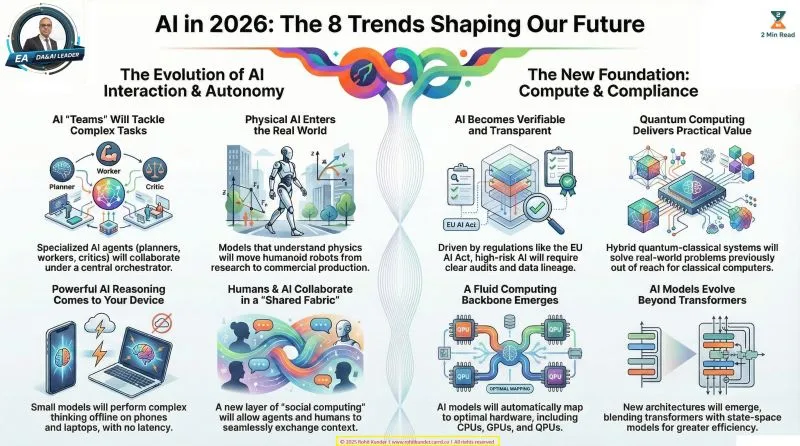
Some important developments include:
- Agentic AI: AI agents will increasingly perform multi-step tasks with appropriate human oversight.
- Generative AI: Businesses will use AI to generate content, analyze information, and support innovation.
- Intelligent Automation: More business workflows will combine AI with automated processes.
- Responsible AI: Organizations will strengthen transparency, fairness, privacy, and governance.
- AI-Powered Decision-Making: Advanced analytics will help businesses identify opportunities and potential risks.
- Human-AI Collaboration: Employees will increasingly work alongside AI systems to improve productivity.
8.Best Practices for a Successful AI Operating Model
Here are some important practices businesses should follow:
- Start with clear business objectives.
- Prioritize high-quality and secure data.
- Establish strong AI governance policies.
- Invest in employee training and development.
- Select scalable AI technologies.
- Monitor AI accuracy and performance.
- Maintain human oversight for important decisions.
- Regularly review and improve AI processes.
Conclusion
An AI Operating Model is becoming an important part of modern business transformation. It provides organizations with a structured approach to managing AI technologies, improving workflows, and achieving measurable business results. By combining skilled employees, quality data, advanced technologies, and responsible governance, businesses can build effective AI systems that support long-term growth.
In 2026 and beyond, adopting a flexible AI operating model can help organizations improve efficiency, encourage innovation, and remain competitive in the digital economy.
Frequently Asked Questions (FAQs)
Q1. What is an AI operating model?
An AI operating model is a framework that helps organizations manage and integrate artificial intelligence into their business operations.
Q2. Why is an AI operating model important?
It helps businesses improve productivity, automate workflows, manage AI risks, and achieve strategic objectives.
Q3. What are the main components of an AI operating model?
The main components include people, processes, data, technology, governance, and performance measurement.
Q4. What are the four types of AI operating models?
The four common approaches are centralized, decentralized, federated, and hybrid operating models.
Q5. How does AI improve business operations?
AI improves operations through intelligent automation, predictive analytics, data processing, and personalized customer experiences.
Q6. Can small businesses use AI operating models?
Yes. Small businesses can adopt affordable AI tools for marketing, customer support, sales, administration, and workflow automation.