Introduction
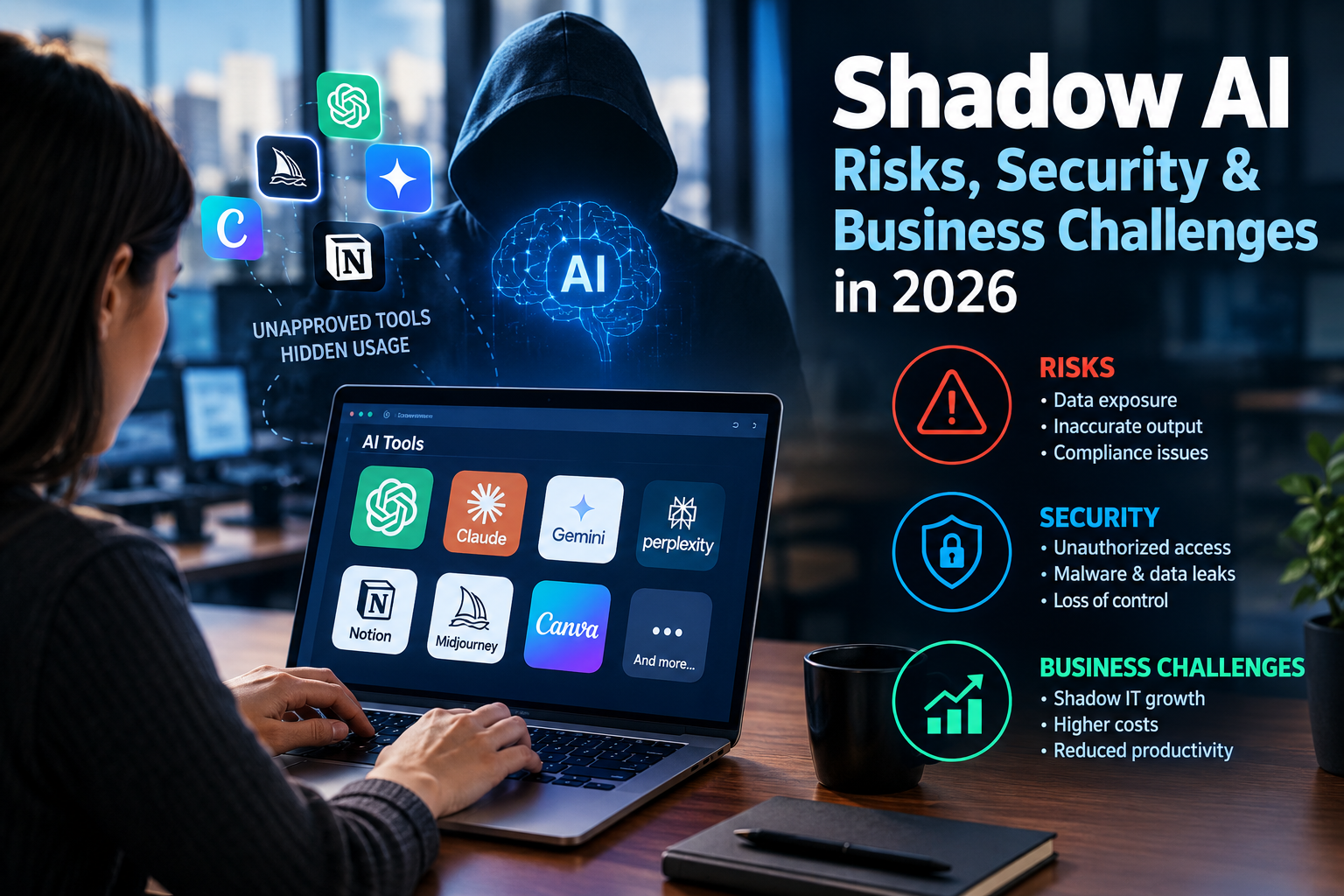
Artificial intelligence has become a major part of modern business. Employees now use AI tools for writing, research, coding, design, customer service, data analysis, and productivity. However, not every AI application used inside an organization is officially approved or monitored by its IT and security teams. This growing practice is commonly called Shadow AI. Shadow AI refers to employees or teams using AI applications without formal authorization, governance, security review, or organizational oversight. While these tools can improve productivity and encourage innovation, they can also create risks involving sensitive data, privacy, compliance, cybersecurity, intellectual property, and operational control. In 2026, understanding Shadow AI is increasingly important for organizations that want to benefit from AI while maintaining appropriate safeguards.
What Is Shadow AI?
Shadow AI is the use of artificial intelligence tools within an organization without formal approval or oversight from the relevant IT, security, legal, or management teams.
For example, an employee might use a public AI chatbot to summarize an internal document, generate marketing copy, analyze customer information, or write software code without checking whether the organization permits that service.
Shadow AI can involve:
- AI chatbots
- Generative AI platforms
- AI coding assistants
- Image and video generators
- AI transcription services
- AI meeting assistants
- Browser-based AI extensions
- Automated data-analysis tools
- AI productivity applications
The important distinction is not necessarily whether an AI tool is harmful. The issue is whether the organization knows about its use and has appropriate controls around it.
Why Is Shadow AI Growing in 2026?
AI tools are becoming easier to access and increasingly integrated into everyday work. Employees can often sign up for an AI service within minutes, sometimes without requiring assistance from an organization’s IT department.
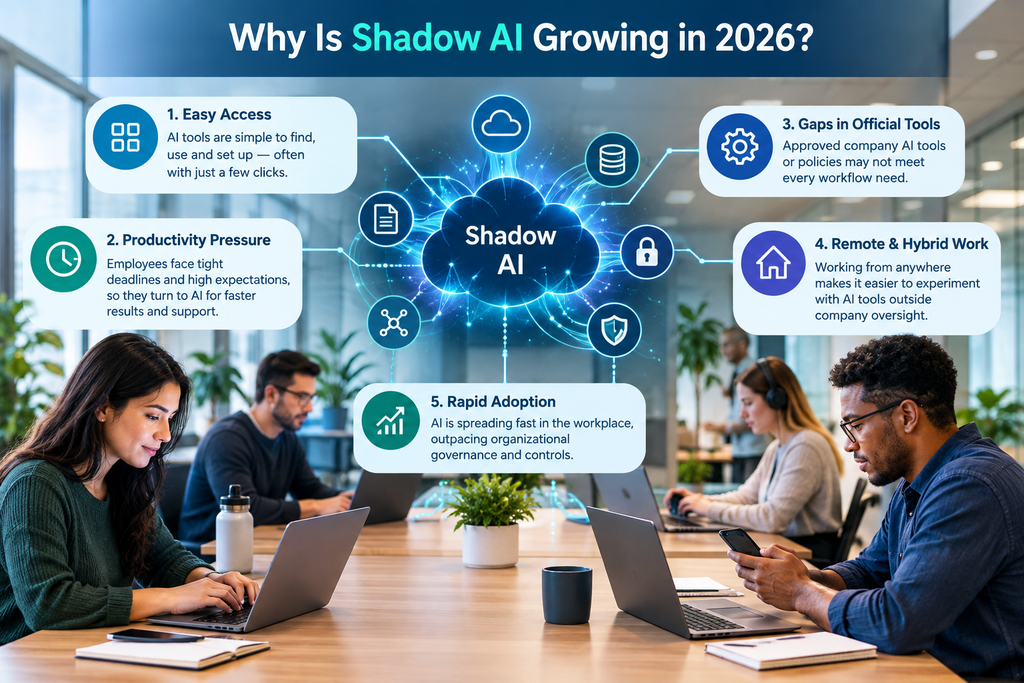
Several factors contribute to Shadow AI adoption:
1. Easy Access to AI
Cloud-based AI services allow employees to experiment with powerful capabilities without installing complex software.
2. Productivity Pressure
Employees may turn to AI when they need to complete repetitive or time-consuming tasks faster.
3. Rapid AI Innovation
New AI applications appear quickly, making traditional approval processes difficult to keep up with.
4. Employee Experimentation
Workers may discover useful AI solutions independently before an organization develops an official alternative.
5. Lack of Approved Tools
If employees do not have convenient enterprise AI solutions, they may seek alternatives themselves.
Major Shadow AI Risks
Shadow AI can create several categories of organizational risk.
1.Data Privacy Risks
Employees may accidentally enter confidential information into an external AI service.
Potentially sensitive information could include:
- Customer information
- Financial records
- Internal reports
- Business strategies
- Employee information
Organizations therefore need clear rules about what information can be submitted to external AI systems.
2.Cybersecurity Risks
Unapproved AI applications can introduce additional security concerns.
For example, an employee might install an AI browser extension without understanding what permissions it has or how information is processed.
Security teams may have difficulty evaluating tools they do not know employees are using.
3.Intellectual Property Risks
Businesses invest heavily in proprietary software, research, designs, content, and product ideas. Uploading confidential intellectual property into an external AI service can create questions about data handling, ownership, retention, and confidentiality.
4.Compliance Challenges
Organizations operating in regulated industries may have legal or regulatory obligations concerning personal data, financial information, healthcare information, or other sensitive records. Using an unapproved AI system can make compliance management more difficult.
5.Inaccurate AI Output
AI-generated information can contain errors, unsupported claims, outdated information, or fabricated details.
If employees use AI-generated material without verification, those errors can enter:
- Reports
- Customer communications
- Marketing campaigns
- Software
- Business decisions
- Research documents
6.Vendor and Third-Party Risk
Every external AI service can introduce another third-party relationship that organizations may need to evaluate.
Security teams may need to understand:
- Where data is processed
- How long data is retained
- Who can access it
- Whether data is used for model improvement
- What security controls exist
- How the provider handles incidents
Shadow AI and Business Impact

Shadow AI is not simply a cybersecurity issue. It can influence many areas of business operations.
1.Productivity
Employees may use AI to automate routine tasks and accelerate content creation, research, analysis, and coding.
2.Innovation
Independent experimentation can reveal new AI use cases that management may not have considered.
3.Operational Risk
At the same time, uncontrolled AI adoption can create inconsistent processes and make it harder to understand how important work is being performed.
4.Financial Impact
Organizations may accumulate subscriptions to numerous AI services without centralized procurement or cost management.
5.Reputation
An AI-related privacy incident, inaccurate customer communication, or inappropriate use of confidential information can potentially damage an organization’s reputation.
Shadow AI vs. Approved AI
| Shadow AI | Approved AI |
| Often used without authorization | Formally evaluated and approved |
| Limited organizational visibility | Greater organizational visibility |
| Security controls may be unclear | Security controls can be established |
| Data handling may be uncertain | Data policies can be defined |
| Costs may be decentralized | Costs can be monitored |
| Governance may be limited | Governance processes are established |
The difference is primarily governance and visibility, rather than whether the technology itself is good or bad.
How Businesses Can Manage Shadow AI
Organizations do not necessarily need to respond to Shadow AI with an outright ban. A more sustainable approach can combine governance, education, approved tools, and monitoring.
1. Create a Clear AI Policy
Businesses should establish straightforward rules explaining:
- Which AI tools employees can use
- What information may be entered
- Which applications are prohibited
- When human review is required
- How AI-generated content should be handled
2. Provide Approved AI Tools
Employees are less likely to rely on unknown services when they have secure and useful enterprise-approved alternatives.
3. Educate Employees
Employees should understand that convenience does not automatically mean a tool is safe for confidential business information.
4. Monitor AI Usage
Security and IT teams can use appropriate enterprise controls to identify unauthorized applications and understand how AI is being used.
5. Establish Data Classification Rules
Organizations can define categories such as:
- Public information
- Internal information
- Confidential information
- Highly sensitive information
AI policies can then specify which categories are permitted with particular tools.
6. Evaluate AI Vendors
Before approving an AI service, organizations should assess its security, privacy, data retention, access controls, contractual terms, and other relevant risks.
Benefits of Managing Shadow AI
Effective governance can help organizations:
- Improve AI visibility
- Reduce unnecessary security exposure
- Protect confidential information
- Control AI-related spending
- Encourage responsible experimentation
- Improve compliance processes
- Standardize AI usage
- Support safer innovation
The objective is not simply to stop employees from using AI. It is to create an environment where useful AI experimentation can happen within reasonable organizational safeguards.
Challenges of Shadow AI Governance
Managing Shadow AI also presents challenges.
1.Rapidly Changing Technology
AI applications and capabilities change quickly, making policies difficult to keep current.
2.Employee Resistance
Overly restrictive rules may encourage employees to hide their AI usage rather than report it.
3.Limited Visibility
Organizations may not immediately know every AI service being used across departments.
4.Balancing Security and Productivity
Strong controls can reduce risk, but excessive restrictions may prevent employees from benefiting from legitimate AI applications.
5.Lack of AI Expertise
Some organizations may not have enough AI, cybersecurity, privacy, or governance specialists to evaluate every emerging tool.
Shadow AI in the Workplace
Shadow AI can appear in almost any department.
Marketing: Employees may use AI for campaign ideas, social media posts, or content creation.
Human Resources: AI may assist with job descriptions, communications, or administrative tasks.
Finance: Employees may use AI for spreadsheet analysis or report preparation.
Software Development: Developers may experiment with AI coding assistants.
Customer Service: Teams may use AI to summarize conversations or draft responses.
Research: Employees may use AI tools to summarize documents or explore ideas.
These applications can provide legitimate productivity benefits, but organizations should establish appropriate rules for their use.
The Future of Shadow AI
As AI becomes embedded into everyday software, Shadow AI may become harder to distinguish from ordinary technology usage.
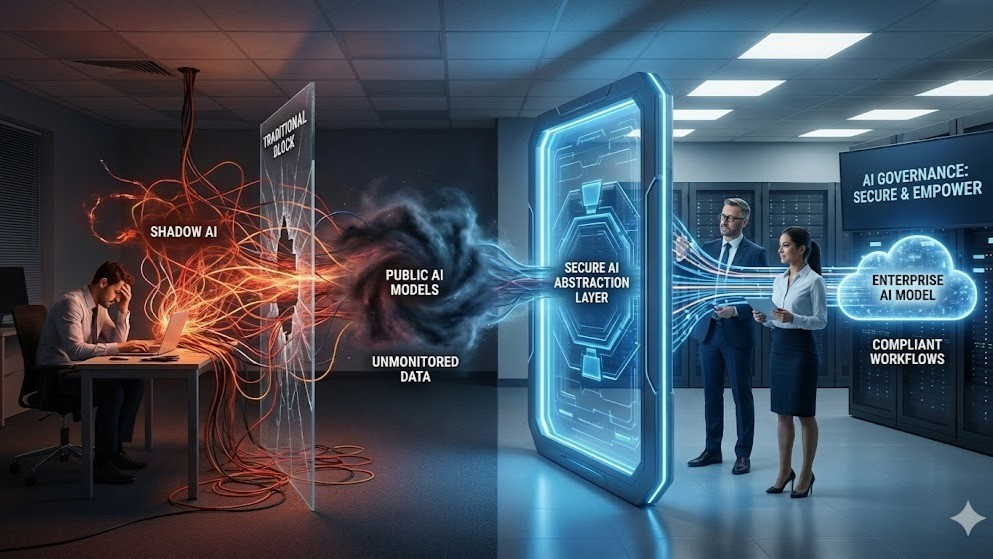
Organizations may increasingly move toward AI governance frameworks that combine:
- Approved AI platforms
- Identity and access controls
- Data-loss prevention
- Employee training
- Vendor assessments
- Usage monitoring
- Risk assessments
- Human oversight
- Regular policy updates
The future challenge will be finding a practical balance between innovation, productivity, security, privacy, and governance.
Key Takeaways
Shadow AI represents the growing use of AI tools outside formal organizational oversight. It can help employees work faster and discover innovative applications, but it can also introduce data, security, compliance, intellectual-property, financial, and operational risks. Businesses can address these challenges by creating clear AI policies, providing approved tools, educating employees, monitoring usage appropriately, classifying sensitive information, evaluating vendors, and maintaining human oversight.
Conclusion
Shadow AI is becoming an important business issue in 2026 because AI adoption is moving faster than many traditional governance processes. Employees can access powerful AI tools almost instantly, creating opportunities for productivity and innovation while also introducing new areas of risk. Organizations can respond by developing practical AI governance rather than relying solely on restrictions. Clear policies, secure alternatives, employee education, appropriate monitoring, and human review can help businesses use AI more responsibly.