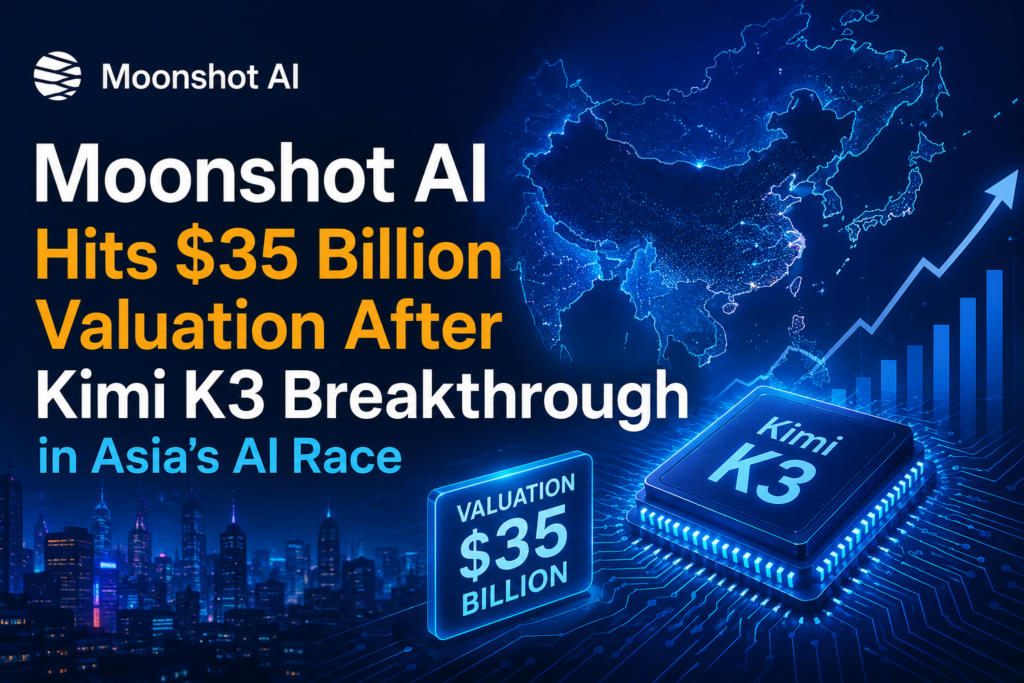
Moonshot AI Stock is the Chinese AI company behind Kimi, a family of large language models and AI assistants. The important point for investors is that Moonshot AI is not currently a publicly traded stock, so there is no normal NASDAQ/HKEX ticker you can buy through a standard brokerage account. Reports indicate the company is preparing for a potential Hong Kong IPO.
1. Moonshot AI stock status
| Item | Current information |
| Company | Moonshot AI |
| Main product | Kimi AI |
| Founded | 2023 |
| Founder/CEO | Yang Zhilin |
| Headquarters | Beijing, China |
| Public ticker | None yet |
| Publicly traded? | No |
| Potential exchange | Hong Kong Stock Exchange |
| Latest reported valuation | ~$35 billion |
| Latest reported funding | $3.5 billion |
| IPO timing | Potentially late 2026/early 2027, but not confirmed |
Moonshot reportedly raised $3.5 billion at a $35 billion valuation in July 2026, following a roughly $2 billion round at a $20 billion valuation in May.
2. Why Moonshot AI is attracting investors
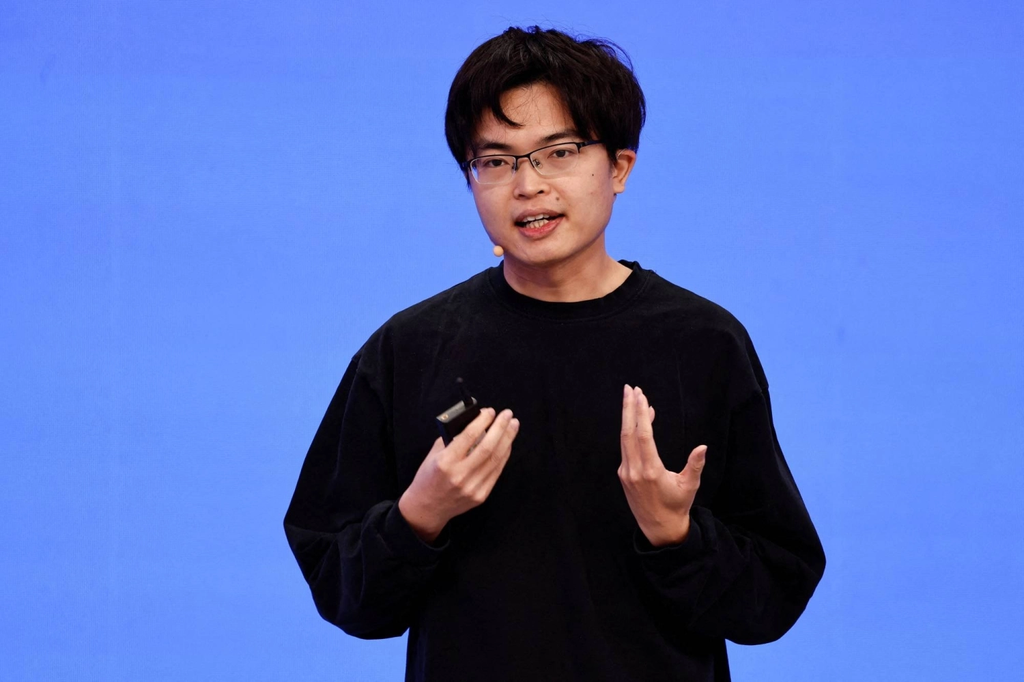
The biggest reason is Kimi. Moonshot has positioned Kimi as a major Chinese competitor to frontier AI companies such as OpenAI and Anthropic.
Its newer Kimi K3 model has generated significant developer and commercial interest. Demand became strong enough that Moonshot temporarily paused new Kimi subscriptions because of capacity constraints.
More recently, Reuters reported that Moonshot is in early discussions with Microsoft, Amazon, and Google about hosting Kimi K3 through their cloud platforms, potentially using revenue-sharing arrangements.
3. Valuation
Moonshot’s reported private valuation has risen extremely quickly:
- 2024: roughly $3.3 billion
- May 2026: roughly $20 billion
- July 2026: roughly $35 billion
The latest reported $35 billion valuation came with a $3.5 billion funding round.
This rapid valuation increase is both an opportunity and a warning sign: a private funding valuation isn’t the same thing as a public-market valuation.
4. Revenue
Moonshot reportedly reached approximately $300 million in annual recurring revenue (ARR) by June 2026, up from more than $200 million in April.
However, investors should distinguish ARR/run-rate figures from audited annual revenue and profit. Moonshot has not yet provided the kind of complete public financial statements investors normally receive from a listed company.
5. How Moonshot makes money
Its major potential revenue sources include:
- Kimi subscriptions
- AI API usage
- Enterprise AI services
- Cloud partnerships
- Commercial licensing/hosting of AI models
The open-weight strategy could help Moonshot attract developers quickly, although it can also put pressure on pricing.
6. IPO plans
Reports in July said Moonshot was seeking shareholder approval for a Hong Kong listing within roughly six months and was reorganizing its offshore structure in preparation for a potential IPO.
But there is currently no confirmed IPO price, official ticker, final share count, or confirmed trading date. Therefore, websites showing a supposed “Moonshot stock price” should be treated carefully.
7. Can you buy Moonshot AI stock now?

Moonshot remains privately held. Some private-share secondary marketplaces may display estimated/private transaction prices, but those are not equivalent to an exchange-traded stock price, and access can be restricted to eligible investors.
So:
Moonshot AI stock today → Private company
Moonshot AI IPO → Potential Hong Kong listing
Official public ticker → Not announced
8. Major competitors
Moonshot is competing in an extremely crowded AI market, including the following:
- OpenAI
- Anthropic
- Alibaba
- DeepSeek
- Z.ai
- MiniMax
- ByteDance
China’s AI IPO market is also becoming more competitive, with companies such as MiniMax and Z.ai already moving into public markets.
9. Biggest investment opportunities
Potential positives:
- Rapid valuation growth
- Strong Kimi brand
- Growing AI API demand
- Kimi K3’s strong technical performance
- Increasing enterprise/cloud opportunities
- China’s strategic investment in AI
- Potential Hong Kong IPO providing liquidity
- Huge long-term AI market
10. Biggest risks
The risks are substantial:
- Very high valuation relative to current revenue
- Extremely expensive AI computing requirements
- Competition from Alibaba, DeepSeek and other Chinese labs
- Competition from OpenAI, Anthropic and Google
- Chinese regulatory risk
- U.S.–China technology restrictions
- Difficulty obtaining advanced AI chips
- Potential AI model commoditization
- Open-weight models can reduce pricing power
- IPO hype could result in an expensive initial valuation
The recent experience of other Chinese technology IPOs also shows that strong debut enthusiasm does not guarantee long-term share performance.
11. Is Moonshot AI stock a good investment?
Potentially interesting, but I would not treat the current private valuation as automatically attractive.
At a reported $35 billion valuation and approximately $300 million ARR, investors are already paying for extremely strong future growth. The company therefore needs to convert Kimi’s technical success into sustainable revenue and eventually profitability.
The most important things to watch before buying after an IPO would be the following:
Revenue growth → gross margins → AI compute costs → cash burn → customer growth → enterprise contracts → IPO valuation.
Bottom line
Moonshot AI is one of China’s most important private AI companies, but it does not currently have a normal publicly traded stock. Its reported valuation has reached around $35 billion, and it is preparing for a potential Hong Kong IPO. Kimi K3 has significantly strengthened the company’s investment story, but the valuation and enormous AI infrastructure requirements create substantial risk.