






1.MCP Governance: Why the Linux Foundation Changes the Enterprise Risk Equation
Linux Foundation: Every enterprise architecture decision carries an underlying question: Can we safely build our infrastructure around this technology, or could a single vendor’s strategic shift force us to rebuild?
For the Model Context Protocol (MCP), that question was particularly relevant through much of 2024. Created and controlled by Anthropic, MCP offered a promising standard for connecting AI applications with external tools and data, but its governance structure also created a potential single-vendor dependency.
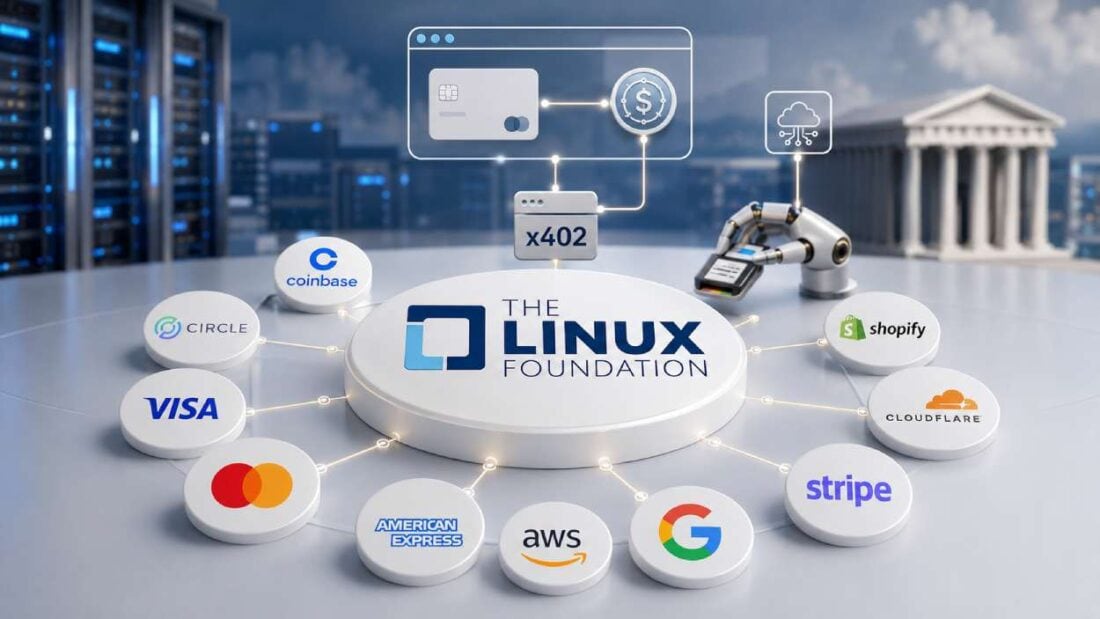
That changed in December 2025, when Anthropic contributed MCP to the Linux Foundation and established the Agentic AI Foundation (AAIF) to support its governance. This shift is significant for enterprises evaluating MCP as a long-term architectural standard because governance, rather than technology alone, plays an important role in reducing vendor lock-in and increasing confidence in an emerging protocol.
The transition raises several important questions: What is the AAIF? Who founded it? How does its governance model help prevent unilateral changes to MCP? And what does the relationship between MCP and other agent interoperability initiatives mean for the broader protocol landscape?
Understanding these developments can help technology leaders evaluate MCP not only as an AI integration technology but also in terms of governance, interoperability, vendor risk, and long-term enterprise viability.
Files, images, and data analysis are unavailable until usage resets at 3:07 PM. Continue chatting with text only, or upgrade for more access.
Try Plus free
2. Why Did Anthropic Hand MCP to the Linux Foundation?
The Model Context Protocol (MCP) was publicly released in November 2024 as an open standard designed to connect AI models with external tools, applications, and data sources. Its adoption grew rapidly, with the protocol becoming part of a broad ecosystem of AI development and productivity tools.
As MCP became increasingly important infrastructure, its governance became just as important as its technical capabilities. A widely adopted protocol controlled by a single commercial company can create several forms of vendor risk. For example, a unilateral specification change could introduce breaking changes for downstream users, while abandonment could leave the ecosystem without a clear path for continued development.
Other concerns include changes to licensing terms and ecosystem fragmentation if competing implementations or protocol forks emerge. For enterprises making long-term infrastructure decisions, these risks can make governance a critical part of technology evaluation.
Moving MCP under the Linux Foundation provides a more neutral governance structure designed to support the protocol as an open ecosystem rather than a product controlled by one vendor. The model separates funding from technical decision-making, with technical governance handled through designated community and technical structures rather than being determined solely by a commercial sponsor.
This transition can reduce several concerns associated with single-vendor control:
- Greater governance neutrality: MCP development is positioned within a broader open-source ecosystem rather than under the exclusive control of Anthropic.
- Reduced vendor dependency: Enterprises have greater confidence that the protocol’s future does not depend entirely on one company’s commercial strategy.
- Greater continuity: A foundation-backed project can provide stronger organizational continuity if individual companies change priorities.
- Improved ecosystem confidence: Neutral stewardship can encourage more companies and developers to build interoperable tools and services around MCP.
For enterprises, the significance of the transition is therefore broader than ownership. Moving MCP into independent foundation governance helps turn it from a vendor-backed protocol into a more broadly governed industry standard, making its long-term adoption easier to evaluate from a risk and architecture perspective.
3. What Is the Agentic AI Foundation (AAIF) and Who Controls It?
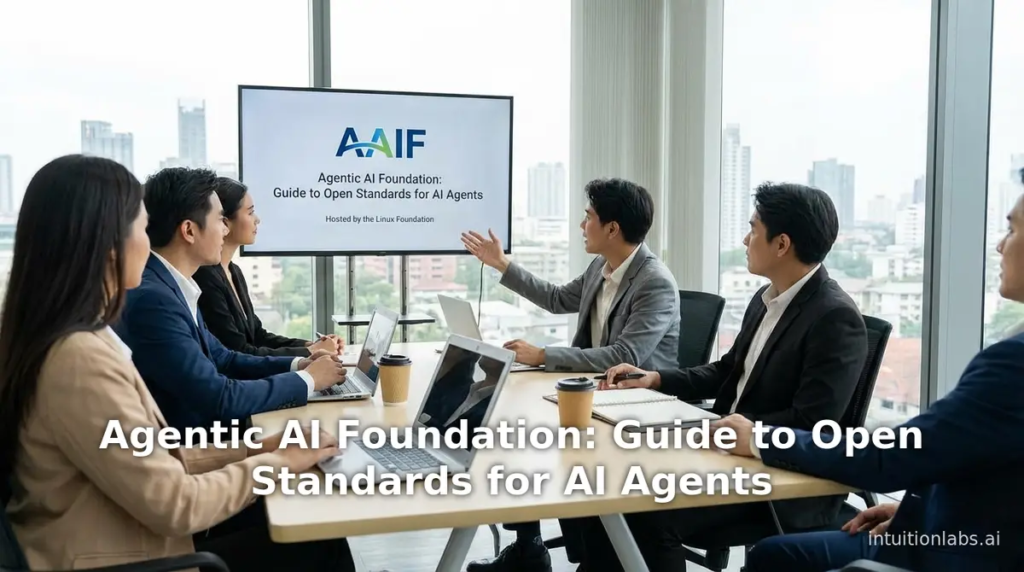
The Agentic AI Foundation (AAIF) is an open foundation established under the Linux Foundation to provide neutral governance for open-source technologies and standards used to build interoperable AI agents. It was announced in December 2025 with three founding project contributions: Anthropic’s Model Context Protocol (MCP), Block’s goose, and OpenAI’s AGENTS.md.
4. Who Controls the AAIF?
The AAIF is not controlled by Anthropic alone. Governance is distributed across participating organizations through the foundation’s governing structures.
The initial Platinum members are AWS, Anthropic, Block, Bloomberg, Cloudflare, Google, Microsoft, and OpenAI. The AAIF has a Governing Board, currently chaired by David Nalley of AWS, with representatives from the major What organizations, including Google, OpenAI, Microsoft, Cloudflare, Anthropic, Bloomberg, and Block, plus a Gold-member representative from Shopify.
A separate technical committee handles technical matters. Its membership includes representatives from multiple organizations, rather than being an Anthropic-only body.
This distinction matters for MCP. The foundation’s stated goal is to ensure that projects such as MCP evolve through transparent, collaborative, and open governance rather than proprietary control by a single company.
5. What Does This Mean for MCP?
For enterprises, the important point is that Anthropic remains an important participant in the MCP ecosystem, but it no longer has sole control over MCP’s institutional home. MCP is now governed through the AAIF under the Linux Foundation, giving other major technology companies and the wider open-source community a formal role in its evolution.
The AAIF has also established technical governance processes for projects under its care, including requirements for project lifecycle management, contribution processes, and governance compliance.
In practical terms: AAIF is designed to make agentic AI infrastructure more vendor-neutral, predictable, interoperable, and community-driven—which makes MCP a less risky long-term architectural bet for enterprises than it would be under exclusive single-vendor governance.
6. How Does the IBM ACP and Google A2A Merger Change the Agent Protocol Landscape?
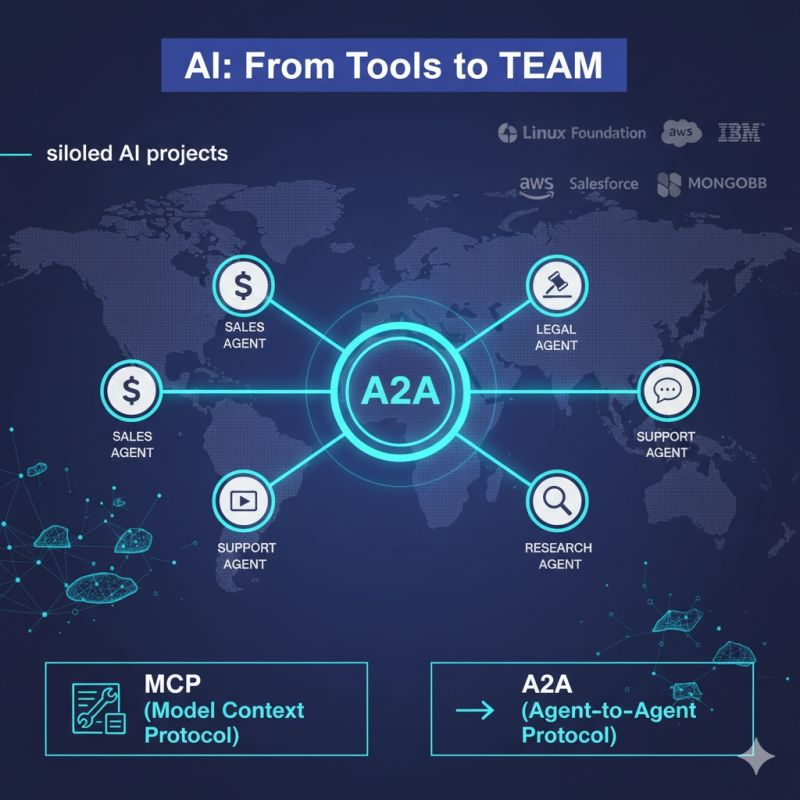
The merger of IBM’s Agent Communication Protocol (ACP) and Google’s Agent-to-Agent Protocol (A2A) represents an important step toward reducing fragmentation in the rapidly developing agent interoperability ecosystem.
Before the merger, two major protocols were addressing similar problems from different perspectives:
- IBM launched ACP in March 2025 as part of its BeeAI platform. The protocol used REST-based communication patterns designed to make agent integration relatively straightforward for developers.
- Google introduced A2A in April 2025, focusing on enterprise-scale communication, task delegation, and coordination between AI agents.
- Google contributed A2A to the Linux Foundation in June 2025, with more than 100 organizations—including Microsoft, AWS, Salesforce, and SAP—supporting the initiative.
Having two competing protocols for agent-to-agent communication created a risk of ecosystem fragmentation. Developers and enterprises could have been forced to choose between incompatible standards, potentially resulting in duplicated integrations and competing implementations.
7. Why the Merger Matters
In August 2025, ACP and A2A merged, combining capabilities from both projects. ACP brought developer-friendly REST patterns, while A2A contributed enterprise-oriented capabilities and a growing ecosystem of supporters.
The resulting unified protocol is referred to as A2A by the Linux Foundation and Google and is positioned alongside MCP within the broader agentic AI interoperability landscape.
The distinction between the two protocols is important:
- MCP focuses primarily on connecting an AI application or agent with tools, data sources, and external capabilities.
- A2A focuses on communication and collaboration between AI agents.
Together, they address complementary layers of agent interoperability. An AI agent could use MCP to access tools and data while using A2A to communicate with another specialized agent.
8. What This Means for Enterprises
The consolidation of ACP and A2A can reduce the risk of investing in competing agent communication standards. A more unified ecosystem can mean fewer integration requirements, broader tooling support, and greater interoperability between vendors.
For enterprise architects, the emerging landscape can therefore be viewed relatively simply:
MCP connects agents to capabilities; A2A connects agents to other agents.
With both projects operating within the Linux Foundation ecosystem, the industry is moving toward a more standardized foundation for building interoperable AI agent systems rather than maintaining multiple competing protocols for similar functions.
What Does the Kubernetes Governance Model Tell Us About MCP’s Future?
The history of Kubernetes offers a useful comparison for understanding what neutral governance could mean for MCP. Kubernetes began at Google but was donated to the Cloud Native Computing Foundation (CNCF) in 2016, placing the project within a vendor-neutral Linux Foundation environment.
The important lesson is that donation alone does not guarantee neutrality. What matters is the governance structure that follows. CNCF emphasizes transparency, community participation, technical merit, and vendor neutrality, with its Technical Oversight Committee providing technical leadership rather than allowing one commercial vendor to dictate project direction.